High fructose corn syrup: what US shoppers need to know
 By Clement8 min read
Find the controversial ingredients already in your kitchen.
Scan packaged foods at home, understand ingredients, and find healthier alternatives in seconds.




 Scan with Osana
Quick answer: high fructose corn syrup (HFCS) is a cheap liquid sweetener made from corn starch, with 42% or 55% fructose depending on the type. It is chemically similar to table sugar, so the bigger issue is total added sugar, and HFCS on a label is a reliable sign of an ultra-processed product.
What is high fructose corn syrup?
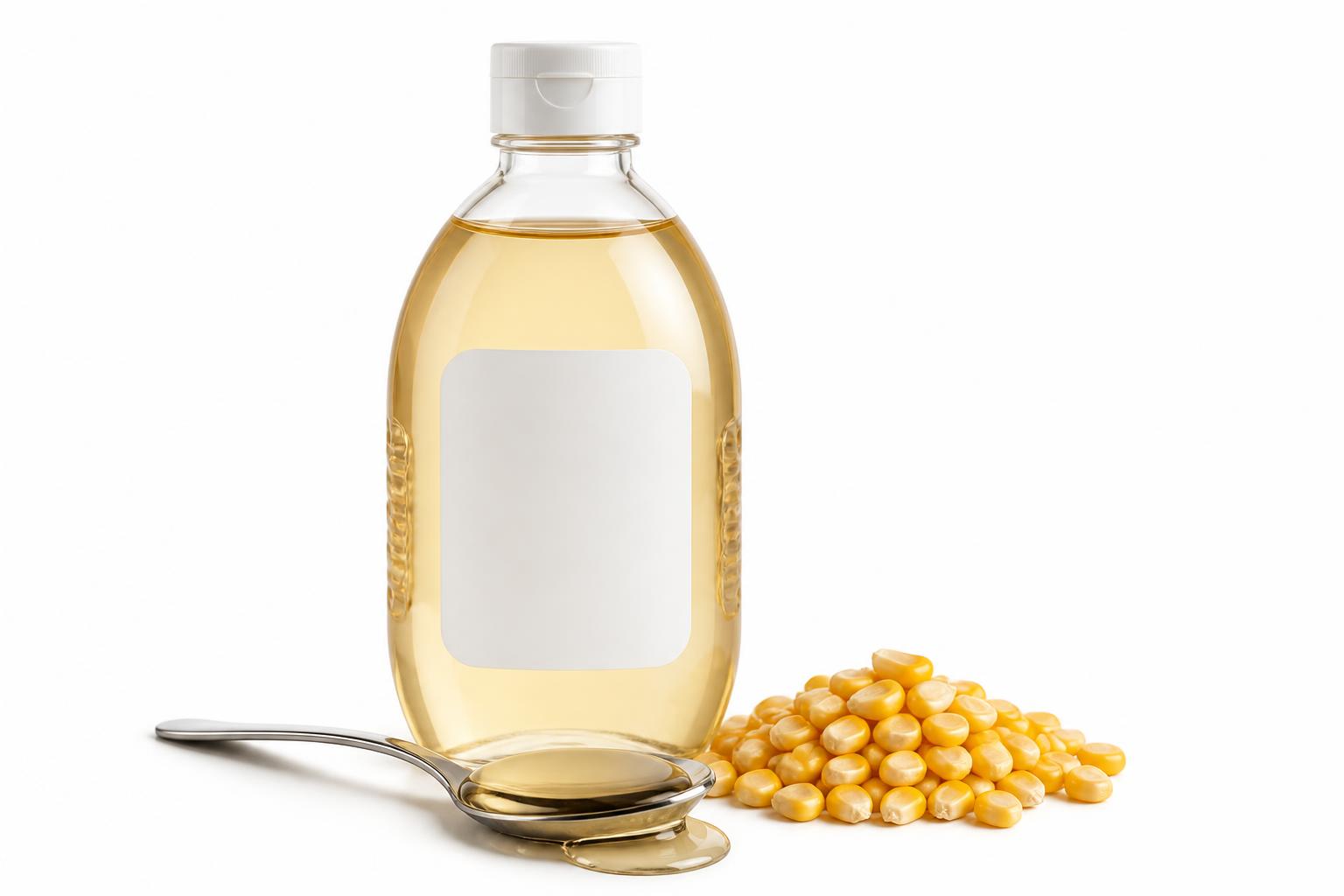
High fructose corn syrup (HFCS) is a liquid sweetener made by converting corn starch into glucose, then using enzymes to convert a portion of that glucose into fructose. The result is a cheap, shelf-stable sweetener that blends easily into beverages, sauces, baked goods, and snacks. It became a dominant ingredient in the US food supply during the 1970s and 1980s, largely because corn subsidies made it far less expensive than cane or beet sugar.
The two most common commercial forms are HFCS-42 (42% fructose, used in cereals and baked goods) and HFCS-55 (55% fructose, used primarily in soft drinks). Both are classified as generally recognized as safe (GRAS) by the FDA.
Where does HFCS show up in the grocery store?
HFCS is one of the most widely used sweeteners in American packaged food. You will find it in categories that might surprise you:
- Soft drinks and fruit-flavored beverages - the most well-known source
- Bread and sandwich rolls - including many mainstream white and wheat loaves
- Condiments - ketchup, barbecue sauce, salad dressings, and relish
- Breakfast cereals and granola bars
- Yogurt with fruit on the bottom
- Crackers and snack cakes
- Canned soups and baked beans
When you are shopping at Target or Walmart, it is easy to pick up a bottle of store-brand ketchup or a loaf of bread without noticing HFCS listed third or fourth in the ingredients. At Whole Foods or Trader Joe's, store-brand products are more likely to use cane sugar or honey instead, but name-brand products stocked at those same retailers may still contain it.
On a label, look for: high fructose corn syrup, corn syrup, or the term "fructose" when it appears without a fruit source. The FDA does not allow manufacturers to call it "corn sugar," a name the corn industry once lobbied to use.
High fructose corn syrup vs sugar: is there a real difference?
This is the question most shoppers ask, and the honest answer is: it depends on what you are comparing.
Chemically, HFCS-55 and table sugar (sucrose) are similar. Sucrose is 50% fructose and 50% glucose bonded together. HFCS-55 is roughly 55% fructose and 45% glucose in free, unbound form. The difference in fructose content is modest, but the free-form fructose in HFCS may be absorbed slightly differently than the fructose released from sucrose digestion.
The National Institutes of Health notes that high fructose intake from any source, including both HFCS and added sugar, is associated with elevated triglycerides, increased liver fat production, and metabolic changes when consumed in large amounts. The key phrase is "large amounts." A small drizzle of ketchup is not the same as drinking multiple cans of soda daily.
The more important distinction for most families is not HFCS versus sugar, but total added sugar intake. The 2020-2025 Dietary Guidelines for Americans recommend limiting added sugars to less than 10% of daily calories. Whether those added sugars come from HFCS, cane sugar, honey, or agave, the metabolic load is broadly similar at comparable doses.
That said, HFCS is a reliable marker of ultra-processed food. Products that contain it are almost always highly processed, low in fiber, and designed for palatability over nutrition. Avoiding HFCS is often a practical shortcut for reducing ultra-processed food overall, even if the ingredient itself is not uniquely toxic.
What does the research actually say?
The science on HFCS is nuanced, and it is worth separating signal from noise.
- Metabolic effects at high doses: Several studies, including research published in the American Journal of Clinical Nutrition, found that high fructose consumption can promote fat synthesis in the liver and raise blood triglycerides more than equivalent glucose intake. Most of these studies used doses far above typical dietary exposure.
- Obesity association: Epidemiological data shows that the rise of HFCS in the US food supply roughly parallels rising obesity rates. However, correlation is not causation, and total caloric intake, physical activity, and the broader dietary pattern all play roles.
- No unique toxicity established: Regulatory agencies including the FDA and the European Food Safety Authority have not identified a specific harm from HFCS at normal dietary levels that is distinct from other added sugars.
The practical takeaway: HFCS is not a poison, but it is a flag. Products that list it prominently tend to be high in added sugar and low in nutritional value.
HFCS in snacks and kids' foods
Corn syrup in snacks is especially common in products marketed to children, including fruit snacks, flavored crackers, breakfast pastries, and chocolate-flavored sandwich cookies. If you are packing a school lunch or filling a snack drawer, a quick label scan often reveals HFCS in items that seem relatively innocent, like a "whole grain" granola bar or a "real fruit" pouch.
For context on how HFCS fits alongside other sweetening and processing strategies used in kids' snacks, it is worth understanding how artificial sweeteners in food are used as alternatives, since some "no HFCS" products simply swap in sucralose or acesulfame-K instead.
Another common companion ingredient in ultra-processed snacks is maltodextrin, a starchy filler that raises blood glucose quickly and often appears alongside HFCS in the same product.
How to reduce HFCS in your diet without overhauling everything
You do not need to throw out your entire pantry. A few targeted swaps go a long way:
- Switch your condiments first. Ketchup, barbecue sauce, and salad dressing are among the easiest swaps. Brands like Annie's, Sir Kensington's, and Primal Kitchen use cane sugar or skip added sweeteners entirely.
- Read bread labels. Many mainstream sandwich breads contain HFCS. Dave's Killer Bread and Ezekiel bread are widely available alternatives at most major retailers.
- Check beverages. Switching from regular soda to sparkling water or unsweetened tea eliminates one of the largest HFCS sources in the average American diet.
- Look past "no HFCS" claims. A product that removes HFCS but replaces it with large amounts of cane sugar or agave is not meaningfully healthier. Check the total added sugar grams on the Nutrition Facts panel.
Conclusion
HFCS is a widely used industrial sweetener that is chemically similar to table sugar but serves as a reliable indicator of ultra-processed food. The science does not support treating it as uniquely dangerous at typical dietary doses, but reducing it is a practical way to lower overall added sugar intake and move toward less processed eating. Reading ingredient labels carefully, especially on condiments, bread, and snacks, is the most effective first step. If you want a faster way to spot HFCS and other added sweeteners across your grocery cart, Osana lets you scan any barcode and see exactly what is inside.
Frequently asked questions
Is high fructose corn syrup banned in other countries?
HFCS is not banned in the European Union, but it is far less common there. EU production quotas on isoglucose (the EU term for HFCS) historically limited its use, though those quotas ended in 2017. European food culture and different cost structures mean cane and beet sugar remain dominant.
How is HFCS listed on US food labels?
It must appear as "high fructose corn syrup" in the ingredients list. The FDA rejected a petition to allow the name "corn sugar" in 2012. You may also see plain "corn syrup," which is a different product with less fructose conversion.
Does HFCS cause more weight gain than regular sugar?
Current evidence does not confirm that HFCS causes more weight gain than an equivalent amount of sucrose. Both contribute calories and can promote weight gain when consumed in excess. The association between HFCS and obesity is largely tied to the types of products it appears in rather than a unique metabolic effect.
Are there HFCS-free versions of popular snack brands?
Yes. Many brands now offer HFCS-free lines in response to consumer demand. Heinz offers an organic ketchup without HFCS, and several major bread brands have reformulated. Always check the current label, as formulations can change.
Should I avoid all products with corn syrup?
Not necessarily. Plain corn syrup (like Karo light corn syrup) is not the same as high fructose corn syrup and has a different fructose content. The concern around HFCS is specifically about the elevated fructose level and its presence in ultra-processed products.
Is HFCS worse for children than adults?
Children are not uniquely vulnerable to HFCS compared to adults, but they often consume it in higher relative amounts through sweetened beverages, snacks, and cereals. Reducing added sugar from all sources, including HFCS, is generally recommended for children by the American Academy of Pediatrics.
Get the cleaner swaps list before your next grocery run.
One short email a week: new label checks and better-for-you products we actually tested.
No spam. Unsubscribe anytime.

Choose cleaner swaps before they land in your cart.
Use Osana at Whole Foods, Trader Joe's, Target, Costco, or Walmart to compare labels faster and shop with more confidence.