Maltodextrin in food: what US shoppers need to know
 By Clement6 min read
Find the controversial ingredients already in your kitchen.
Scan packaged foods at home, understand ingredients, and find healthier alternatives in seconds.




 Scan with Osana
What is maltodextrin in food?
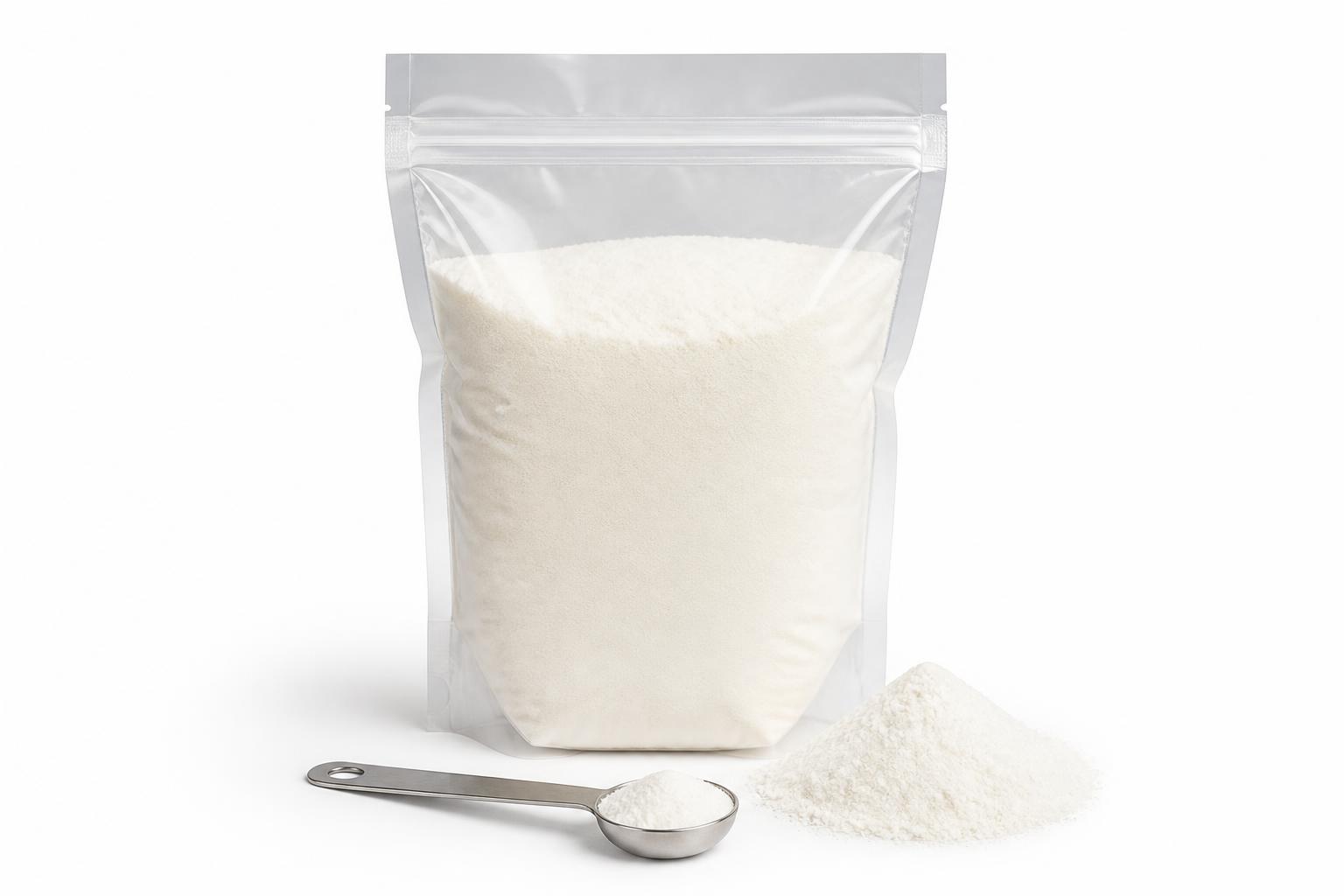
Maltodextrin is a highly processed starch derivative used as a filler, thickener, and preservative in a wide range of packaged foods. It is made by breaking down starch, usually from corn, wheat, or potato, into short chains of glucose molecules. The result is a tasteless white powder that blends easily into everything from protein powders to salad dressings, which is exactly why it shows up so often on ingredient labels without most shoppers noticing it.
The FDA classifies maltodextrin as Generally Recognized as Safe (GRAS), meaning manufacturers can add it freely without special approval. That legal status does not settle every nutritional or health question around it, though, and growing consumer interest in ultra-processed food ingredients has pushed maltodextrin into the spotlight.
Why the glycemic index of maltodextrin matters
One of the most discussed concerns is the maltodextrin glycemic index. Maltodextrin has a GI estimated between 85 and 105, which is higher than table sugar (GI around 65). That means it can spike blood glucose quickly after eating.
For most healthy adults eating a balanced diet, small amounts in a single product are unlikely to be a problem. But maltodextrin is a processed food ingredient that appears in dozens of products people eat daily, including:
- Protein shakes and meal replacement powders
- Flavored crackers and chips (think snack brands at Costco or Target)
- Instant oatmeal and breakfast cereals
- Salad dressings and sauces
- Low-fat yogurts and dairy alternatives
- Baby formula and toddler snacks
When multiple products in a single day each contain maltodextrin, cumulative exposure adds up. People managing blood sugar, following a lower-glycemic diet, or feeding young children have good reason to pay attention.
A 2018 review published in Nutrients noted that maltodextrin may also alter gut microbiota composition and promote the growth of certain bacteria associated with inflammatory bowel conditions, though researchers emphasized that more human trials are needed before drawing firm conclusions.
Hidden maltodextrin: where it hides on labels
One frustrating reality is that hidden maltodextrin does not always announce itself clearly. Because it is technically a carbohydrate, it can be grouped into the total carbohydrate count on a Nutrition Facts panel without appearing prominently. You have to scan the ingredient list to find it.
Common label names and contexts to watch:
- Listed simply as "maltodextrin" (most common)
- Present in "natural flavors" blends or spice mixes where it acts as a carrier
- Found in "modified food starch" blends in some formulations
- In "powdered" versions of foods like powdered peanut butter or powdered coffee creamers
At Whole Foods or Trader Joe's, you will find products marketed as clean or minimally processed that still contain maltodextrin. The word "natural" on the front of a package does not exclude it. This is a good example of why front-of-pack claims are not a reliable shortcut.
How does the US approach compare to Europe?
Maltodextrin is permitted in both the United States and the European Union, so this is not a case of an ingredient banned abroad but allowed here. The regulatory picture is similar on both sides of the Atlantic.
Where the conversation gets more nuanced is in the broader ultra-processed food framework. European public health guidance has increasingly emphasized reducing overall ultra-processed food consumption, referencing classification systems like NOVA, which places products containing maltodextrin firmly in the ultra-processed category. US dietary guidelines have been slower to adopt NOVA-style language, though consumer awareness is rising, partly driven by the broader clean-label and MAHA-adjacent wellness conversations circulating on social media.
The practical takeaway: maltodextrin is not a banned or acutely dangerous ingredient, but it is a reliable marker that a product has been significantly industrially processed.
What to look for at the grocery store
If you want to reduce maltodextrin in your family's diet, here are realistic label-reading strategies:
- Check the ingredient list, not just the front of pack. Marketing words like "wholesome," "clean," or "simple" do not guarantee maltodextrin is absent.
- Prioritize short ingredient lists. Products with five or fewer recognizable ingredients rarely contain maltodextrin.
- Watch protein powders carefully. This is one of the highest-concentration categories. Many popular brands at Costco and Walmart use maltodextrin as a cheap bulking agent.
- Compare store brands vs. name brands. Sometimes a store-brand version at Target or Walmart uses a simpler formulation.
- Look at toddler and kids snacks specifically. Maltodextrin appears frequently in puffed snacks, pouches, and flavored crackers marketed to children.
For more context on how other common additives behave similarly, the piece on carrageenan in food covers a comparable ultra-processed ingredient that also hides in dairy alternatives and kids products. And if you are building a broader picture of ingredients currently under regulatory scrutiny, the US food additives under FDA review in 2026 article is a useful reference.
Conclusion
Maltodextrin in food is not a smoking-gun ingredient, but it is a consistent signal that a product is ultra-processed. Its high glycemic index, its ability to hide in plain sight across dozens of daily products, and its potential effects on gut health are all worth understanding before you fill your cart. Reading ingredient labels carefully is the most reliable tool you have, and doing it consistently across every product in your pantry takes real effort. If you want a faster way to flag maltodextrin and other ultra-processed ingredients while you shop, Osana lets you scan any barcode or ingredient label and get an instant breakdown so you can make a more informed call right at the shelf.
Frequently asked questions
Is maltodextrin safe to eat?
The FDA considers maltodextrin GRAS, meaning it is legally safe for use in food. Most healthy adults consuming it occasionally in small amounts are unlikely to experience harm. People with diabetes, insulin resistance, or inflammatory bowel conditions may want to limit it given its high glycemic index and potential gut effects.
Is maltodextrin the same as sugar?
Not exactly. Maltodextrin is a carbohydrate derived from starch, not a sugar in the traditional sense, but it behaves similarly in the body and has a glycemic index that can exceed table sugar. It is not classified as a sugar on Nutrition Facts labels, which is one reason it can be easy to overlook.
Why is maltodextrin in so many products?
It is cheap, flavorless, and functionally versatile. Manufacturers use it to add bulk, improve texture, extend shelf life, and carry flavors or other ingredients. Those properties make it attractive across a huge range of product categories.
Does maltodextrin contain gluten?
Maltodextrin made from wheat could theoretically carry trace gluten, but the processing typically removes proteins to below detectable levels. Most US maltodextrin is corn-derived. Still, people with celiac disease should look for certified gluten-free labeling to be certain.
Can I find maltodextrin-free protein powders?
Yes. Some brands use minimal ingredients with whey, casein, or plant proteins and no fillers. Reading the ingredient list is the only reliable way to confirm. Short lists with no unfamiliar additives are a good sign.
Is maltodextrin banned in Europe?
No. Maltodextrin is permitted in both the US and the EU. It is not on any EU restricted or banned additives list. The concern is less about legal status and more about its role as a marker of ultra-processed food formulation.
Get the cleaner swaps list before your next grocery run.
One short email a week: new label checks and better-for-you products we actually tested.
No spam. Unsubscribe anytime.

Choose cleaner swaps before they land in your cart.
Use Osana at Whole Foods, Trader Joe's, Target, Costco, or Walmart to compare labels faster and shop with more confidence.