US food additives under FDA review: what to watch in 2026
 By Clement6 min read
Find the controversial ingredients already in your kitchen.
Scan packaged foods at home, understand ingredients, and find healthier alternatives in seconds.



 Scan with Osana
What is the FDA reviewing right now?
Several US food additives under FDA review are drawing renewed attention from researchers, consumer advocates, and everyday shoppers in 2026. The FDA periodically re-evaluates the safety of substances already permitted in the food supply, especially when new scientific evidence emerges. This is not a recall list, but it is a watchlist worth knowing.
The process typically falls under the agency's "Generally Recognized as Safe" (GRAS) framework, a designation that critics argue has long relied too heavily on industry-submitted data. In recent years, the FDA has signaled it wants to modernize how it assesses food chemicals under review, partly in response to growing public concern and a wave of petitions from health organizations.
Key additives currently being re-evaluated
Titanium dioxide (TiO2)
Titanium dioxide is a white pigment used in candies, chewing gum, frosting, and some sauces to create a bright, clean appearance. The European Food Safety Authority banned it in 2022 citing genotoxicity concerns. In the US, it remains permitted, but the FDA has acknowledged petitions requesting a formal safety review. If you shop at Target or Walmart and pick up store-brand frosting or white-coated candy, titanium dioxide may be on the label as E171.
Red dye No. 3 (erythrosine)
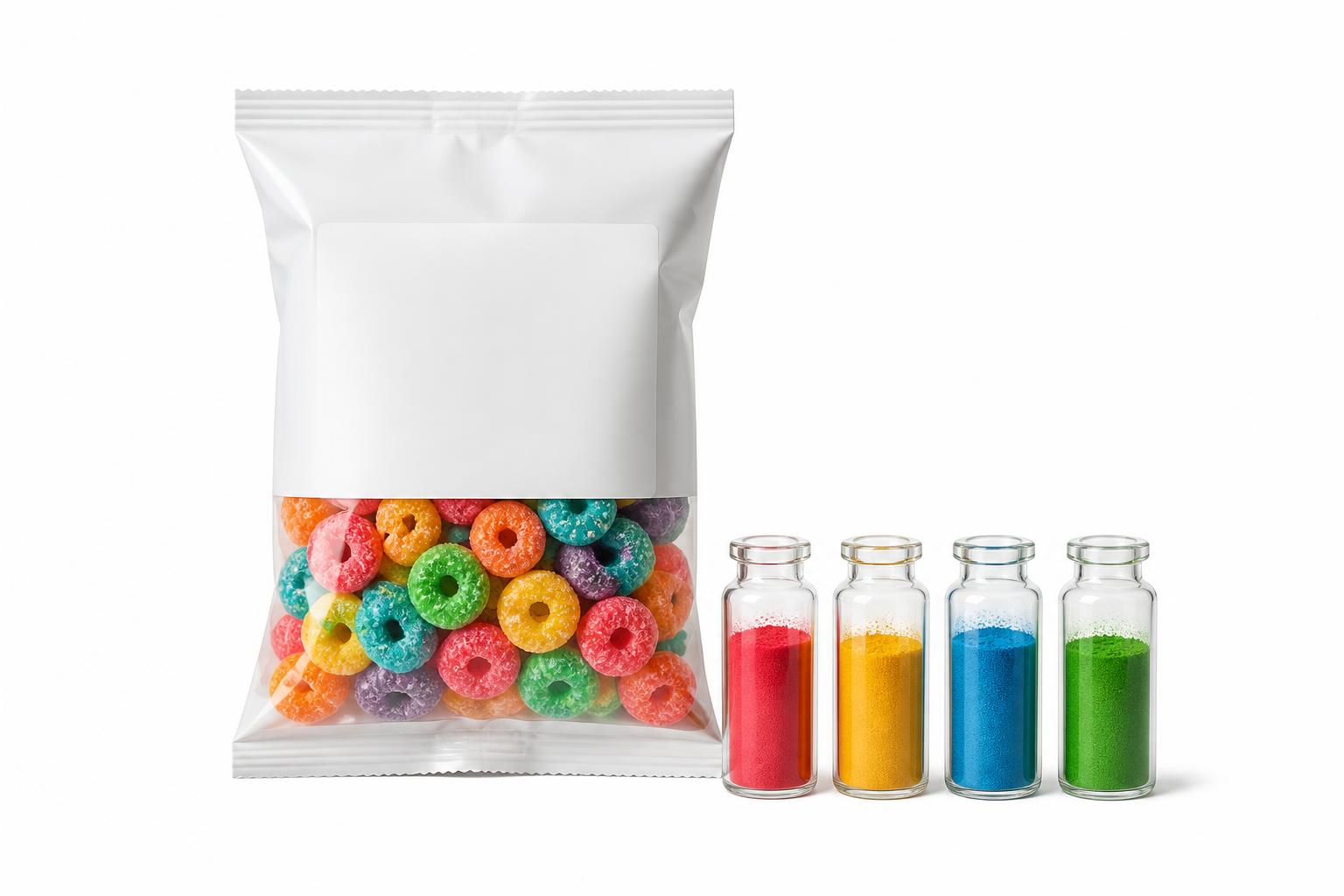
This one moved from review to action. The FDA revoked authorization for Red No. 3 in early 2024 in food and ingested drugs, citing a high-dose animal study linking it to cancer in male rats. Manufacturers have until 2027 to reformulate. You may still find it in maraschino cherries, certain fruit cocktails, and some candy products on store shelves right now. Reading the label is still necessary.
Brominated vegetable oil (BVO)
BVO was used for decades in citrus-flavored sodas to keep flavor evenly distributed. The FDA revoked its authorization in 2024 after studies raised concerns about potential thyroid and neurological effects. PepsiCo and Coca-Cola had already reformulated most products, but smaller regional brands may still be transitioning. Check ingredient labels on store-brand citrus sodas, especially at Costco or club stores where older inventory can linger.
Propylparaben
A preservative found in some tortillas, pastries, and packaged baked goods, propylparaben is an endocrine-disrupting compound of concern according to several researchers. The FDA has received formal petitions to restrict it. The European Union restricts its use in food. In the US, it remains on the GRAS list, but it is one of the food additives being reviewed most closely by advocacy groups in 2026.
Potassium bromate
Used as a flour improver in some bread and baked goods, potassium bromate has been banned in the EU, Canada, and several other countries due to evidence of carcinogenicity in animal studies. California passed a law in 2023 restricting it, and there is growing federal-level pressure to revisit its GRAS status. It does not always survive baking, but residual amounts can remain. Bread from in-store bakeries and some commercial sandwich loaves are common sources.
Why the 2026 watchlist matters for grocery shoppers
The broader context here is a shift in how Americans think about chemicals in the food supply. Growing consumer interest in cleaner labels, combined with search trends around topics like seed oils, ultra-processed foods, and ingredients banned in Europe but allowed in the US, has pushed the FDA to be more transparent about its review pipeline.
A 2023 study published in Public Health Nutrition found that ultra-processed foods make up nearly 60 percent of caloric intake for US adults, which has intensified scrutiny of the additives that make those products shelf-stable, visually appealing, and hyper-palatable.
It is worth noting that "under review" does not mean "proven harmful." Many additives have been used safely for decades. The concern is that the original safety data is often decades old, and the FDA's GRAS process has historically not required independent verification. The Government Accountability Office flagged this gap in a 2022 report, recommending the FDA strengthen its oversight of food ingredient safety.
How to read a label when you are not sure
You do not need a chemistry degree to shop smarter. A few practical habits help:
- Look for E-numbers or chemical names in the ingredient list. Titanium dioxide, potassium bromate, and propylparaben are spelled out in full on US labels.
- Check the order of ingredients. Additives listed near the end are present in smaller amounts, but frequency across multiple products in your cart adds up.
- Compare store brands to name brands. Whole Foods 365 and Trader Joe's house brands often avoid several of the additives on this watchlist, but not always. Verify rather than assume.
- Focus on product categories with higher additive loads: packaged bread, flavored drinks, candy, frosting, processed snack cakes, and shelf-stable tortillas.
If you are shopping at Costco and buying in bulk, the stakes are higher. A product your family eats in large quantities every week deserves a closer look than something you buy occasionally.
The bottom line
The FDA review process is slow by design, meant to weigh evidence carefully before restricting substances that affect an enormous food supply. That is not inherently bad. But it does mean that shoppers who want to stay ahead of the science need to track the FDA food chemicals under review themselves, rather than waiting for a headline.
The 2026 watchlist is not a reason to panic or overhaul your entire pantry overnight. It is a reason to read labels more deliberately, understand which product categories carry the most exposure, and make incremental swaps where they make sense for your family.
If you want a faster way to do that at the grocery store, Osana lets you scan any barcode or ingredient label and instantly see which additives are flagged, restricted in other countries, or currently under review, so you can make a confident choice before the product goes in your cart.
Frequently asked questions
What does it mean when an FDA food additive is "under review"?
It means the FDA is re-evaluating whether existing safety data still supports the additive's continued use. It does not mean the ingredient is banned or proven harmful. The review may result in no change, new restrictions, or a full revocation of authorization.
Is Red Dye No. 3 still in food I can buy today?
Yes. The FDA revoked its authorization in early 2024, but manufacturers have until January 2027 to remove it from products. You may still find it in maraschino cherries, some candies, and certain processed foods currently on shelves.
Why are some additives banned in Europe but still allowed in the US?
The EU and US use different regulatory frameworks. The EU applies a more precautionary approach, restricting substances when evidence of potential harm exists even without certainty. The FDA generally requires stronger evidence of harm before acting. Neither system is perfect.
Should I avoid all products with additives?
Not necessarily. Many additives have strong safety records. The goal is to be informed about which ones carry more uncertainty, especially for children or people who consume them frequently across multiple products.
How often does the FDA update its list of approved food additives?
The FDA reviews additives on a rolling basis in response to new research, petitions from health organizations, or internal safety assessments. There is no fixed annual update, which is why staying current requires following FDA announcements directly at fda.gov.
What product categories should I check first if I am concerned about these additives?
Prioritize packaged bread and baked goods, flavored sodas and drinks, candy and frosting, shelf-stable tortillas, and processed snack cakes. These categories have historically had higher concentrations of the additives currently under scrutiny.

Choose cleaner swaps before they land in your cart.
Use Osana at Whole Foods, Trader Joe's, Target, Costco, or Walmart to compare labels faster and shop with more confidence.