Titanium dioxide in food: what shoppers need to know
 By Clement7 min read
Find the controversial ingredients already in your kitchen.
Scan packaged foods at home, understand ingredients, and find healthier alternatives in seconds.




 Scan with Osana
What is titanium dioxide in food?
Titanium dioxide is a white pigment added to food to make it look brighter, whiter, or more opaque. It does not add flavor or nutrition. In the US, it appears on ingredient labels as titanium dioxide and in Europe it was formerly listed as E171 food additive. You have almost certainly eaten it without realizing it, because it hides in products that look perfectly ordinary on the shelf.
Where you will actually find it at the grocery store
Titanium dioxide shows up in a surprisingly wide range of everyday products. The categories where it appears most often include:
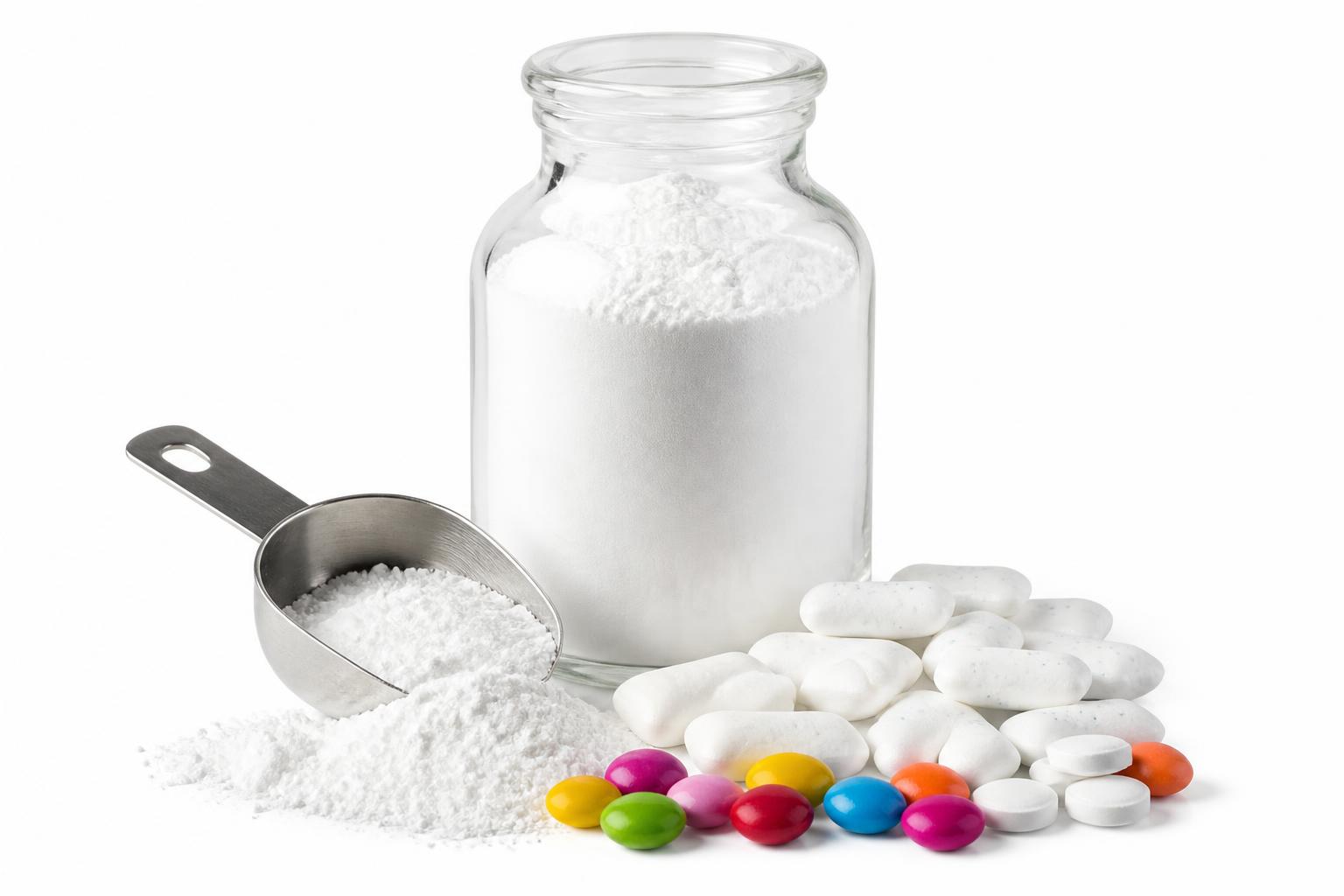
- Candy and coated confections - white-coated chocolates, chewing gum shells, and sprinkles. Skittles, Starburst, and similar products have historically used it for their bright coatings.
- Powdered sugar and frosting mixes - it prevents clumping and boosts whiteness.
- Salad dressings and sauces - especially ranch, Caesar, and creamy white dressings where a clean white color is commercially desirable.
- Dairy-style products - some non-dairy creamers and flavored yogurts use it to mimic the opacity of whole milk.
- Supplements and medications - many white capsule coatings and tablet coatings contain it, though this falls outside food labeling rules.
If you shop at Walmart, Target, or a conventional grocery chain, you are more likely to encounter it than at Whole Foods or Trader Joe's, where many house-brand products have already removed it. That said, removal is not universal even at natural-leaning retailers, so reading the label still matters.
Is titanium dioxide banned in Europe?
Yes. The European Food Safety Authority (EFSA) concluded in 2021 that E171 could no longer be considered safe as a food additive, primarily because the available data could not rule out genotoxicity from titanium dioxide nanoparticles. France had already implemented a national ban in 2020. The European Union formally banned E171 in food products starting in August 2022, giving manufacturers a short transition window.
You can read the EFSA scientific opinion directly at efsa.europa.eu.
The core concern is not titanium dioxide as a bulk material. It is the nanoscale particles that can form during manufacturing. At that size, particles may behave differently in the body, and some animal studies suggested potential DNA damage, though human evidence remains limited and debated.
What does the FDA say in the United States?
In the US, titanium dioxide remains an approved food additive under FDA regulations, permitted at levels not exceeding 1 percent of the food's weight. The FDA has not issued a ban or a formal safety reassessment specifically for titanium dioxide nanoparticles in food as of 2025.
This regulatory gap is exactly the kind of discrepancy that drives consumer concern. Interest in ingredients that are restricted in Europe but still allowed in the US has grown significantly, fueled partly by broader conversations around food policy and transparency. Whether or not a ban is warranted, it is reasonable for shoppers to want to know what they are buying.
For context on how the FDA evaluates color additives and food ingredients, see the FDA color additives overview.
What does the research actually say about health risks?
The honest answer is: the picture is incomplete. Here is a fair summary of where the science stands:
- Several animal studies have shown that high doses of titanium dioxide nanoparticles can cause inflammation in the gut and, in some models, DNA strand breaks. A frequently cited review published in Particle and Fibre Toxicology outlines these mechanisms.
- Human epidemiological data specifically linking dietary titanium dioxide to disease outcomes is limited. Controlled human studies at realistic dietary exposure levels are scarce.
- EFSA's precautionary conclusion was based on the inability to establish a safe threshold, not on confirmed harm in humans.
- Some researchers argue that exposure levels from food are far below doses used in animal studies and that risk is overstated.
This is not a case of settled science on either side. It is a case where precaution is reasonable, especially for children who eat more candy and processed snacks per body weight than adults.
How to spot it on a US food label
Under FDA rules, titanium dioxide must be listed by name in the ingredient list when it is used as a color additive. It will not be hidden under a vague term like "artificial color" in most cases. Here is a practical approach when you are standing in the aisle:
- Flip the package and go straight to the ingredient list, not the nutrition facts panel.
- Scan for "titanium dioxide" - it is almost always near the end of the list alongside other additives.
- Check coated candies, white-frosted items, and creamy dressings first. These are the highest-probability categories.
- Compare store brands versus name brands. Reformulations happen frequently, and a product you bought last year may have a different formula today.
A simple rule for families: if a food is bright white and heavily processed, it is worth a quick ingredient check.
Cleaner alternatives and practical swaps
Avoiding titanium dioxide does not require a major lifestyle overhaul. A few practical swaps:
- Choose dark chocolate or plain chocolate-covered options instead of brightly coated candy.
- Make homemade ranch dressing with Greek yogurt, herbs, and lemon - it takes five minutes and skips multiple additives at once.
- For powdered sugar needs, look for brands that list only "sugar" or "sugar, cornstarch" in the ingredients.
- When buying gum, brands like Simply Gum and some Trader Joe's house-brand options have removed titanium dioxide from their formulas.
Conclusion
Titanium dioxide in food is a legitimate ingredient to be aware of, particularly for families with young children who eat a lot of candy and processed snacks. The EU ban reflects a precautionary stance where regulators decided the data was not reassuring enough, while the FDA has not yet reached the same conclusion. Neither position is irrational. As a shopper, you do not need to panic, but you do have every right to know what is in your food and make your own call. If you want to stop squinting at tiny ingredient lists in the middle of a grocery aisle, the Osana app lets you scan any barcode or ingredient label and instantly flags additives like titanium dioxide so you can decide in seconds.
Frequently asked questions
Is titanium dioxide in food dangerous?
Current human evidence does not confirm harm at typical dietary exposure levels. However, EFSA determined in 2021 that a safe threshold could not be established, which led to the EU ban. Many researchers recommend a precautionary approach, especially for children.
What foods contain titanium dioxide in the US?
Common sources include coated candy, chewing gum, powdered sugar, white frostings, ranch and Caesar dressings, non-dairy creamers, and some supplement capsules. It appears on the ingredient label as "titanium dioxide."
Why is titanium dioxide banned in Europe but not the US?
EFSA concluded in 2021 that nanoparticles in E171 could not be ruled out as genotoxic, leading to an EU-wide ban in 2022. The FDA has not conducted a comparable reassessment and still permits it at up to 1 percent of food weight.
Does titanium dioxide in candy affect kids more than adults?
Children generally consume more candy and coated sweets per kilogram of body weight than adults, which means their relative exposure is higher. This is one reason many pediatric nutrition experts suggest limiting heavily processed, brightly coated confections.
How do I avoid titanium dioxide at the grocery store?
Check the ingredient list on coated candies, gums, white-frosted baked goods, and creamy dressings. The ingredient must be listed by name under FDA rules. Choosing minimally processed foods and making sauces from scratch are the most reliable ways to avoid it.
Has the FDA reviewed titanium dioxide recently?
As of 2025, the FDA has not issued a formal safety reassessment or proposed rule change specifically for titanium dioxide in food. Broader FDA reviews of food additives are ongoing, and consumer advocacy groups have petitioned for updated reviews of several legacy-approved additives.

Choose cleaner swaps before they land in your cart.
Use Osana at Whole Foods, Trader Joe's, Target, Costco, or Walmart to compare labels faster and shop with more confidence.