Nutrition Facts label explained: a practical US guide
 By Clement7 min read
Find the controversial ingredients already in your kitchen.
Scan packaged foods at home, understand ingredients, and find healthier alternatives in seconds.




 Scan with Osana
What the Nutrition Facts label actually tells you
The Nutrition Facts label is a federally standardized panel required on most packaged foods sold in the United States. It tells you the calorie count, macronutrient breakdown, and key micronutrients per serving, based on rules set by the FDA's current Nutrition Facts label regulations. Understanding how to read it takes about five minutes, and it can change every grocery run you make.
This guide covers the US label only. If you also want to decode the ingredient list below the panel, including additives, preservatives, and ultra-processed markers, see our full guide to reading food ingredient labels.
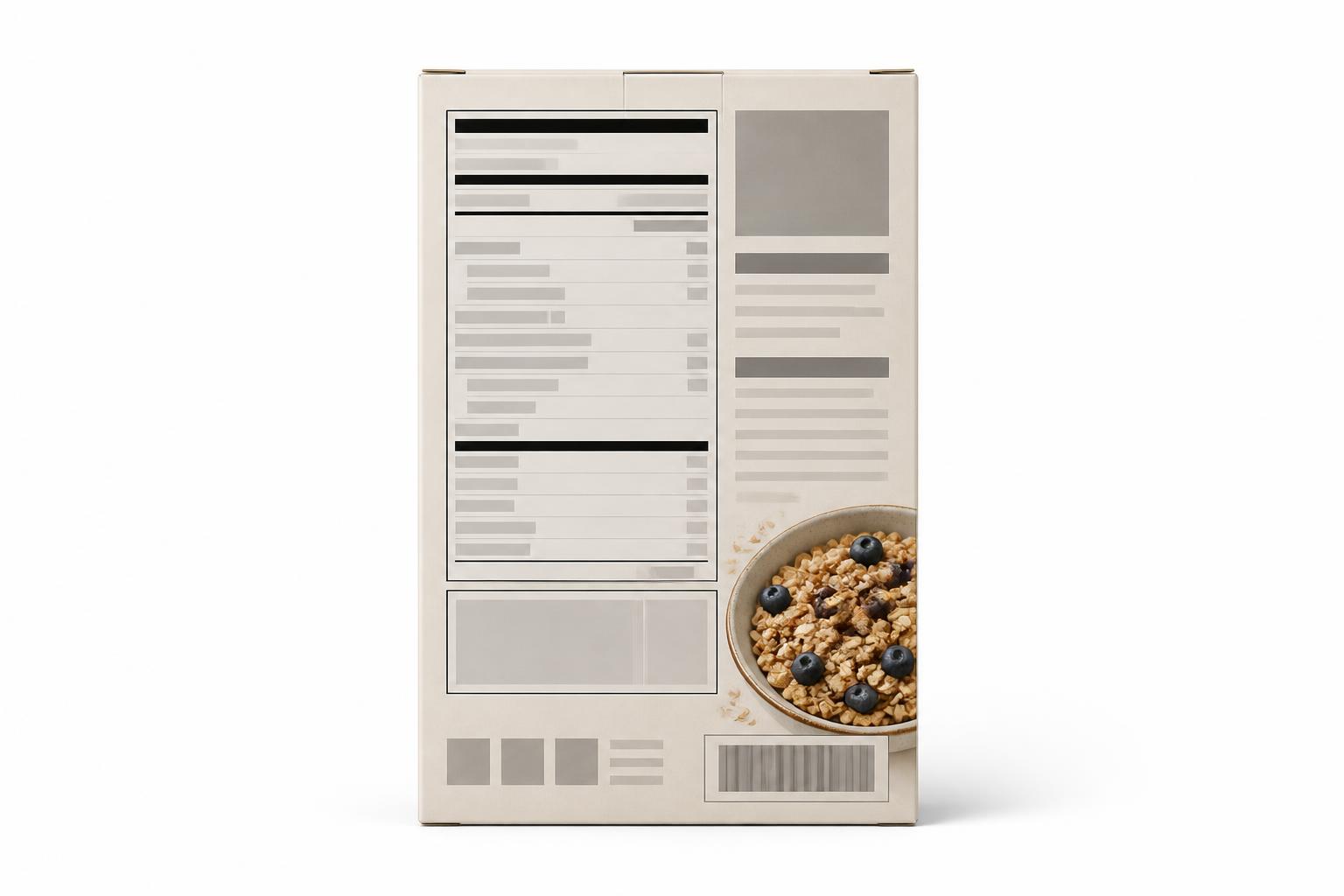
Serving size: the number that changes everything
The very first line after the bold "Nutrition Facts" header is the serving size. Every number on the rest of the panel is based on this amount, not the whole package.
This is where labels can mislead you without technically lying. A bag of chips might list 140 calories per serving, but the bag contains 3.5 servings. Eat the whole bag and you have consumed 490 calories.
The FDA updated serving size rules in 2016 to reflect amounts people actually eat. For example, a 20 oz soda is now one serving, not 2.5. Still, always check this line first and multiply everything else if you eat more than one serving.
Practical tip: For items like crackers, cereal, or trail mix that are easy to over-pour, weigh a serving once on a kitchen scale. The visual portion is almost always smaller than you expect.
Calories: the headline number
Calories appear in large bold type directly below serving size. The FDA made this change in the 2016 update to make the number harder to miss.
Calories measure total energy from fat, carbohydrates, and protein combined. They do not tell you anything about ingredient quality, processing level, or additive load. A 200-calorie snack bar made with whole oats and dates is nutritionally very different from a 200-calorie bar built on refined flour, added sugars, and emulsifiers, even though the label looks identical at a glance.
The nutrients section: what to limit and what to get enough of
The FDA organizes nutrients into two groups.
Nutrients to limit
- Saturated fat - listed in grams and as a % Daily Value. The Dietary Guidelines for Americans recommend keeping this below 10% of total daily calories.
- Trans fat - must be listed separately. The FDA banned partially hydrogenated oils in 2018, so most products now show 0g, but trace amounts under 0.5g per serving can still round to zero.
- Sodium - one of the most important lines for families eating a lot of packaged food. A single serving of canned soup can carry 40% or more of the daily recommended limit of 2,300mg.
- Added sugars - a newer required line since the 2016 update. This separates sugars added during manufacturing from sugars that occur naturally in fruit or dairy. The American Heart Association recommends no more than 25g of added sugars per day for women and 36g for men.
Nutrients to get enough of
- Dietary fiber - most Americans fall short of the 28g daily target. High-fiber foods (5g or more per serving) support digestive health and satiety.
- Vitamin D, calcium, iron, and potassium - these four are required on the label because Americans are commonly low in them.
Percent Daily Value: a quick-reference tool
The % Daily Value (%DV) column on the right side of the panel is based on a 2,000-calorie daily diet. It gives you a fast benchmark:
- 5% DV or less = low in that nutrient
- 20% DV or more = high in that nutrient
Use this as a directional guide, not a precise target. A 2,000-calorie baseline does not fit every person, but the scale still works for comparison shopping. If you are choosing between two yogurts, the one with 8% DV sodium versus 18% DV sodium is meaningfully lower regardless of your personal calorie needs.
Total fat vs. the types of fat
Total fat is broken down into saturated fat, trans fat, and sometimes monounsaturated and polyunsaturated fats. Polyunsaturated and monounsaturated fats are not required to be listed but manufacturers may include them voluntarily.
Note that the Nutrition Facts panel does not identify which specific oils were used. To see whether a product contains canola oil, soybean oil, or sunflower oil, you need to check the ingredient list below the panel. If you are actively trying to reduce seed oil intake, the ingredient list is where that information lives, not the fat breakdown on the panel.
Total carbohydrates, fiber, and sugars
Total carbohydrates include dietary fiber, total sugars, and added sugars as sub-lines. The math works like this: subtract fiber from total carbs to get a rough sense of net digestible carbohydrates.
Added sugars deserve special attention. The label might show 12g total sugars on a flavored oat milk, but if 10g of those are added sugars, that product is closer to a sweetened beverage than a plain milk alternative.
Protein
Protein is listed in grams but does not have a required %DV. The general guidance from the NIH Office of Dietary Supplements is roughly 0.8g per kilogram of body weight for sedentary adults, though active individuals and older adults often benefit from more.
For snacks and meal replacements, comparing protein per serving across products is one of the most practical uses of the panel. Our guide to high-protein snacks at US grocery stores walks through specific products worth knowing.
What the Nutrition Facts label does not tell you
The panel answers calorie and macronutrient questions well. It does not tell you:
- Whether the product contains artificial dyes, preservatives, or emulsifiers
- Whether ingredients are ultra-processed
- Whether any additives are restricted in other countries
- The quality or source of the ingredients listed
For those questions, the ingredient list is your next stop. And if decoding a 40-word ingredient list in a grocery aisle sounds exhausting, that is exactly the problem a food scanner app is built to solve.
Conclusion
The Nutrition Facts label is a standardized, reliable tool for comparing calories, macros, sodium, fiber, and added sugars across products. Read the serving size first, use %DV as a quick benchmark, and pay close attention to added sugars and sodium, the two nutrients most Americans consistently over-consume. For everything the panel does not cover, including additives and processing level, move to the ingredient list. If you want a faster way to do all of this in the grocery aisle, Osana lets you scan any barcode and get an instant breakdown of both the nutrition panel and the ingredient list, including additive flags and ultra-processed food warnings.
Frequently asked questions
What is the difference between total sugars and added sugars on the label?
Total sugars includes both naturally occurring sugars (like those in fruit or plain dairy) and sugars added during manufacturing. Added sugars is the sub-line that shows only what was added. For health purposes, added sugars is the more meaningful number to watch.
Why does the serving size matter so much?
Every number on the Nutrition Facts panel is calculated per serving, not per package. If you eat two servings, you double the calories, sodium, and sugar. Always check the serving size before reading any other number.
What does % Daily Value mean?
It shows how much one serving contributes to a standard 2,000-calorie daily diet. Use 5% as a low benchmark and 20% as a high benchmark for any nutrient.
Does the Nutrition Facts label show all the ingredients?
No. The panel covers nutrients only. The ingredient list is a separate section printed below or beside the panel and is the only place where specific additives, preservatives, oils, and flavorings are disclosed.
Is the US Nutrition Facts label different from labels in other countries?
Yes. The US label is governed by FDA rules and uses %DV based on a 2,000-calorie diet. European labels use a 100g or 100ml reference amount and a traffic-light color system in some countries. Formatting, required nutrients, and thresholds differ across regions.
How often does the FDA update the Nutrition Facts label?
The most recent major update took effect in 2020 for large manufacturers and 2021 for smaller ones. Changes included larger calorie text, the new added sugars line, updated %DV for several nutrients, and revised serving sizes based on current eating patterns.
Choose cleaner swaps before they land in your cart.
Use Osana at Whole Foods, Trader Joe's, Target, Costco, or Walmart to compare labels faster and shop with more confidence.