BHA and BHT in food: what US shoppers need to know
 By Clement7 min read
Find the controversial ingredients already in your kitchen.
Scan packaged foods at home, understand ingredients, and find healthier alternatives in seconds.




 Scan with Osana
What are BHA and BHT in food?
BHA (butylated hydroxyanisole) and BHT (butylated hydroxytoluene) are synthetic antioxidant preservatives added to food to slow the oxidation of fats and oils. In plain terms, they stop food from going rancid and extend shelf life. You will find them listed by name on ingredient labels, often at the very end of a long list, sometimes with the note "to preserve freshness."
They are not coloring agents or flavor enhancers. Their job is purely preservation, which is why this article focuses on their specific role as antioxidant preservatives rather than on food dyes or other additive categories.
Where are BHA and BHT commonly found?
These two preservatives show up across a wide range of everyday grocery items in the United States:
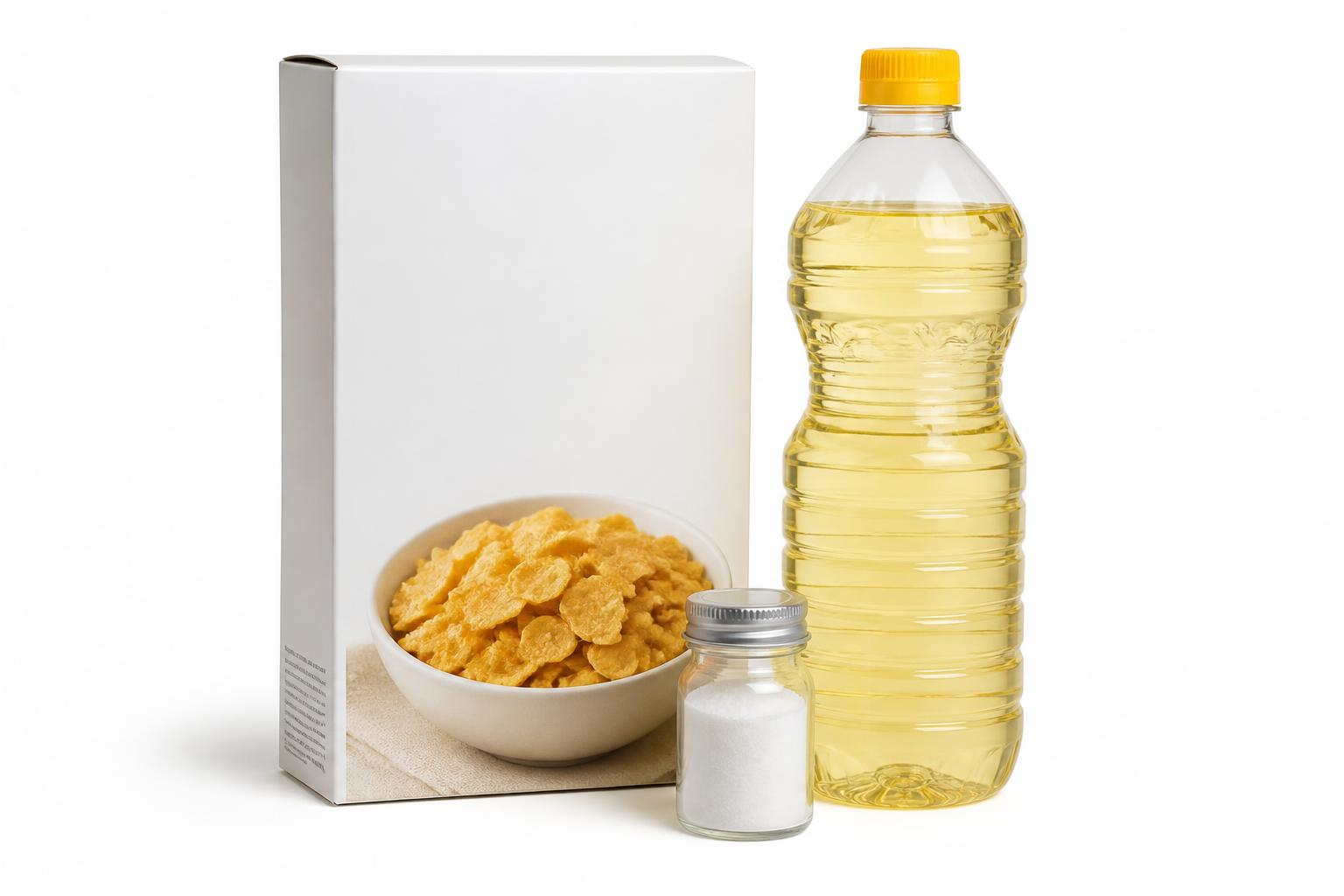
- Breakfast cereals - brands like Rice Krispies and Corn Flakes have historically used BHT as a preservative in the cereal itself or added to the packaging liner
- Snack crackers and chips - many shelf-stable savory snacks use one or both to protect their fat content
- Chewing gum - BHT appears frequently in gum ingredient lists
- Instant noodles and ramen - the fat in the noodle block is a common target for oxidation
- Vegetable oils and shortenings - especially those sold in bulk or intended for long storage
- Meat products - some processed sausages and dried meats use BHA as a BHA preservative to extend shelf life
- Cosmetics and food packaging - BHT is also used in packaging materials, which means it can migrate into food even when not listed as a direct ingredient
If you shop at Walmart or Costco and buy large-format boxes of cereal or multipacks of crackers, these are the categories worth checking first.
What does the science say?
The safety picture for BHA and BHT is genuinely mixed, and it is worth being honest about that complexity.
The FDA currently classifies both BHA and BHT as GRAS (Generally Recognized as Safe) at the low concentrations used in food. The National Toxicology Program (NTP) listed BHA as "reasonably anticipated to be a human carcinogen" based on animal studies, but the doses used in those studies were far higher than typical dietary exposure. Human epidemiological evidence remains inconclusive.
BHT has a somewhat cleaner research record than BHA, though some animal studies have raised questions about thyroid and hormonal effects at high doses. A 2021 review published in Food and Chemical Toxicology noted that current dietary exposure levels are likely well below thresholds of concern for most people, while calling for updated risk assessments given how old much of the foundational safety data is.
The key phrase is "at current dietary exposure levels." The concern many shoppers have is cumulative exposure across multiple products eaten daily, especially for children who eat cereal, crackers, and snacks in larger quantities relative to their body weight.
How does the US compare to other countries?
This is where the regulatory gap becomes relevant. The European Union does not ban BHA and BHT outright, but it restricts them more tightly than the US does. The European Food Safety Authority (EFSA) has set lower acceptable daily intake (ADI) values for BHA in particular, and BHA is not permitted in infant formula or baby foods in the EU.
The US has not updated its formal safety review for these additives in decades. Growing consumer interest in cleaner labels, accelerated by conversations around food policy reform, has pushed several major brands to voluntarily reformulate. Post Consumer Brands removed BHT from some cereals. Kellogg's reformulated certain products for the European market but not always for the US version of the same product.
This kind of dual-standard reformulation is exactly what frustrates shoppers who believe US food regulation can lag behind Europe on certain additives. It is also why reading labels matters even for familiar brands, because the US and EU versions of the same cereal box can have different ingredient lists.
For context on how the FDA is approaching additive reviews more broadly, see US food additives under FDA review: what to watch in 2026.
How to spot BHA and BHT on a label
Both must be declared by name when added directly to food. Look for:
- "BHA" or "butylated hydroxyanisole"
- "BHT" or "butylated hydroxytoluene"
- The phrase "to preserve freshness" or "added to packaging material to preserve product freshness" - this second phrase is a signal that BHT may be in the liner even if not in the food itself
They are almost always near the end of the ingredient list because they are used in very small amounts. Preservatives in cereal are a particularly common hiding spot, so check both the cereal ingredients and any note about the bag or liner.
Natural alternatives you may see instead include mixed tocopherols (a form of vitamin E), rosemary extract, and ascorbic acid. These signal a brand has chosen to reformulate away from synthetic antioxidants.
If you are also watching for synthetic dyes in the same products, artificial food dyes in kids snacks covers that overlapping concern in more detail.
Practical tips for grocery shopping
- Check cereals first - this is the highest-frequency exposure category for families with kids
- Compare store brands to name brands - some store brands at Target or Trader Joe's have already removed BHT where national brands have not
- Look at the packaging note - "added to packaging" means BHT contact even without a direct food listing
- Prioritize reformulated options - brands that list mixed tocopherols have made a deliberate choice to move away from synthetic preservatives
- Do not panic about a single serving - the concern is habitual, daily exposure across multiple products, not one bowl of cereal
Conclusion
BHA and BHT are legal, widely used preservatives in the US food supply. The science does not support alarm about occasional exposure, but it does support reading labels carefully if you are eating products that contain them every day, especially for children. The regulatory gap between the US and EU is real, and voluntary brand reformulation is already underway for some products. Knowing what to look for puts the choice back in your hands.
If you want to skip the label-decoding at the store, Osana lets you scan any barcode or ingredient list and instantly flags BHA, BHT, and other additives worth knowing about.
Frequently asked questions
Is BHA or BHT worse for you?
BHA has a more concerning regulatory profile than BHT. The US National Toxicology Program lists BHA as reasonably anticipated to be a human carcinogen based on animal studies, while BHT does not carry the same classification. That said, both are used at very low levels in food, and current human evidence is not conclusive for either.
Are BHA and BHT banned in Europe?
No, they are not fully banned in the EU, but they are more tightly restricted than in the US. BHA in particular has a lower acceptable daily intake in Europe, and neither is permitted in foods for infants and young children.
Which cereals still contain BHT?
Some Kellogg's and General Mills products have historically contained BHT, though formulations change. Always check the current ingredient list on the box rather than relying on older information, because brands reformulate without announcement.
Can BHT be in food packaging without being listed as an ingredient?
Yes. When BHT is added to packaging material rather than directly to food, brands may note it as "added to packaging to preserve freshness" rather than listing it in the ingredient panel. It can still migrate into the food.
What are natural alternatives to BHA and BHT?
Common natural alternatives include mixed tocopherols (vitamin E), rosemary extract, and ascorbic acid (vitamin C). These are functionally similar antioxidants and are generally considered cleaner label options.
Should I throw out everything in my pantry that contains BHT?
That is not necessary. The evidence suggests concern is most relevant for daily, habitual exposure across multiple products rather than occasional consumption. Prioritizing reformulation for the highest-frequency items in your diet, like breakfast cereal, is a reasonable and proportionate approach.
Get the cleaner swaps list before your next grocery run.
One short email a week: new label checks and better-for-you products we actually tested.
No spam. Unsubscribe anytime.

Choose cleaner swaps before they land in your cart.
Use Osana at Whole Foods, Trader Joe's, Target, Costco, or Walmart to compare labels faster and shop with more confidence.