Artificial food dyes in kids snacks: what parents should know
 By Clement7 min read
Find the controversial ingredients already in your kitchen.
Scan packaged foods at home, understand ingredients, and find healthier alternatives in seconds.



 Scan with Osana
Artificial food dyes in kids snacks: the basics
Artificial food dyes show up in dozens of popular kids snacks sold at Target, Walmart, and Costco, from gummy bears and fruit snacks to cheese-flavored crackers and frosted cereals. These synthetic color additives are approved by the FDA, but a growing body of research and increasing consumer interest have prompted many parents to take a closer look at ingredient labels before buying. Understanding what these dyes are, where they hide, and what the science actually says can help you make more confident choices at the grocery store.
Why snacks with artificial colors are so common
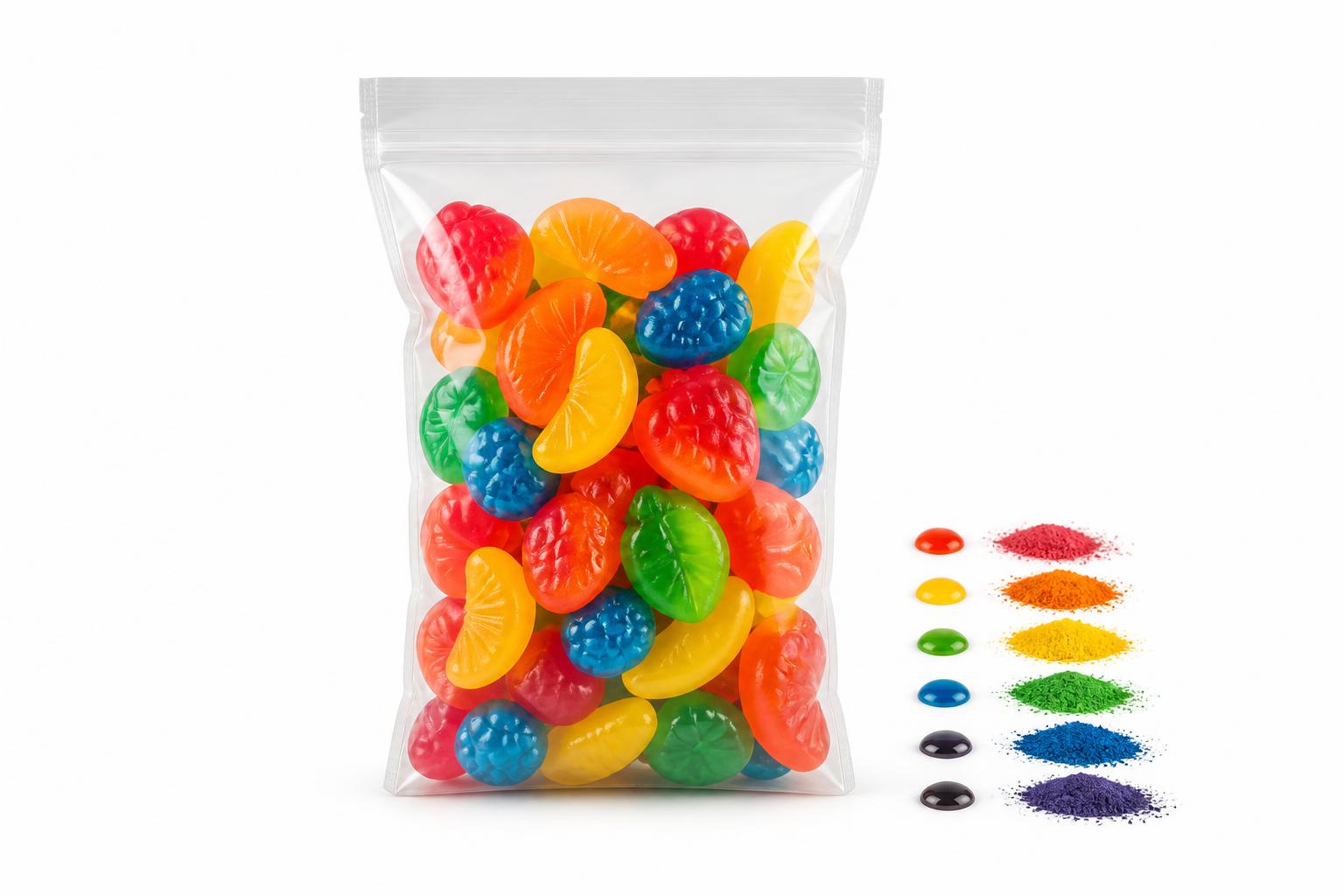
Food manufacturers use synthetic dyes because they are cheap, stable, and produce bright, consistent colors that appeal to children. Natural colorings like beet juice or turmeric can fade, bleed, or vary in shade from batch to batch. Artificial dyes solve that problem reliably, which is why they remain a staple in the kids snack aisle.
Common product categories where you will find artificial colors include:
- Gummy and chewy fruit snacks (Mott's Fruit Snacks, Welch's Fruit Snacks)
- Flavored crackers and chips (Cheez-It Snap'd, Doritos)
- Breakfast cereals (Froot Loops, Trix, Lucky Charms)
- Frosted or decorated cookies and cakes (Oreo Cakesters with colored filling, packaged birthday cakes)
- Powdered drink mixes and juice pouches (Kool-Aid, Capri Sun Roarin' Waters)
- Candy and chocolate-coated snacks (M&Ms, Skittles)
The dyes most commonly found in these products include Red 40, Yellow 5, Yellow 6, Blue 1, and Red 3. They appear on ingredient labels by name, so they are technically visible, but they are easy to overlook when you are reading quickly in the snack aisle.
What the research says about food dyes and children
The relationship between food dyes and children's behavior has been studied for decades, and the evidence is genuinely mixed. The most cited research is a 2007 study published in The Lancet, which found that a mixture of artificial colors and the preservative sodium benzoate was associated with increased hyperactivity in children from the general population, not just those with ADHD. That study prompted the European Food Safety Authority to conduct a full review and ultimately led the EU to require a warning label on foods containing six specific synthetic dyes, stating that the product "may have an adverse effect on activity and attention in children."
In the United States, the FDA reviewed the same evidence and concluded it did not establish a causal link strong enough to require labeling changes, though it acknowledged that some sensitive children may react to certain dyes. The agency continues to monitor the science.
A 2012 meta-analysis in the Journal of the American Academy of Pediatrics found a statistically significant association between artificial food color consumption and increased ADHD symptoms, while also noting that effect sizes were modest and that more research was needed. The National Institutes of Health has funded additional work in this area, and interest has grown further as consumer and regulatory attention to food additives has increased in 2024 and 2025.
The honest summary: the science does not support panic, but it does support paying attention, especially for families with children who may be more sensitive.
How the US and EU approach these dyes differently
This gap is one of the most common topics in clean eating and food safety conversations online, and it is a real difference worth understanding. In the EU, foods containing certain synthetic dyes must carry a warning label. Many European manufacturers reformulated their products to use natural colorings instead, so the same brand can look different on shelves in London versus Los Angeles.
In the US, these dyes remain fully approved with no warning label requirement. That does not automatically mean they are unsafe, but it does mean the regulatory threshold for action is different. Parents who want to apply a more precautionary standard have to do that work themselves at the label level.
For a broader look at how US food additives compare to international standards, the article on US food additives under FDA review in 2026 covers the current regulatory landscape in more detail.
Reading labels for dye-free snacks
Finding dye-free snacks is easier than it used to be, but it still requires label reading. Here is a practical approach:
- Check the ingredient list, not the front of the package. Words like "naturally flavored" or "made with real fruit" on the front do not mean the product is free of synthetic dyes.
- Look for color additives by name. In the US, certified color additives must be listed by name (Red 40, Blue 1, etc.) rather than just as "artificial colors." This makes them identifiable if you know what to look for.
- Watch for "color added" on fruit-flavored products. This phrase sometimes signals synthetic dyes even when the product looks natural.
- Compare store formats. Trader Joe's and Whole Foods 365 store brands generally avoid synthetic dyes. Mainstream store brands at Walmart and Target vary widely, so checking the label matters even within the same store.
If you want to go deeper on specific dyes, the article on Red 40 in food covers the most widely used synthetic dye in the US food supply in detail.
Practical swaps for the kids snack aisle
You do not need to overhaul your pantry overnight. A few targeted swaps can meaningfully reduce your family's exposure:
- Replace dyed gummy snacks with Annie's Organic Bunny Fruit Snacks, which use plant-based colors
- Choose plain or lightly flavored crackers like Simple Mills or Mary's Gone Crackers instead of brightly colored cheese snacks
- Swap artificially colored cereals for options like Barbara's Puffins or plain Cheerios
- For candy occasions, look for brands like YumEarth, which uses natural dye alternatives
None of these swaps require a specialty store. Many are available at Target, Costco, and even mainstream Walmart shelves.
Conclusion
Artificial food dyes in kids snacks are not a hidden conspiracy, but they are also not something most parents want to ignore once they understand what the research says and how labeling works. The gap between US and EU standards is real, the science on sensitive children is worth taking seriously, and the good news is that clean alternatives are increasingly available at mainstream stores. If you want a faster way to check what is actually in the snacks in your cart, Osana lets you scan any barcode or ingredient label and instantly flag synthetic dyes, ultra-processed ingredients, and cleaner alternatives.
Frequently asked questions
Are artificial food dyes banned in the US?
No. Artificial food dyes like Red 40, Yellow 5, Yellow 6, and Blue 1 are currently approved by the FDA for use in food sold in the United States. Some dyes, like Red 3, have had specific uses restricted, but synthetic dyes as a category remain legal and widely used.
Do all kids snacks contain artificial dyes?
No. Many snacks are made without synthetic dyes, including most products from brands like Annie's, Simple Mills, and Trader Joe's store brands. The key is reading the ingredient list rather than relying on front-of-package claims.
What is the difference between artificial and natural food colors?
Artificial food colors are synthesized from petroleum-based compounds. Natural food colors come from plant, mineral, or animal sources such as beet juice, turmeric, or spirulina. Natural colors are generally considered lower-risk, though they are not always allergy-free.
Can artificial dyes cause hyperactivity in kids?
Some studies, including a widely cited 2007 Lancet study, found an association between certain artificial color mixtures and increased hyperactivity in children. The FDA has reviewed this evidence and has not required warning labels, but the EU has. Most experts suggest the effect may be more pronounced in children who are already sensitive or have ADHD.
How do I find dye-free snacks at a regular grocery store?
Look at the ingredient list and check for any color listed by name (Red 40, Yellow 5, Blue 1, etc.). Products with no listed synthetic dyes and no "color added" language are generally dye-free. Store brands at Whole Foods and Trader Joe's tend to avoid synthetic dyes more consistently than mainstream brands.
Are natural food colorings completely safe?
Natural colorings are generally considered lower-risk than synthetic dyes, but "natural" does not automatically mean allergen-free or suitable for everyone. Annatto, for example, has been linked to allergic reactions in some individuals. Reading labels carefully remains important even with naturally colored products.

Choose cleaner swaps before they land in your cart.
Use Osana at Whole Foods, Trader Joe's, Target, Costco, or Walmart to compare labels faster and shop with more confidence.