Seed oils in packaged foods: what US shoppers should know
 By Clement7 min read
Find the controversial ingredients already in your kitchen.
Scan packaged foods at home, understand ingredients, and find healthier alternatives in seconds.




 Scan with Osana
Seed oils in packaged foods: what the labels are not telling you
Seed oils in packaged foods are nearly impossible to avoid at a typical US grocery store. Canola oil, soybean oil, and sunflower oil appear in everything from salad dressings and crackers to protein bars and frozen meals. Whether these oils are a genuine health concern or simply overused is a question more shoppers are asking, and the honest answer is: the science is still evolving, but there are practical reasons to be more label-aware.
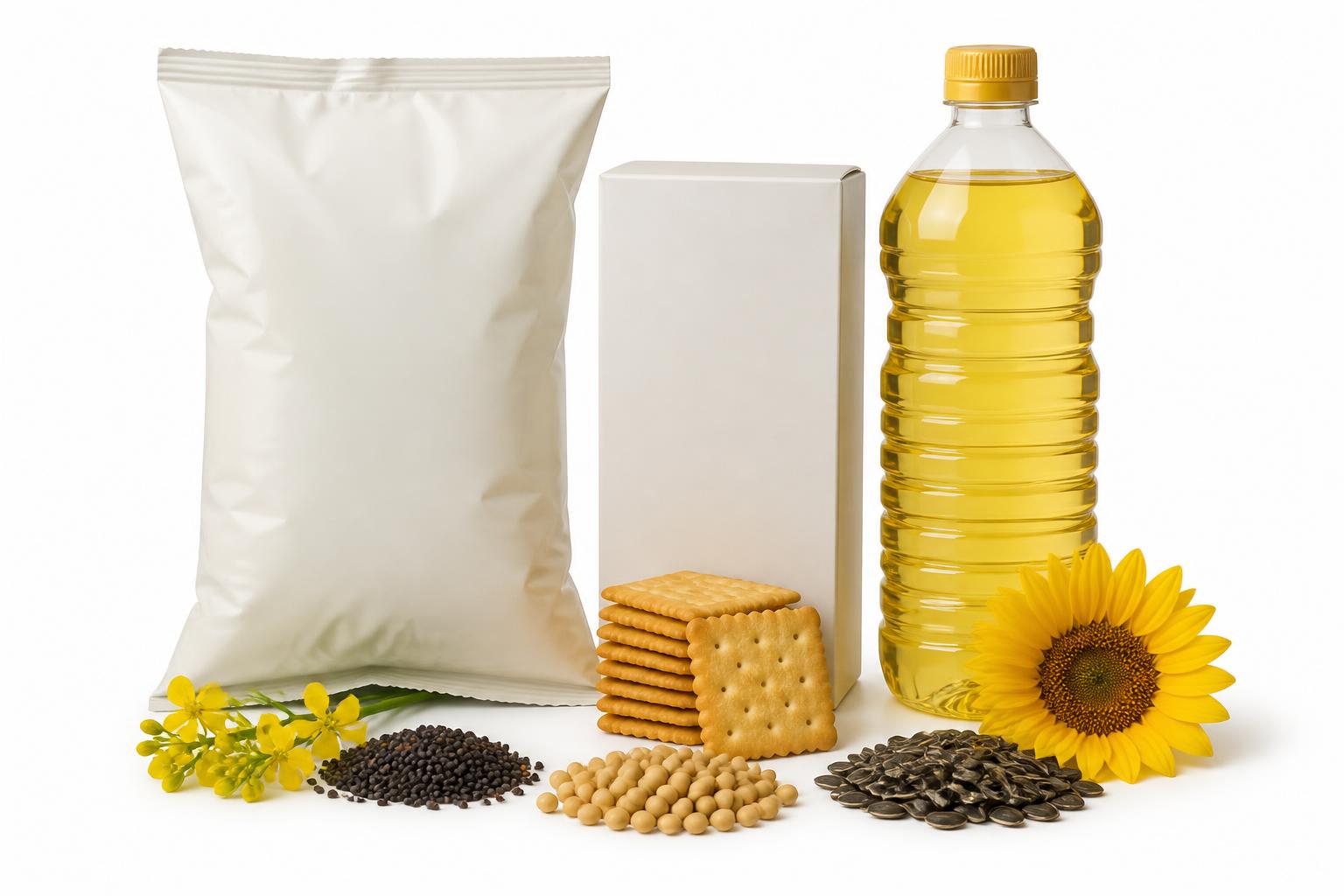
What counts as a seed oil?
The term "seed oil" refers to oils extracted from the seeds of plants, usually through high-heat industrial processing and chemical solvents like hexane. The most common ones in US packaged foods include:
- Soybean oil - the single most used oil in American food manufacturing
- Canola oil - derived from rapeseed, widely used in baked goods and snack foods
- Sunflower oil - common in chips, crackers, and "natural" snack brands
- Corn oil, cottonseed oil, safflower oil, and grapeseed oil
These oils are high in polyunsaturated fatty acids (PUFAs), particularly omega-6 linoleic acid. The concern raised by some researchers is not that omega-6 fats are inherently bad, but that the modern US diet contains a dramatically skewed ratio of omega-6 to omega-3 fatty acids, largely because seed oils are so prevalent in processed food.
What does the research actually say?
This is where it gets nuanced. Major health organizations including the American Heart Association have long recommended replacing saturated fats with polyunsaturated fats, and several large studies support that position for cardiovascular outcomes.
At the same time, a growing body of research is examining whether the high omega-6 content of seed oils, combined with their industrial processing, contributes to systemic inflammation. A 2021 review published in Nutrients noted that elevated omega-6 to omega-3 ratios are associated with pro-inflammatory markers, though the authors emphasized that dietary context matters enormously.
A separate concern involves oxidation. Seed oils are chemically unstable at high heat, and when foods are fried or baked with them at industrial scale, oxidation byproducts can form. A 2020 study in Food Chemistry found that repeatedly heated vegetable oils produce elevated levels of aldehydes, which are compounds with potential toxicity at high exposure levels.
None of this means a single bag of crackers made with canola oil is dangerous. What it does mean is that if seed oils appear in the majority of your packaged food purchases, the cumulative exposure is worth thinking about.
Where seed oils hide in your grocery cart
The tricky part is that inflammatory seed oils often appear in products marketed as healthy. Here are common hiding spots:
- Whole grain crackers and granola bars - many use sunflower or canola oil as the primary fat
- Plant-based and vegan products - soybean oil is a staple in meat alternatives and dairy-free spreads
- Bottled salad dressings - even "clean" brands at Whole Foods and Trader Joe's often use canola or sunflower oil
- Protein bars and nutrition snacks - sunflower oil appears frequently in the coating or filling
- Frozen meals and soups - soybean oil is almost universal in this category
- Bread and tortillas - canola or soybean oil is used for texture and shelf life
At stores like Costco or Walmart, bulk and store-brand products are especially likely to rely on soybean oil as the cheapest available fat. Even at Whole Foods, the 365 house brand uses canola oil in a number of its products.
How to read a label for seed oils
Under current FDA labeling rules, manufacturers are required to list every ingredient but are not required to distinguish between oil types beyond their common name. That means you need to scan the ingredient list, not just the nutrition facts panel.
Look for any of these in the first five to seven ingredients, since ingredients are listed by weight:
- Soybean oil, partially hydrogenated soybean oil
- Canola oil, expeller-pressed canola oil
- Sunflower oil, high-oleic sunflower oil
- Corn oil, cottonseed oil, vegetable oil (often a blend of the above)
"High-oleic" versions of sunflower or canola oil are chemically more stable and have a different fatty acid profile, which some researchers consider less problematic. The label will specify this if it applies.
If a product lists "vegetable oil" without specifying the source, that is almost always a blend dominated by soybean or canola oil. This is a common practice in budget and mid-tier brands.
For context on other ingredients that often appear alongside seed oils in ultra-processed foods, it is worth understanding what TBHQ is and why it appears in so many snack foods, since it is frequently used as a preservative specifically in seed-oil-heavy products. Similarly, many of the same food categories that rely on seed oils also contain BHA and BHT as antioxidant preservatives, which have their own ongoing regulatory discussions.
Practical swaps at the grocery store
If you want to reduce seed oil exposure in packaged foods, these are realistic strategies:
- Choose products that use olive oil, avocado oil, or coconut oil as the primary fat
- Look for brands that specify "expeller-pressed" or "cold-pressed" oils, which avoid chemical solvent extraction
- In the cracker and chip aisle, brands like Siete, Simple Mills, and Late July offer options made with avocado or coconut oil
- For salad dressings, Primal Kitchen uses avocado oil across most of its line
- When buying at Costco, check the Kirkland olive oil products versus the standard vegetable oil versions
None of this requires a complete pantry overhaul. Reducing the frequency of seed-oil-heavy products in your weekly shop is a reasonable starting point.
Conclusion
Seed oils in packaged foods are not a simple villain, but they are genuinely pervasive and the cumulative exposure question is legitimate. The science does not support panic, but it does support being more intentional about reading ingredient lists, especially in product categories that market themselves as healthy. Scanning labels at the store is the most direct way to know what you are actually buying. If you want a faster way to do that across your whole grocery run, Osana can scan barcodes and ingredient labels to flag seed oils and other ingredients worth knowing about.
Frequently asked questions
Are seed oils actually inflammatory?
The term "inflammatory seed oils" reflects a real scientific debate. Seed oils are high in omega-6 linoleic acid, and a high omega-6 to omega-3 ratio in the diet is associated with pro-inflammatory markers in some studies. However, major health bodies still consider polyunsaturated fats heart-healthy when they replace saturated fats. The honest answer is that research is ongoing and context matters.
Is canola oil worse than other seed oils?
Canola oil has a more balanced omega-6 to omega-3 ratio than soybean or sunflower oil, which some researchers consider an advantage. However, it is still industrially processed and widely used in ultra-processed foods. High-oleic canola oil is more heat-stable than standard canola oil.
Why is soybean oil in almost everything?
Soybean oil is the most produced and cheapest edible oil in the United States. It has a neutral flavor, a long shelf life, and works across almost every food application. That makes it the default choice for food manufacturers trying to minimize costs.
Is sunflower oil a healthier option?
Regular sunflower oil is very high in omega-6 linoleic acid. High-oleic sunflower oil has a different fatty acid profile that is more stable and closer to olive oil. If a label specifies "high-oleic sunflower oil," it is generally considered a better option than standard sunflower oil.
How do I find products without seed oils at Whole Foods or Trader Joe's?
Read the ingredient list rather than relying on front-of-pack claims. Look for olive oil, avocado oil, or coconut oil as the listed fat. Both stores carry options in most categories, but they are not the default. You will need to compare labels within the same product category.
Do seed oil concerns apply to cooking oils I buy separately, or just packaged foods?
Both, but packaged foods are where most Americans get the majority of their seed oil exposure simply because of volume. A bottle of canola oil at home that you use occasionally is a much smaller contributor than daily consumption of crackers, dressings, frozen meals, and snack bars that all contain seed oils.
Get the cleaner swaps list before your next grocery run.
One short email a week: new label checks and better-for-you products we actually tested.
No spam. Unsubscribe anytime.

Choose cleaner swaps before they land in your cart.
Use Osana at Whole Foods, Trader Joe's, Target, Costco, or Walmart to compare labels faster and shop with more confidence.