TBHQ in food: what US shoppers need to know
 By Clement6 min read
Find the controversial ingredients already in your kitchen.
Scan packaged foods at home, understand ingredients, and find healthier alternatives in seconds.




 Scan with Osana
What is TBHQ in food?
TBHQ (tertiary butylhydroquinone) is a synthetic antioxidant preservative added to foods to slow the oxidation of fats and oils, extending shelf life. You will find it listed by its full name or the abbreviation TBHQ in the ingredient panel of many packaged snacks, frozen meals, and fast food items sold across the United States.
The FDA classifies TBHQ as generally recognized as safe (GRAS) at concentrations up to 0.02 percent of the fat or oil content in a product. That sounds small, but because Americans eat a lot of fat-containing packaged food, exposure can add up across a day.
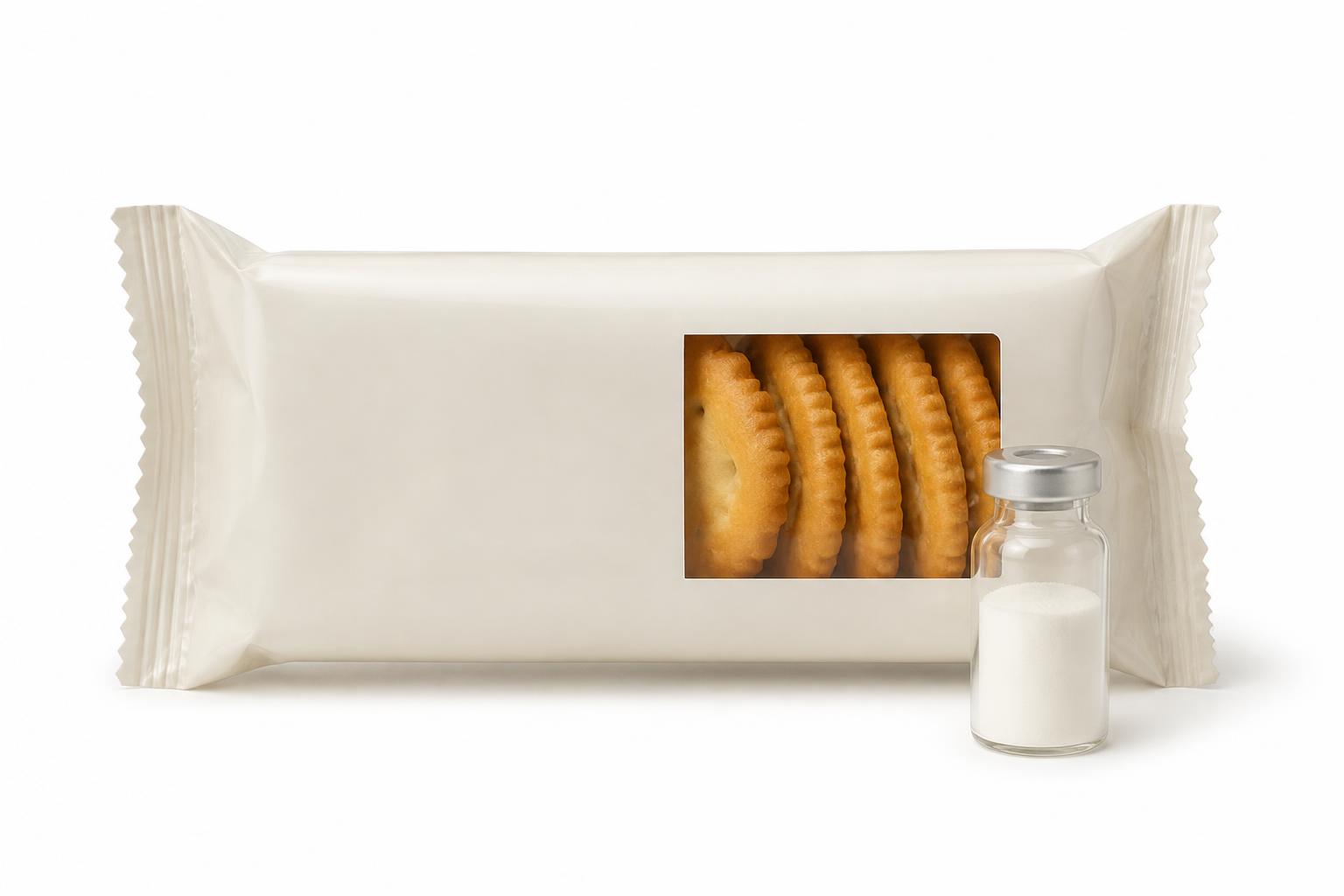
Where is TBHQ used?
As a TBHQ preservative, it shows up most often in:
- Crackers and chips such as Cheez-Its, Ritz crackers, and many store-brand equivalents
- Microwave popcorn and shelf-stable popcorn bags
- Frozen convenience foods including chicken nuggets, fish sticks, and pot pies
- Instant noodles and ramen cups
- Fast food frying oils used by some major chains
- Cooking sprays and some vegetable shortening products
- Granola bars and breakfast cereals with added oils
If you pick up a box of crackers at Target or a bag of microwave popcorn at Costco, scanning the ingredient list for TBHQ takes only a few seconds but can be easy to miss when it appears near the end of a long list.
How the US and EU treat TBHQ differently
This is where the US-versus-Europe gap that many shoppers have heard about becomes relevant. The European Union does not permit TBHQ as a food additive. The European Food Safety Authority (EFSA) reviewed the compound and declined to authorize it, citing insufficient safety data to establish an acceptable daily intake. That decision does not automatically mean TBHQ is dangerous, but it does mean the regulatory bar in the EU is higher.
In the US, the FDA has not revoked GRAS status for TBHQ, though it remains on the list of additives under ongoing scrutiny. Growing consumer interest in ingredient transparency, including conversations sparked by the MAHA movement and broader clean-label trends, has put preservatives like TBHQ under a brighter spotlight.
For comparison, similar synthetic antioxidants like BHA and BHT follow the same pattern of being permitted in the US but restricted or banned elsewhere. If you want a deeper look at that family of preservatives, see our article on BHA and BHT in food.
What does the research say?
The science on TBHQ is genuinely mixed, which is why straightforward answers are hard to find.
- Animal studies at high doses have linked TBHQ to precancerous stomach lesions in rodents, according to data reviewed by the National Toxicology Program. However, these doses far exceed typical human dietary exposure.
- A 2020 report by the Environmental Working Group flagged TBHQ as a compound of concern, particularly for immune function, citing a study published in the International Immunopharmacology journal suggesting it may interfere with immune response at relevant exposure levels.
- The FDA's current position is that TBHQ is safe at permitted levels, and no human clinical trials have established direct harm from normal dietary intake.
The honest takeaway: the evidence does not prove TBHQ is harmful at the amounts found in food, but the EU's refusal to authorize it and some emerging immune-related research are legitimate reasons for shoppers who want to minimize synthetic additives to keep an eye on it.
How to find TBHQ in snacks on grocery labels
Label reading for TBHQ in snacks is straightforward once you know what to look for. The FDA requires it to be declared by name in the ingredient list, so you will see it written out as TBHQ or tertiary butylhydroquinone. It is almost always near the end of the list, grouped with other preservatives.
Practical tips for your next grocery run:
- Check crackers and crunchy snacks first. These are the highest-frequency category for TBHQ in the US market.
- Look at frozen breaded proteins. Chicken nuggets and fish sticks often use oils preserved with TBHQ.
- Read instant noodle cups carefully. Many popular ramen and noodle cup brands include TBHQ in the seasoning oil packet or the noodle block.
- Compare store brands vs. name brands. Some Trader Joe's and Whole Foods 365 products are formulated without TBHQ, but you still need to verify label by label.
If a product simply says "antioxidants" without naming them, that is a red flag worth investigating further, though US regulations generally require specific naming for TBHQ.
Cleaner alternatives to look for
Manufacturers who want to avoid synthetic preservatives typically use mixed tocopherols (vitamin E), rosemary extract, or ascorbic acid (vitamin C) to protect oils from oxidation. These are not automatically better in every context, but they are the most common natural substitutes you will see on cleaner-label products.
When you are comparing two similar crackers or snack bags side by side, checking whether one uses tocopherols instead of TBHQ is a quick, practical way to choose the less-processed option without overhauling your entire diet.
For a broader look at how the FDA is revisiting additives like these, our overview of US food additives under FDA review in 2026 covers the regulatory landscape in more detail.
Conclusion
TBHQ is a legal, widely used preservative in American packaged food, particularly in snacks and frozen convenience items. The FDA considers it safe at current levels, but the EU's outright ban and some emerging research on immune function give health-conscious shoppers a reasonable basis for wanting to limit it. The best approach is not panic but awareness: read ingredient labels, compare products, and choose alternatives when they are readily available and similarly priced. If you want a faster way to catch TBHQ and other synthetic additives without squinting at fine print in the snack aisle, Osana lets you scan any barcode or ingredient label and instantly flags preservatives, ultra-processed ingredients, and EU-restricted additives so you can make confident choices in seconds.
Frequently asked questions
Is TBHQ banned in Europe?
Yes. The European Union does not authorize TBHQ as a food additive. EFSA reviewed the compound and found insufficient safety data to set an acceptable daily intake, so it is not permitted in EU food products.
Is TBHQ safe to eat?
The FDA classifies TBHQ as GRAS at up to 0.02 percent of fat or oil content. Most mainstream toxicology reviews have not found harm at typical dietary exposure levels, but some researchers have raised questions about immune effects and animal data at high doses.
What foods commonly contain TBHQ?
Crackers, chips, microwave popcorn, instant noodles, frozen chicken nuggets, fish sticks, and some fast food frying oils are the most common sources in the US diet.
How do I know if a product has TBHQ?
In the United States, TBHQ must be listed by name in the ingredient panel. Look for "TBHQ" or "tertiary butylhydroquinone" near the end of the ingredient list, usually grouped with other preservatives.
What are natural alternatives to TBHQ in snacks?
Manufacturers often use mixed tocopherols (vitamin E), rosemary extract, or ascorbic acid as natural antioxidants to replace synthetic preservatives like TBHQ. These are worth looking for when comparing similar products.
Is TBHQ the same as BHA or BHT?
No, but they are related. BHA, BHT, and TBHQ are all synthetic antioxidant preservatives used to protect fats and oils from going rancid. They have different chemical structures and slightly different safety profiles, but all three are permitted in the US and restricted or banned in the EU.
Get the cleaner swaps list before your next grocery run.
One short email a week: new label checks and better-for-you products we actually tested.
No spam. Unsubscribe anytime.

Choose cleaner swaps before they land in your cart.
Use Osana at Whole Foods, Trader Joe's, Target, Costco, or Walmart to compare labels faster and shop with more confidence.