Red dye 40 in food: what US shoppers need to know
 By Clement7 min read
Find the controversial ingredients already in your kitchen.
Scan packaged foods at home, understand ingredients, and find healthier alternatives in seconds.




 Scan with Osana
What is red dye 40 in food?
Red dye 40, also listed on labels as Allura Red AC or FD&C Red No. 40, is one of the most widely used synthetic food colorants in the United States. It gives products their bright red, orange-red, or pink appearance, and you will find it in everything from fruit punch to frosted cereals to strawberry-flavored yogurt. The FDA currently classifies it as safe for use in food, but a growing number of parents and shoppers are asking harder questions about what the research actually says.
Where red 40 shows up in US grocery stores
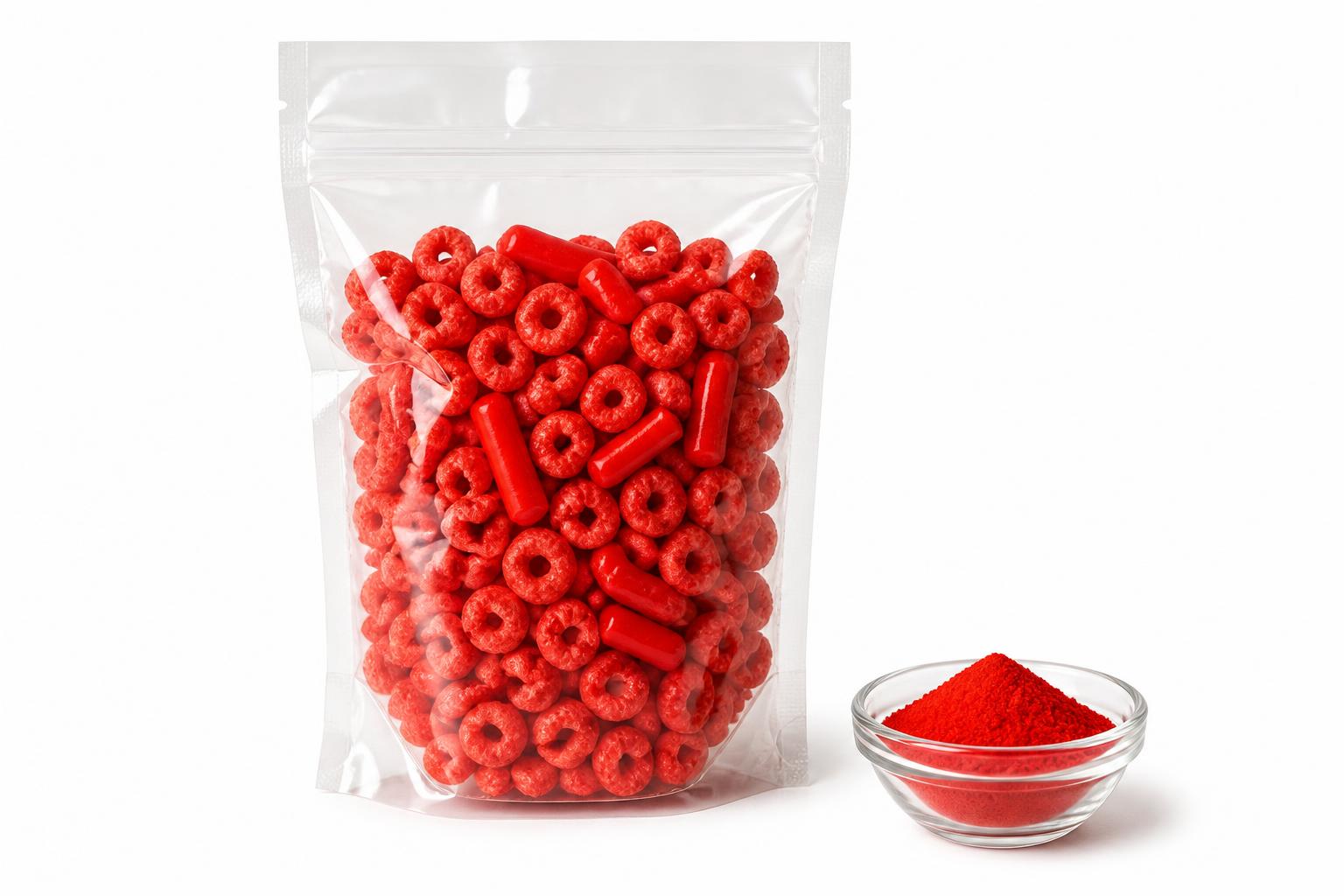
Red 40 is not a niche ingredient. Walk through any conventional grocery store and you will find it in a wide range of categories.
Candy and snacks
Red 40 in candy is probably the most common exposure point for children. Gummy bears, fruit snacks, Skittles, Jolly Ranchers, and many store-brand gummies all use it. Check the ingredient list on any brightly colored candy and Allura Red AC is often one of the first colorants listed.
Beverages
Fruit-flavored drinks, sports drinks, powdered drink mixes, and some flavored waters use red 40 to achieve their color. Brands sold at Target, Walmart, and Costco in large multipacks are common sources.
Cereals and breakfast foods
Many children's cereals, flavored instant oatmeal packets, and toaster pastries contain red 40 alongside other synthetic dyes like Yellow 5 and Yellow 6.
Condiments and sauces
Some maraschino cherries, flavored ketchups, and certain salad dressings also contain it, which surprises many shoppers who associate the dye mainly with candy.
What does the science say about red 40 side effects?
The evidence on red 40 side effects is mixed, and it is worth being precise rather than alarmist.
The most consistently studied concern is behavioral effects in children. A landmark 2007 study published in The Lancet found that a mixture of synthetic food dyes, including Allura Red, combined with the preservative sodium benzoate was associated with increased hyperactivity in children. The study covered both children with and without ADHD diagnoses. You can read the original research here.
The FDA reviewed that research and concluded the evidence did not establish a causal link strong enough to require regulatory action for the general population. However, the agency acknowledged that some sensitive children may benefit from reduced dye intake.
Some animal studies have raised questions about higher-dose exposure, but doses used in those studies are typically far above what a person would consume through food. The FDA's current position is that red 40 is safe at levels found in food.
For people with aspirin sensitivity, there is also a small body of research suggesting a possible cross-reaction, though this affects a limited subset of the population.
The Europe situation: warning labels, not a ban
One of the most searched topics around this ingredient is the red 40 Europe warning label, and it is worth clarifying what actually happened.
Red 40 is not banned in the European Union. It is permitted. However, since 2010, EU regulations have required foods containing Allura Red AC and five other synthetic dyes to carry a specific on-pack warning: "may have an adverse effect on activity and attention in children." This requirement followed the same Lancet research mentioned above.
That warning label requirement is a meaningful regulatory difference from the US, where no equivalent label is required. Many European food manufacturers responded by reformulating products to use natural colorants like beetroot extract or paprika extract instead, partly to avoid the warning and partly due to consumer pressure. This is why the same brand of candy or cereal can look different in a European store versus an American one.
The EU's approach reflects a different regulatory philosophy, sometimes described as more precautionary, not a definitive scientific conclusion that the dye is harmful at normal intake levels. EFSA completed a full re-evaluation of Allura Red in 2009 and set an acceptable daily intake, concluding it was safe within those limits.
This regulatory gap between the US and EU is part of a broader pattern that many shoppers are paying attention to, especially following increased consumer interest in food additive policy. If you want to understand which other ingredients fall into this category, the FDA's current review pipeline for food additives in 2026 covers several ingredients facing new scrutiny.
How to read labels and reduce exposure if you choose to
If you want to limit red 40 in your household, label reading is your main tool. Here is what to look for.
- FD&C Red No. 40 is the full FDA-approved name
- Allura Red AC is the alternative name, more common on imported products
- Red 40 is the shorthand version used on most US ingredient lists
At Whole Foods and Trader Joe's, store-brand products often avoid synthetic dyes by policy. At Target, the Good and Gather line has moved away from artificial colors in several categories. At Walmart and Costco, national brand products are more likely to contain synthetic dyes, while some store-brand or organic lines do not.
Natural alternatives you may see instead include beet juice concentrate, carmine (derived from insects, relevant for vegan shoppers), paprika extract, and annatto. These are not automatically better for every person, but they represent reformulations driven by consumer demand.
Red 40 is one of several synthetic additives that shoppers are scrutinizing more carefully. For a broader look at other colorants and preservatives facing similar questions, the article on titanium dioxide in food covers a related ingredient that has also prompted different regulatory responses in the US and EU.
For the blue side of the dye aisle, our guide to Blue 1 food dye covers where it appears and its current regulatory status.
Conclusion
Red dye 40 is legal in the US, widely used, and the subject of ongoing consumer debate. The science does not support calling it dangerous for most people, but the EU warning label requirement and the behavioral research in children are legitimate reasons to want to know when it is in your food. Reading ingredient lists carefully is the most practical step you can take at the grocery store. If you want a faster way to check products across your entire cart, Osana lets you scan barcodes and ingredient labels to instantly flag additives like red 40 and find cleaner alternatives.
Frequently asked questions
Is red dye 40 banned in Europe?
No. Red 40, known in Europe as Allura Red AC (E129), is permitted in the EU. However, products containing it must carry a warning label stating the dye "may have an adverse effect on activity and attention in children." Many manufacturers reformulated their products to avoid this label.
What foods are most likely to contain red 40?
Candy, gummy snacks, fruit-flavored drinks, children's cereals, flavored yogurt, toaster pastries, and some condiments are among the most common sources in US grocery stores.
Does red 40 cause hyperactivity in children?
A 2007 Lancet study found an association between a mixture of synthetic dyes (including red 40) and sodium benzoate and increased hyperactivity in children. The FDA reviewed the research but did not find it sufficient to require label warnings or restrict the dye. Some parents report behavioral improvements after removing synthetic dyes from their children's diets.
What is red 40 made from?
Red 40 is a petroleum-derived synthetic azo dye. It is not made from insects or natural plant sources.
Are there natural alternatives to red 40?
Yes. Manufacturers can use beet juice concentrate, paprika extract, pomegranate juice, and other plant-based colorants. Carmine, derived from cochineal insects, is also used but is not suitable for vegan or some religious diets.
How can I tell if a product has red 40 without reading every label?
Look for "Red 40," "FD&C Red No. 40," or "Allura Red AC" in the ingredient list. A barcode scanning app that flags synthetic dyes can also speed up this check across multiple products.

Choose cleaner swaps before they land in your cart.
Use Osana at Whole Foods, Trader Joe's, Target, Costco, or Walmart to compare labels faster and shop with more confidence.