Azodicarbonamide in bread: what you need to know
 By Clement7 min read
Find the controversial ingredients already in your kitchen.
Scan packaged foods at home, understand ingredients, and find healthier alternatives in seconds.




 Scan with Osana
What is azodicarbonamide in bread?
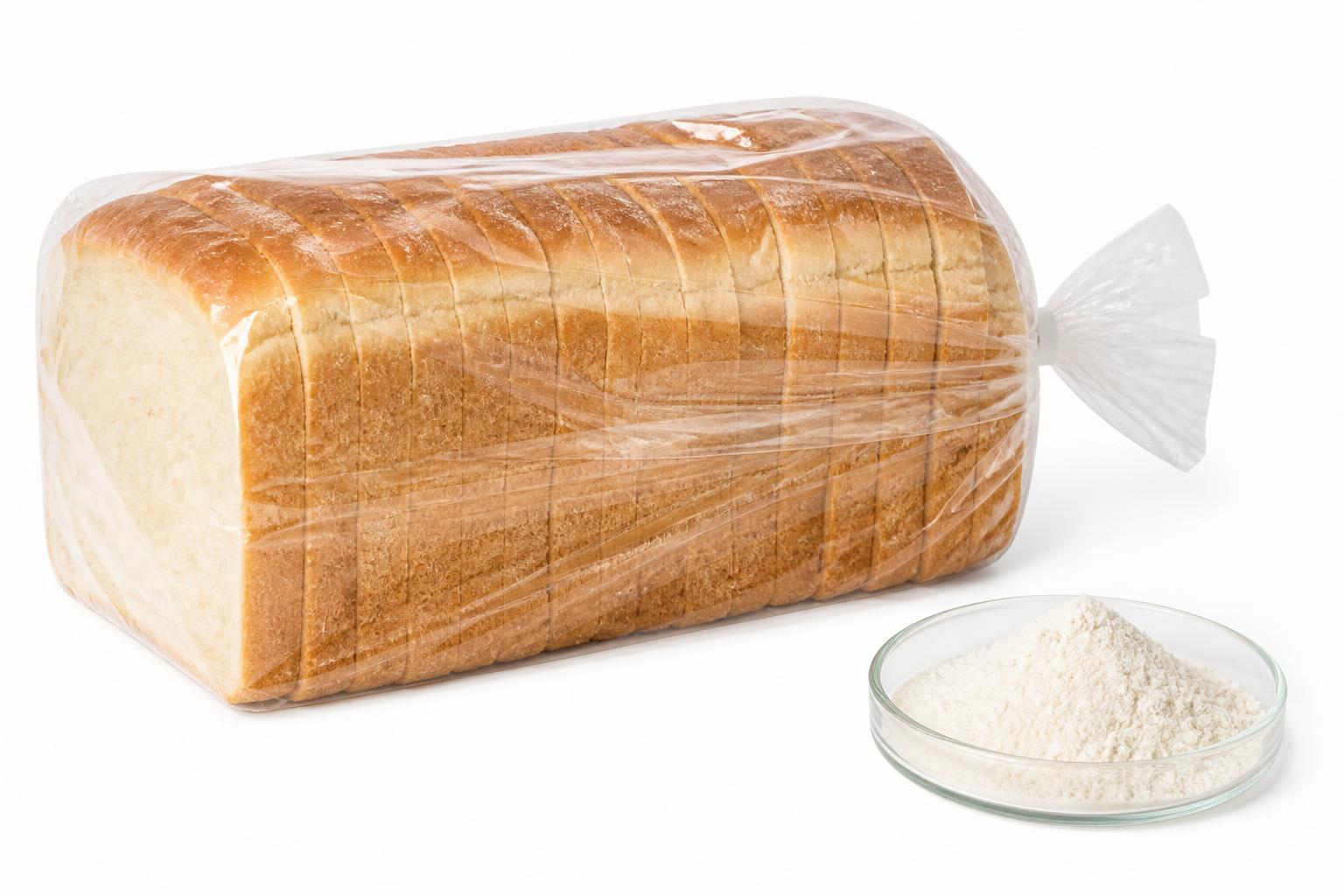
Azodicarbonamide (ADA) is a synthetic dough conditioner added to commercial bread and baked goods to strengthen dough, speed up processing, and improve texture. It is approved by the FDA for use in the United States at concentrations up to 45 parts per million. If you have ever seen a viral video about the so-called "yoga mat chemical in bread," this is the ingredient being referenced, because azodicarbonamide is also used industrially to make foamed plastics like yoga mats.
That dual use sounds alarming, but the chemistry in bread is different from the chemistry in plastic manufacturing. Still, the ingredient raises legitimate questions worth understanding before your next grocery run.
Why is azodicarbonamide called the yoga mat chemical?
The nickname gained traction around 2014 when a food blogger petitioned Subway to remove ADA from its bread. The "yoga mat chemical" framing spread quickly on social media because azodicarbonamide is genuinely used as a blowing agent in polyurethane foam products, including exercise mats.
In bread, ADA acts as an oxidizing agent. It reacts during mixing and baking to condition gluten structure, which allows commercial bakeries to process dough faster and produce a softer, more consistent loaf. By the time bread reaches your plate, ADA itself has largely broken down. The concern centers on one of its breakdown byproducts: urethane (ethyl carbamate), a compound classified as a probable human carcinogen by the International Agency for Research on Cancer. Urethane can form in small amounts when ADA reacts with yeast during baking.
A second byproduct, semicarbazide, has been studied in animal models. The European Food Safety Authority (EFSA) flagged concerns about semicarbazide as early as 2005, which contributed to the decision to ban ADA in the European Union.
Azodicarbonamide is banned in Europe but legal in the US
This gap in regulation is one of the most common examples cited by consumers who believe US food safety standards lag behind those in other countries. The EU banned azodicarbonamide as a flour treatment agent in 1997. The United Kingdom, Australia, and several other countries followed with similar restrictions.
The FDA has maintained its GRAS (Generally Recognized as Safe) status for ADA in the US, arguing that the levels used in food are too low to pose a meaningful health risk. The agency has not conducted a formal reassessment of ADA in recent years, though growing consumer pressure and broader scrutiny of food additives have kept the conversation active. If you follow discussions around food policy and the MAHA movement, ADA frequently appears on lists of ingredients that advocates want the FDA to revisit.
For a broader look at additives currently under regulatory scrutiny, see US food additives under FDA review: what to watch in 2026.
Where is azodicarbonamide found in grocery stores?
ADA appears in a wide range of commercially baked products. You are most likely to encounter it in:
- Sandwich bread and hot dog buns from major national brands sold at Walmart, Target, and most conventional grocery stores
- Fast food buns and rolls, including products from major quick-service chains
- Packaged bagels and English muffins in the bread aisle
- Frozen dough products and some pizza crusts
- Flour tortillas from large commercial producers
Breads marketed as clean-label, artisan, or organic typically do not contain ADA. At Whole Foods, most store-brand and vendor breads avoid it. Trader Joe's has also moved away from ADA in its in-house baked goods. However, labeling is not always obvious, and the same brand may use different formulations for different product lines.
ADA is worth comparing alongside another dough additive with a similar regulatory story. Potassium bromate in bread is another flour treatment agent banned in the EU and many other countries but still permitted in the US, and it is sometimes used in the same product categories.
How to read a bread label for azodicarbonamide
Under FDA labeling rules, azodicarbonamide must be declared on the ingredient list by its full name. It will not be hidden under a vague term like "natural flavors" or "enzymes." Look for:
- Azodicarbonamide (spelled out in full)
- Sometimes listed near other dough conditioners such as DATEM, ascorbic acid, or monoglycerides
Practical tips for your next grocery trip:
- Flip the bread bag and scan the ingredient list, not just the front-of-pack claims like "made with whole grains" or "no artificial preservatives."
- Ingredient lists are ordered by weight, so ADA near the end of a long list indicates a small amount, but it is still present.
- If a bread ingredient list is short (flour, water, yeast, salt, maybe a little oil or honey), ADA is almost certainly absent.
- When in doubt, use a barcode scanner to check the full ingredient profile before putting a product in your cart.
What does the research actually say?
The honest answer is that the evidence is mixed and mostly based on animal studies or occupational exposure data, not controlled human trials at food-level doses.
- The FDA's own assessment acknowledges that urethane can form as a breakdown product but considers the levels in finished bread to be very low.
- A 2005 EFSA opinion raised concern about semicarbazide in animal studies but noted uncertainty about relevance to human exposure from bread.
- Occupational exposure to azodicarbonamide powder (in factories, not from eating bread) is associated with asthma and respiratory irritation, according to WHO documentation.
None of this constitutes proof of harm from eating a sandwich. But it explains why many consumers, especially those who pay close attention to ingredient lists, prefer to avoid it when a clean-label alternative is easy to find.
Conclusion
Azodicarbonamide in bread is a good example of an ingredient that is technically legal, widely used in the US, and yet absent from food supplies in much of the rest of the world. Whether you consider that a reason to avoid it or simply a data point to be aware of, knowing it is there is the first step. Reading ingredient labels carefully, choosing shorter ingredient lists, and favoring brands that have voluntarily removed ADA are all practical ways to reduce your exposure without overhauling your grocery budget. If you want a faster way to check every bread, bun, and tortilla in your cart, Osana lets you scan barcodes and ingredient labels instantly so you can spot ADA and other flagged additives before you buy.
Frequently asked questions
Is azodicarbonamide safe to eat?
The FDA considers it safe at permitted levels in the US. However, the EU banned it in 1997 citing concerns about breakdown byproducts, and some researchers have called for further study. Current evidence does not prove harm from normal dietary exposure, but many consumers prefer to avoid it.
What breads do not contain azodicarbonamide?
Artisan, organic, and clean-label breads typically do not use ADA. Most Whole Foods 365 breads, Trader Joe's in-house breads, and many sourdough loaves are made without it. Always check the ingredient list to confirm.
Why is it called the yoga mat chemical?
Azodicarbonamide is also used industrially as a blowing agent in foamed plastics, including yoga mats. The same compound serves different chemical functions in different contexts, but the nickname stuck after a 2014 viral campaign.
Is azodicarbonamide banned in other countries besides Europe?
Yes. The UK (post-Brexit regulations retained the EU ban), Australia, and several other countries do not permit ADA as a flour treatment agent. The US and Canada still allow it.
Does toasting or baking bread destroy azodicarbonamide?
ADA reacts and largely breaks down during the baking process itself. By the time you eat the bread, ADA is mostly gone, but the byproducts it forms during baking, including trace urethane and semicarbazide, may remain at low levels.
How do I find out if my bread contains azodicarbonamide without reading every label?
Scanning the barcode with a food scanner app is the fastest method. The full ingredient list is matched instantly, and flagged additives like ADA are highlighted so you do not have to decode fine print in the bread aisle.

Choose cleaner swaps before they land in your cart.
Use Osana at Whole Foods, Trader Joe's, Target, Costco, or Walmart to compare labels faster and shop with more confidence.