Potassium bromate in bread: what you need to know
 By Clement6 min read
Find the controversial ingredients already in your kitchen.
Scan packaged foods at home, understand ingredients, and find healthier alternatives in seconds.




 Scan with Osana
What is potassium bromate in bread?
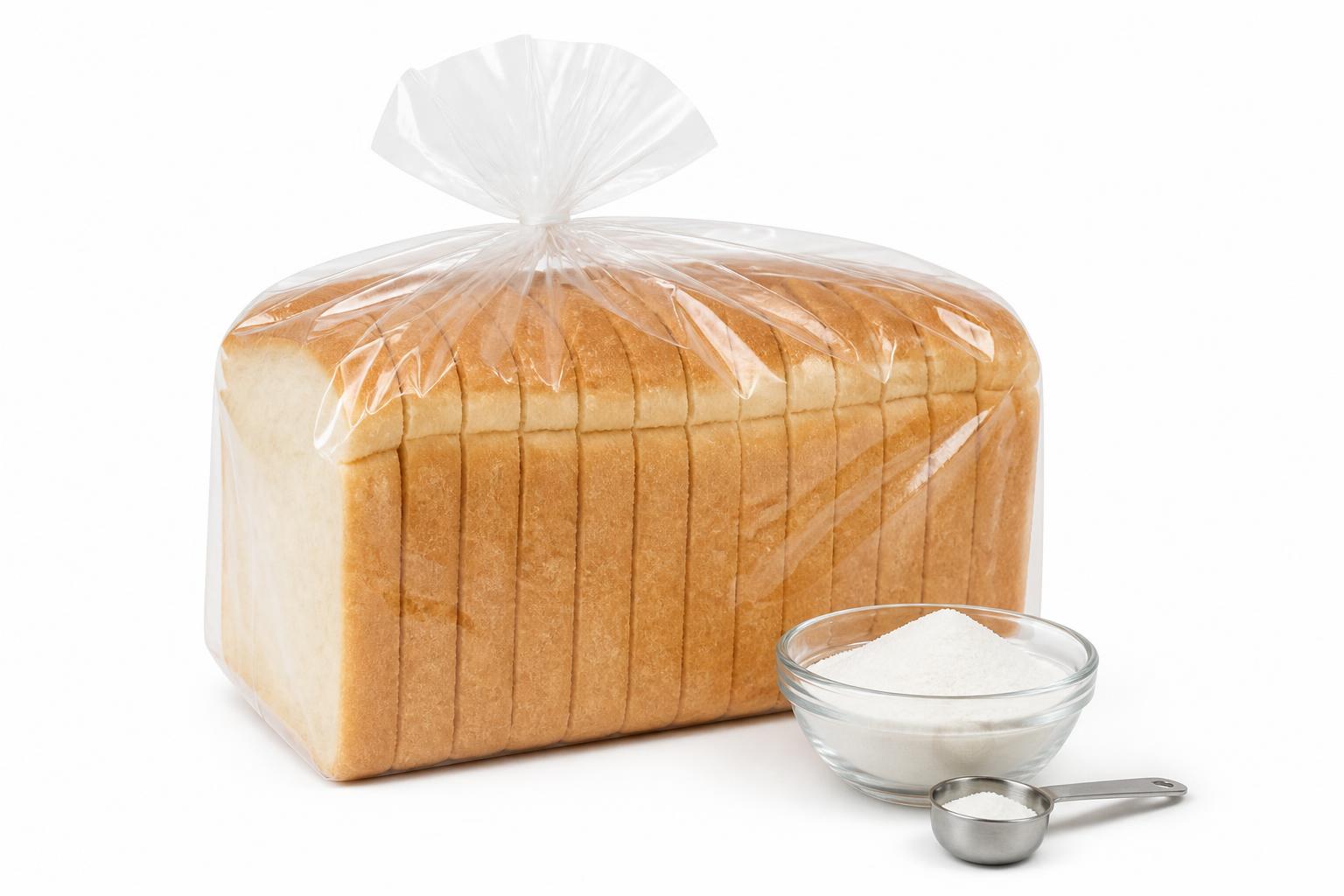
Potassium bromate is a chemical additive used in commercial bread-making to strengthen dough, improve rise, and produce a consistent, fluffy texture. It is classified as a flour treatment agent, and while it breaks down during baking, residual amounts can remain in the finished loaf. That residue is the core of the health debate around this ingredient.
You will most commonly find it listed on ingredient labels as potassium bromate or sometimes under the broader term "maturing agent." It shows up in commercial white breads, hamburger buns, hot dog rolls, pizza dough, and some packaged bagels, particularly in products made for high-volume bakeries and fast-food supply chains.
Why potassium bromate is banned in Europe (and many other countries)
The European Union prohibited potassium bromate as a bread additive decades ago, citing concerns about its potential to cause DNA damage and its classification as a possible human carcinogen. The International Agency for Research on Cancer (IARC) lists potassium bromate as a Group 2B substance, meaning it is possibly carcinogenic to humans, based largely on animal studies showing kidney tumors at high doses.
Beyond the EU, potassium bromate is banned or restricted in the UK, Canada, Brazil, China, and several other countries. The US is a notable exception. The FDA has not banned potassium bromate, though it has advised bakers to voluntarily stop using it since the 1990s. That guidance was non-binding, and the additive remains on the FDA's list of permitted food additives.
This gap between US and European regulation is exactly the kind of discrepancy that has driven growing consumer interest, including conversations in wellness communities and broader food safety discussions around what Americans are eating versus what is allowed elsewhere.
The health concerns: what the science actually says
Most of the concern around potassium bromate comes from animal studies. Research published in journals including Food and Chemical Toxicology has shown that high oral doses in rats and mice produced kidney tumors, thyroid tumors, and peritoneal mesotheliomas. Human epidemiological data is limited, partly because the additive has already been removed from most countries' food supplies.
The key question is whether residual bromate in a baked loaf reaches levels that are meaningfully harmful to humans eating normal amounts of bread. Proponents of continued use argue that bromate converts to bromide during baking, a much less reactive compound. Critics point out that conversion is not always complete, especially in products that are underbaked or made with certain formulations.
For everyday grocery shoppers, the honest answer is: the risk from occasional consumption is likely low, but the uncertainty is real, and many countries have decided the additive is simply not necessary when safer alternatives exist.
How to find potassium bromate on a bread label
Under US labeling rules, potassium bromate must be declared in the ingredient list if it is added directly to a product. Here is what to look for:
- "Potassium bromate" listed among flour treatment agents or dough conditioners
- "Bromated flour" or "enriched bromated flour" in the flour description
- A long list of dough conditioners in general, which can sometimes signal a more heavily processed loaf
Brands and products to watch include some store-brand sandwich breads, commercial pizza dough, and bulk bakery items sold at warehouse stores. Higher-end or clean-label breads, including many sold at Whole Foods or Trader Joe's, tend to use unbromated flour and will often say so on the packaging.
If you are shopping at Target, Walmart, or Costco, the ingredient list is your best tool. A bread with five or fewer recognizable ingredients is unlikely to contain potassium bromate, but checking the label directly is the only reliable method.
It is also worth knowing that potassium bromate is not the only additive worth watching in the bread aisle. Ingredients like titanium dioxide in food have raised similar questions about whether US standards lag behind international ones.
Practical tips for avoiding bromated flour at the grocery store
-
Read the flour description first. If the ingredient list says "enriched bromated flour," the product contains potassium bromate. "Unbleached unbromated flour" is the cleaner alternative.
-
Look for the "no bromate" claim. Some brands proactively label their bread as made with unbromated flour, especially in natural and organic sections.
-
Choose certified organic breads. USDA organic certification prohibits the use of potassium bromate, so any certified organic loaf is bromate-free by definition.
-
Check fast-food and restaurant bread separately. Potassium bromate has historically been more common in commercial foodservice bread than in retail packaged bread. Home consumption is generally easier to control.
For a broader look at how the FDA is currently reviewing additives like this one, the article on US food additives under FDA review in 2026 covers the regulatory landscape in more detail.
Conclusion
Potassium bromate is a bread additive with a clear regulatory story: most of the world has moved away from it, the US has not, and the science suggests enough uncertainty that many shoppers reasonably prefer to avoid it. The good news is that bromated flour is not universal, and clean-label alternatives are widely available at most major grocery stores. Reading the ingredient list, choosing organic when possible, and knowing what "bromated flour" means on a label puts you in a much stronger position at the shelf. If you want to scan bread packaging and instantly flag potassium bromate alongside other controversial additives, Osana makes that process fast and straightforward.
Frequently asked questions
Is potassium bromate still used in US bread?
Yes. While the FDA has encouraged voluntary removal since the 1990s, potassium bromate remains a legal food additive in the United States and is still used by some commercial bakers.
How do I know if my bread has potassium bromate?
Check the ingredient list for "potassium bromate" or "bromated flour." If the label says "unbromated" or the bread is USDA certified organic, it does not contain this additive.
Is potassium bromate dangerous to eat?
Animal studies have linked high doses to tumor development, and IARC classifies it as a possible human carcinogen. Human risk from normal bread consumption is uncertain but has led most countries to ban it as a precaution.
Why is potassium bromate banned in Europe but not the US?
Europe applies a precautionary principle more broadly in food regulation, banning substances with credible safety concerns even without definitive human proof of harm. US regulation tends to require stronger evidence of harm before restricting an additive.
What is a safe alternative to bromated flour in bread?
Most commercial bakers use ascorbic acid (vitamin C) or other dough conditioners as direct replacements for potassium bromate. These alternatives are widely accepted and considered safe.
Does organic bread always avoid potassium bromate?
Yes. USDA organic standards prohibit potassium bromate, so any bread carrying a certified organic label is guaranteed to be bromate-free.

Choose cleaner swaps before they land in your cart.
Use Osana at Whole Foods, Trader Joe's, Target, Costco, or Walmart to compare labels faster and shop with more confidence.