Clean eating grocery list: what to buy and skip
 By Clement7 min read
What belongs on a clean eating grocery list
A clean eating grocery list focuses on whole, minimally processed foods with short, recognizable ingredient lists. The goal is not perfection but a practical framework you can use at Whole Foods, Trader Joe's, Target, or Costco without spending 20 minutes decoding every package.
Below is a category-by-category breakdown, plus a section on what to watch for on labels so your clean grocery list actually stays clean once you get home.

Find the controversial ingredients already in your kitchen.
Scan packaged foods at home, understand ingredients, and find healthier alternatives in seconds.




 Scan with Osana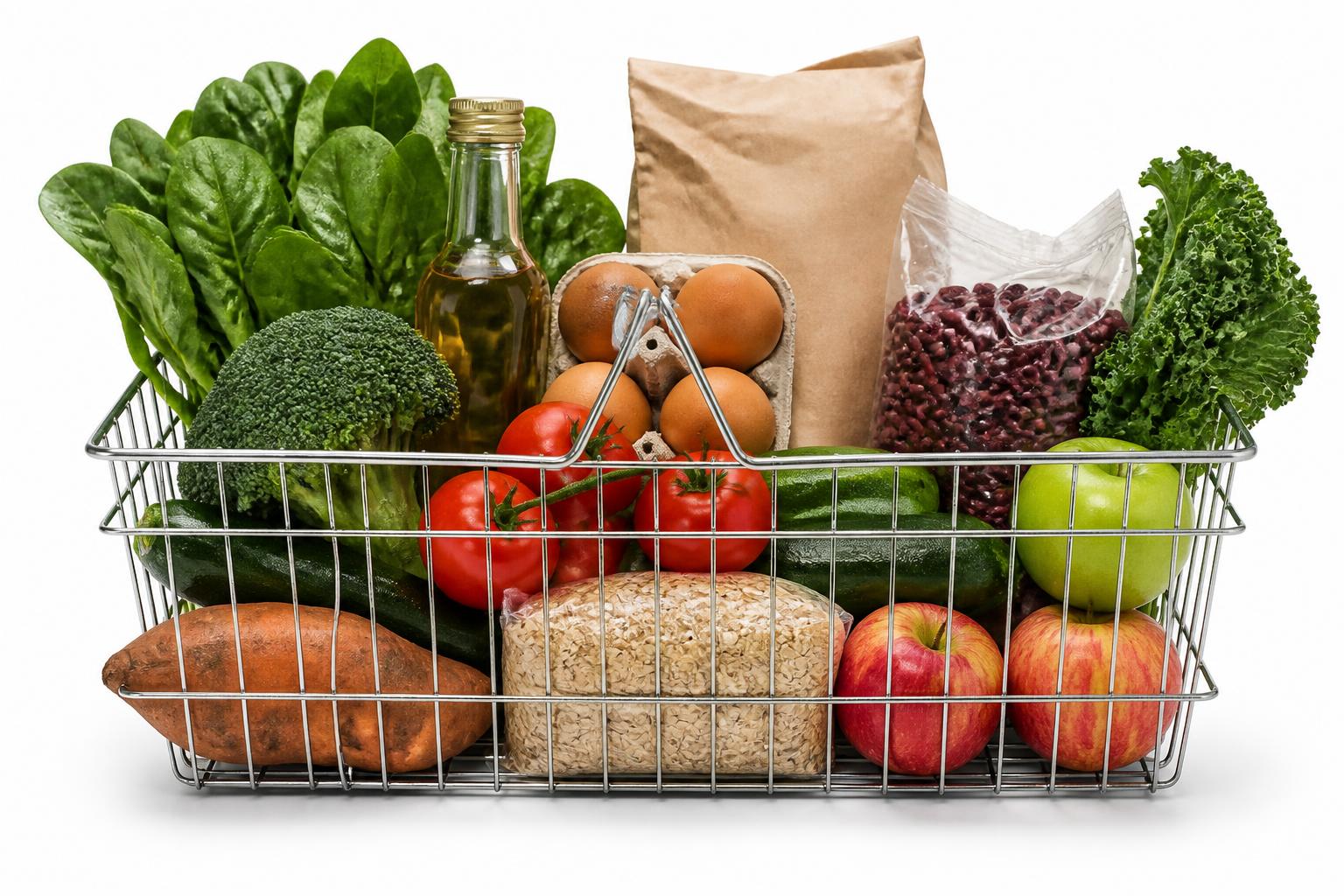
Produce: the easiest category to get right
Fresh fruits and vegetables are the foundation of any clean eating shopping list. They have no ingredient lists to decode and no additives to worry about.
Prioritize:
- Leafy greens: spinach, kale, arugula, romaine
- Cruciferous vegetables: broccoli, cauliflower, Brussels sprouts, cabbage
- Colorful produce: bell peppers, berries, sweet potatoes, beets
- Alliums: garlic, onions, leeks
If budget is a concern, the EWG Shopper's Guide publishes an annual Dirty Dozen and Clean Fifteen list that helps you decide where organic spending matters most.
Proteins: whole sources over heavily processed ones
The protein aisle is where clean eating gets complicated fast. A chicken breast is straightforward. A "grilled chicken strip" in a resealable bag often contains sodium phosphates, natural flavors, and modified starches.
Whole protein sources to prioritize:
- Eggs (look for pasture-raised if budget allows)
- Plain, unseasoned meat and fish from the butcher counter or freezer section
- Canned fish: sardines, wild salmon, tuna with water or olive oil only, no added broth with long ingredient lists
- Legumes: dried or canned with no added salt or with just water and salt
- Plain Greek yogurt with two to three ingredients maximum: milk, cream, live cultures
What to leave on the shelf: Flavored deli meats, pre-marinated proteins, and plant-based meat alternatives often contain long ingredient lists with emulsifiers, colorings, and flavor compounds. That does not make them automatically harmful, but they are not what most people mean when they say clean eating.
Grains and bread: where label reading matters most
Bread is one of the trickiest categories on a healthy grocery list. A loaf that looks wholesome can contain calcium propionate, dough conditioners, and added sugars that push it into ultra-processed territory.
What to look for:
- Ingredient list of five items or fewer
- First ingredient: whole wheat flour or another whole grain, not enriched flour
- No high fructose corn syrup
- No azodicarbonamide (a dough conditioner restricted in the EU and several other countries)
Cleaner grain options:
- Rolled oats with one ingredient: oats
- Brown rice or quinoa in plain bulk or bag form
- Sourdough from a bakery counter, which typically uses flour, water, salt, and starter only
- Corn tortillas: look for masa harina, water, lime, and nothing else
Dairy and dairy alternatives: read beyond the front label
Front-of-package claims like "organic," "natural," or "plant-based" say nothing about what is actually inside. Flip the package.
Dairy:
- Plain whole milk, butter, and hard cheeses tend to have short, clean ingredient lists
- Flavored yogurts and coffee creamers are common sources of artificial dyes, carrageenan, and added sugars
Plant-based milks:
- Unsweetened oat, almond, or soy milk with the fewest ingredients
- Watch for carrageenan, which some brands still use as a thickener and which has drawn scrutiny from researchers, though the FDA considers it generally recognized as safe
Pantry staples: oils, condiments, and snacks
This is where most clean eating shopping lists fall apart. Pantry items have long shelf lives and long ingredient lists to match.
Oils:
- Extra virgin olive oil, avocado oil, and coconut oil are common clean choices
- Canola, soybean, sunflower, and corn oils are refined seed oils that many clean eating communities prefer to limit, though the science on their health impact is still debated
Condiments:
- Plain mustard: vinegar, mustard seed, salt, turmeric
- Hot sauce: peppers, vinegar, salt
- Olive oil-based mayonnaise with no added sugar or artificial preservatives
- Salsa with recognizable vegetable ingredients only
Snacks:
- Raw or dry-roasted nuts with no added oils or flavoring
- Popcorn popped in olive oil or air-popped
- Seed crackers with five ingredients or fewer
- Dark chocolate at 70 percent cacao or higher, with cacao, cocoa butter, and sugar as the first three ingredients
What to watch on labels across every category
A clean eating shopping list is only as good as your ability to spot what does not belong. A few ingredients that frequently appear in otherwise healthy-looking products:
- High fructose corn syrup in bread, condiments, and yogurt
- Artificial dyes (Red 40, Yellow 5, Yellow 6, Blue 1) in snacks, cereals, and drinks
- BHA and BHT in cereals and crackers as preservatives
- Partially hydrogenated oils (trans fats) still appearing in some shelf-stable products
- "Natural flavors" as a catch-all term that can cover a wide range of compounds
For a deeper look at which ingredients are worth flagging, the FDA's food additives database is a useful reference. Research published in BMJ has also linked high ultra-processed food intake to adverse health outcomes, though individual ingredients require their own evaluation.
If you want to go further, learning how to read food ingredient labels is a practical skill that pays off every shopping trip.
A quick reference clean grocery list
Always buy: Fresh produce, eggs, plain meat and fish, rolled oats, brown rice, plain legumes, extra virgin olive oil, raw nuts, plain Greek yogurt, simple bread with five or fewer ingredients
Buy with label check: Plant-based milks, canned goods, condiments, crackers, frozen meals, flavored dairy products
Usually skip or minimize: Flavored deli meats, pre-marinated proteins, brightly colored snack foods, cereals with added dyes, sodas and sweetened drinks, most fast-food-style frozen entrees
Conclusion
Building a clean eating grocery list is less about following strict rules and more about developing a habit of checking what is actually inside your food. Start with produce and whole proteins, get comfortable reading ingredient lists in the bread and dairy aisles, and pay close attention to pantry staples where additives hide most easily. Over time, the process gets faster. If you want to speed it up even more at the store, Osana lets you scan any barcode or ingredient label and instantly flag additives, ultra-processed ingredients, and EU-restricted compounds, so you can make better decisions without reading every label by hand.
Frequently asked questions
What does clean eating actually mean for grocery shopping?
Clean eating generally means choosing whole or minimally processed foods with short, recognizable ingredient lists and avoiding additives, artificial dyes, and heavily refined ingredients. There is no single official definition, so most people define it by their own priorities.
Is organic the same as clean eating?
Not necessarily. Organic certification covers pesticide and farming standards, but an organic product can still be ultra-processed and contain additives. Checking the ingredient list matters regardless of the organic label.
What are the hardest grocery categories to keep clean?
Bread, condiments, flavored dairy, and packaged snacks tend to have the most hidden additives. These are the categories where reading the ingredient list, not just the front of the package, makes the biggest difference.
Can I build a clean grocery list on a budget?
Yes. Dried legumes, frozen vegetables, eggs, oats, and in-season produce are among the most affordable clean eating staples. You do not need to shop exclusively at Whole Foods or Trader Joe's.
How do I know if a packaged food is ultra-processed?
A useful rule of thumb is the NOVA classification system, which categorizes foods by degree of processing. If a product contains ingredients you would not find in a home kitchen, such as emulsifiers, stabilizers, or artificial flavors, it likely falls into the ultra-processed category. You can read more in our guide to the ultra processed foods list.
Are seed oils something I should avoid on a clean eating list?
Seed oils are a topic of active debate in wellness communities. Some people prefer to limit refined oils like soybean, sunflower, and canola in favor of olive or avocado oil. The scientific evidence is mixed, so this is a personal choice rather than a settled health recommendation.
Get the cleaner swaps list before your next grocery run.
One short email a week: new label checks and better-for-you products we actually tested.
No spam. Unsubscribe anytime.

Choose cleaner swaps before they land in your cart.
Use Osana at Whole Foods, Trader Joe's, Target, Costco, or Walmart to compare labels faster and shop with more confidence.