What is guar gum in food? How this bean-based thickener works and where it hides
 By Clement6 min read
Find the controversial ingredients already in your kitchen.
Scan packaged foods at home, understand ingredients, and find healthier alternatives in seconds.




 Scan with Osana
Guar gum is a natural thickener made from the seeds of the guar bean. A tiny amount turns watery mixtures thick and smooth, which is why it shows up in ice cream, salad dressings, yogurt, sauces, plant milks, and gluten-free baked goods. It is considered safe at the levels used in food, and it is also a source of soluble fiber, though large amounts can cause gas or bloating in some people.
Quick answer: guar gum is a plant-based thickener and stabilizer from guar beans. On a label it usually appears near the end of the ingredient list, because manufacturers need only a fraction of a percent to change texture.
Where guar gum comes from
The guar plant is a legume grown mainly in India and Pakistan. Its seeds contain an endosperm rich in a carbohydrate called galactomannan. Processors remove the husk and germ, grind the endosperm, and sell it as an off-white powder. In Europe it carries the code E412.
What makes guar gum special is how much water it can hold. It thickens cold liquids without heating, and it has several times the thickening power of cornstarch, so a pinch can do the work of spoonfuls.
What guar gum does in food
As a guar gum thickener, it has a few specific jobs:
- Thickens without cooking. It builds body in cold products like dressings, smoothies, and dairy-free milks.
- Controls ice crystals. In frozen desserts it binds water so large crystals do not form, keeping the texture smooth after the carton has been opened and refrozen.
- Keeps mixtures stable. It helps stop sauces and yogurts from weeping liquid or separating on the shelf.
- Replaces gluten's structure. Gluten-free breads and baking mixes use it to hold moisture and improve crumb.
- Adds creaminess to lighter products. Lower-fat foods use it to feel richer in the mouth.
Guar gum in ice cream and other common foods
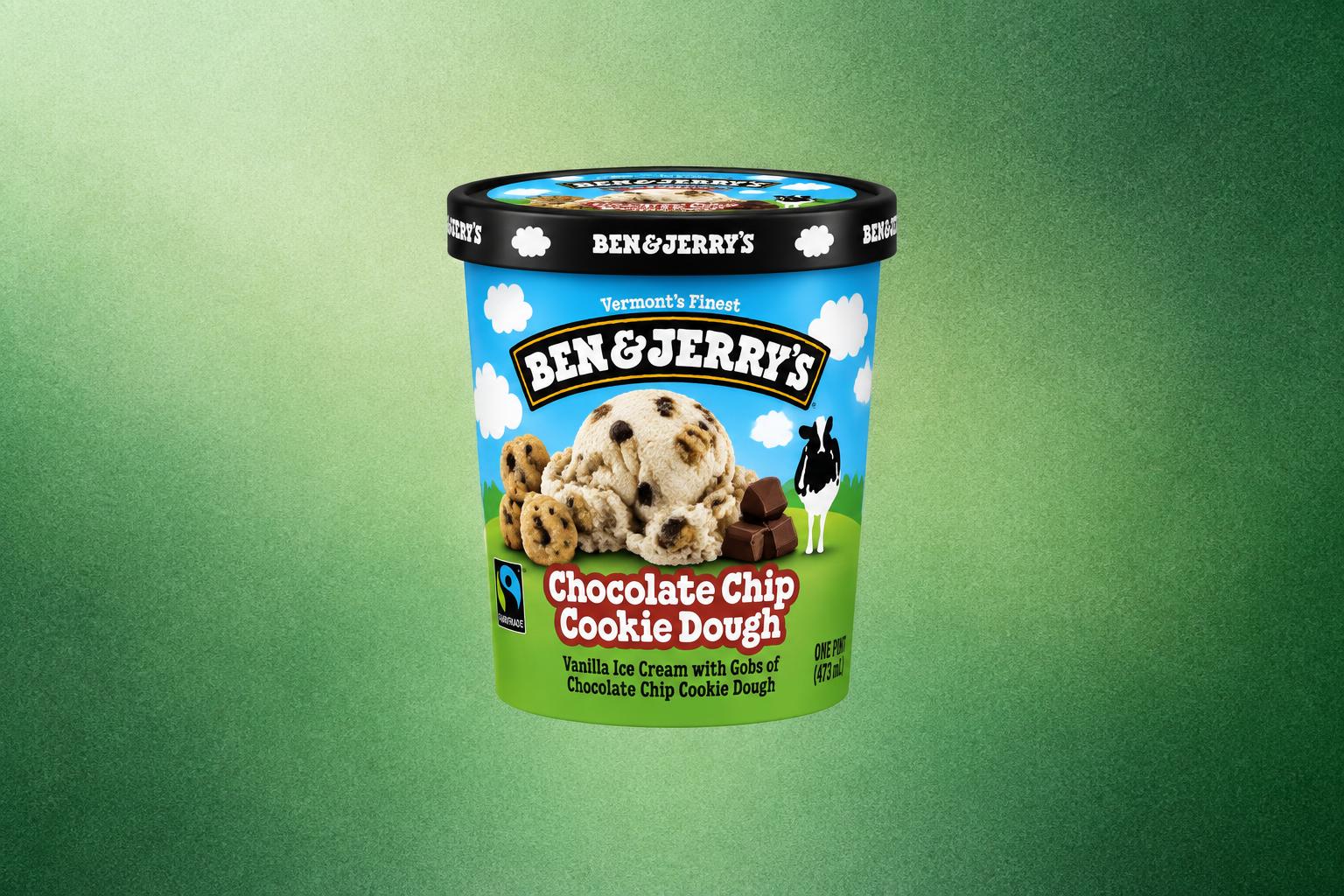
Guar gum in ice cream is one of its best-known uses. Many mainstream ice creams and frozen dairy desserts list guar gum alongside carob bean gum or carrageenan, while the simplest premium pints skip gums entirely. Our ranking of the healthiest ice cream shows that contrast across six vanilla pints.
| Food category | Why guar gum is used | Often paired with |
|---|---|---|
| Ice cream and frozen desserts | Smooth texture, fewer ice crystals | Carob bean gum, carrageenan, mono- and diglycerides |
| Salad dressings and sauces | Body and pourability | Xanthan gum |
| Yogurt and cream cheese | Thickness, less liquid separation | Pectin, locust bean gum |
| Plant milks and creamers | Creamy feel, even suspension | Gellan gum, sunflower lecithin |
| Gluten-free bread and mixes | Moisture and structure | Xanthan gum, psyllium |
| Protein shakes | Thicker mouthfeel | Cellulose gum, carrageenan |
How guar gum differs from other gums
Food gums are often lumped together, but they behave differently:
- Guar gum comes from a bean, thickens cold liquids quickly, and adds soluble fiber.
- Xanthan gum is made by bacterial fermentation and creates a stretchy, suspending texture.
- Carob or locust bean gum comes from carob seeds and works best with heat, often combined with guar.
- Carrageenan comes from red seaweed and is used for gelling in dairy and plant milks.
- Cellulose gum is a modified form of plant cellulose made through a chemical process.
These differences matter because research questions are not the same for every gum. Most debate about gut health has focused on synthetic emulsifiers and cellulose derivatives, not guar gum. Our overview of emulsifiers in food explains that wider group.
What the FDA and current research say
The FDA lists guar gum as generally recognized as safe when used within set limits for different food categories. In Europe it is authorized as E412, and EFSA has reviewed it as part of its re-evaluation of food additives without identifying a safety concern at reported uses.
Because guar gum is mostly soluble fiber, it ferments in the large intestine. That is useful for some people, and a partially broken-down version is even sold as a fiber supplement. It also explains the main downside: in larger amounts, especially from supplements or several gum-heavy products in one day, it can cause gas, bloating, or loose stools.
One historical note is often misunderstood. In the early 1990s, US regulators acted against weight-loss pills that used large doses of guar gum, after reports that the swelling fiber caused blockages. That issue involved concentrated pills taken with little water, not the tiny amounts used to thicken food.
The fair summary is that guar gum is low concern at food levels, with digestive comfort being the main personal factor to watch.
How to read guar gum on an ingredient label
A guar gum ingredient label listing is usually simple: "guar gum" written near the end of the list. A few habits help:
- Do not panic about its position. Gums are used in very small amounts, so they always appear late in the list.
- Count the stabilizers. One gum in a yogurt is very different from a frozen dessert with four gums and two emulsifiers.
- Notice pairings. Guar gum plus carob bean gum is a classic ice cream combination, while guar plus xanthan is common in gluten-free products.
- Check fiber claims. Products that market extra fiber sometimes rely on added gums and isolated fibers rather than whole foods.
- Watch your own tolerance. If gum-heavy foods leave you bloated, compare labels and choose simpler versions.
For a quick example, one Greek yogurt might list only cultured milk, while another flavored cup adds sugar, guar gum, pectin, and natural flavors. Both are legal, but the first is simply less formulated.
Conclusion
Guar gum is a bean-based thickener that gives ice cream, dressings, yogurt, and gluten-free foods their smooth, stable texture. It is considered safe at the small amounts used in food, adds a little soluble fiber, and is mainly worth watching if your digestion is sensitive to gums. Rather than avoiding it on principle, compare how many texture additives a product stacks and choose simpler options for the foods you eat most often. If you want those label checks done in seconds, try scanning your next grocery haul with Osana.
Frequently asked questions
Is guar gum bad for you?
Guar gum is considered safe at the levels used in food by both US and European regulators. Some people notice gas or bloating, especially from large amounts or fiber supplements.
Is guar gum natural?
Yes. It is ground from the seed endosperm of the guar bean. It is processed into a powder, but it is not chemically modified like some other thickeners.
Is guar gum gluten free?
Yes. Guar gum comes from a legume and contains no gluten, which is why it is widely used in gluten-free baking.
What is the difference between guar gum and xanthan gum?
Guar gum comes from a bean and thickens cold liquids quickly, while xanthan gum is made by fermenting sugars with bacteria and creates a more elastic texture. Many products use both.
Get the cleaner swaps list before your next grocery run.
One short email a week: new label checks and better-for-you products we actually tested.
No spam. Unsubscribe anytime.

Choose cleaner swaps before they land in your cart.
Use Osana at Whole Foods, Trader Joe's, Target, Costco, or Walmart to compare labels faster and shop with more confidence.