High Fiber Foods List: A Practical Grocery Guide
 By Clement7 min read
Find the controversial ingredients already in your kitchen.
Scan packaged foods at home, understand ingredients, and find healthier alternatives in seconds.




 Scan with Osana
What counts as a high fiber food?
A high fiber food is generally one that delivers at least 5 grams of dietary fiber per serving, according to the FDA's nutrient content claim definitions. Foods with 2.5 to 4.9 grams per serving are considered a "good source." The Dietary Guidelines for Americans recommend 25 grams of fiber per day for adult women, yet most Americans fall well short of that target.
This guide is built for the woman who wants a practical, label-smart high fiber foods list she can actually use at Whole Foods, Trader Joe's, Costco, or Walmart, not a generic chart copied from a textbook.
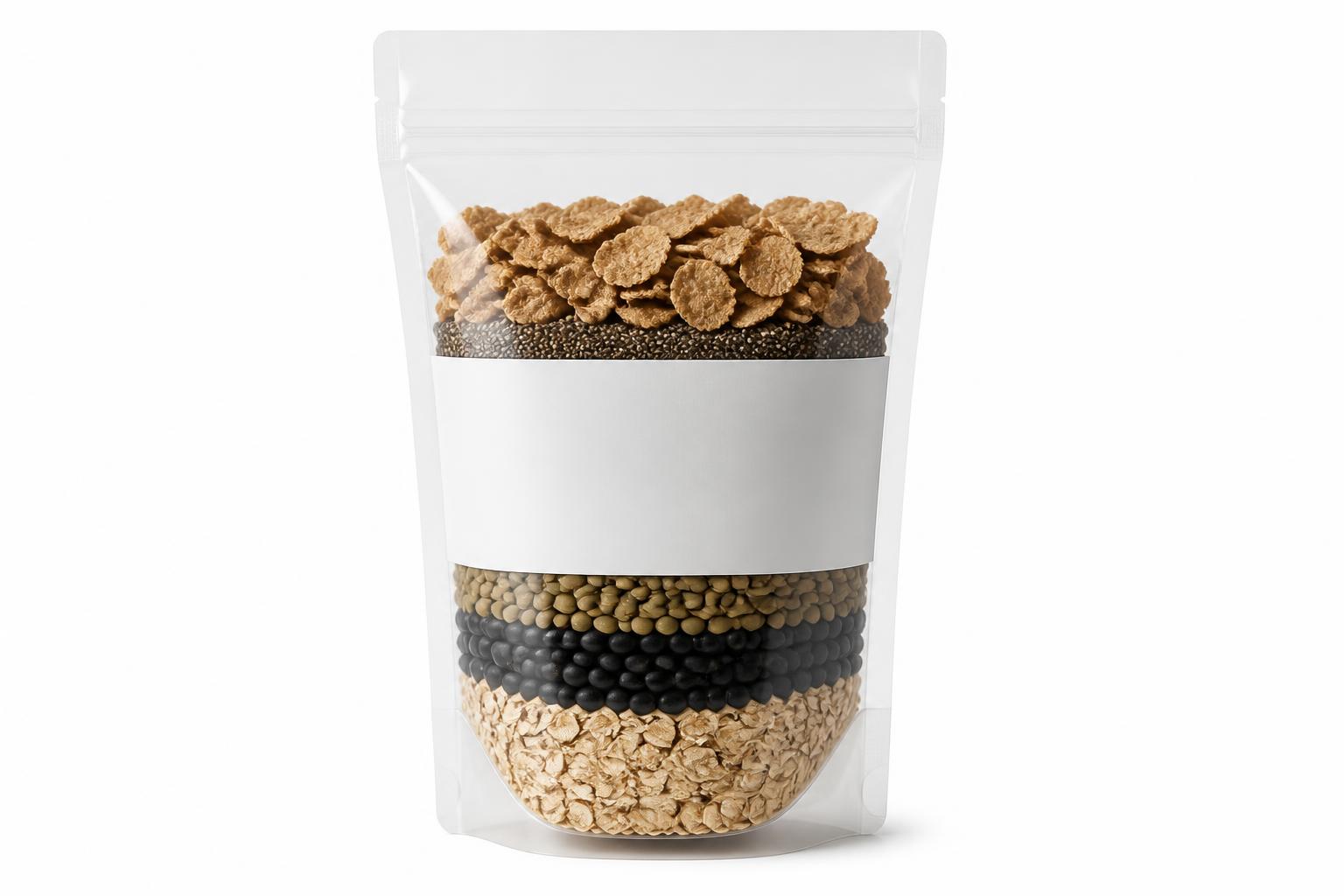
Why fiber matters beyond digestion
Dietary fiber is split into two types: soluble and insoluble. Soluble fiber dissolves in water and forms a gel that slows digestion. Insoluble fiber adds bulk and helps food move through the gut. Both matter.
A large body of research, including a 2019 Lancet meta-analysis covering nearly 250 million person-years of data, links higher fiber intake to lower rates of cardiovascular disease, type 2 diabetes, and colorectal cancer. That is not a guaranteed outcome for any individual, but it reflects strong population-level evidence worth knowing.
For women in their 40s and 50s, fiber also plays a role in supporting gut microbiome diversity, which the NIH Human Microbiome Project has linked to broader immune and metabolic function.
High fiber food examples: whole foods first
Whole foods are the most straightforward category on any high fiber foods list. No label decoding required.
Legumes and beans
- Lentils - about 15 g fiber per cooked cup
- Black beans - about 15 g per cooked cup
- Chickpeas - about 12 g per cooked cup
- Edamame - about 8 g per cup
Canned versions work just as well. Look for cans with no added salt or BPA-free lining when possible.
Whole grains
- Oats (rolled or steel-cut) - about 4 g per half-cup dry
- Barley - about 6 g per cooked cup
- Quinoa - about 5 g per cooked cup
- Whole wheat pasta - about 6 g per cooked cup
Vegetables
- Artichokes - about 10 g per medium artichoke
- Green peas - about 9 g per cooked cup
- Broccoli - about 5 g per cooked cup
- Brussels sprouts - about 4 g per cooked cup
- Sweet potato (with skin) - about 4 g per medium potato
Fruits
- Raspberries - about 8 g per cup
- Pears (with skin) - about 5 g per medium pear
- Apples (with skin) - about 4 g per medium apple
- Avocado - about 10 g per cup
Nuts and seeds
- Chia seeds - about 10 g per 2 tablespoons
- Flaxseed (ground) - about 4 g per 2 tablespoons
- Almonds - about 3.5 g per ounce
Foods rich in fiber at the grocery store: packaged picks
Not every high-fiber option is in the produce aisle. Packaged foods can be genuinely fiber-rich, but labels deserve a closer look.
What to check on the Nutrition Facts label
- Dietary Fiber row - aim for 5 g or more per serving for a "high fiber" claim.
- Serving size - a bar listing 10 g of fiber per 100 g serving sounds impressive until you notice the serving is 28 g.
- Ingredient list - fiber should come from whole food sources like oats, psyllium husk, chicory root, or beans. Watch for isolated fibers added primarily to inflate the number, such as inulin or polydextrose, which may not offer the same benefits as intact plant fiber according to FDA guidance on dietary fiber.
For a deeper walkthrough of how to read the full panel, the Nutrition Facts label explained guide covers every row in plain language.
Best high fiber foods in the packaged aisle
| Category | What to look for | Fiber range |
|---|---|---|
| Crackers | 100% whole grain, 3+ g per serving | 3-5 g |
| Cereals | Oat-based, bran, no added dyes | 4-10 g |
| Protein/snack bars | Oats or nuts as first ingredients | 4-7 g |
| Canned beans | Low sodium, simple ingredient list | 6-8 g |
| Frozen edamame | Edamame only, no sauces | 8 g |
| Whole grain bread | Whole wheat as first ingredient | 3-5 g |
If you want fiber-rich options that also avoid ultra-processed additives, the minimally processed foods list is a useful companion guide.
Label red flags on "high fiber" packaged foods
Some products market themselves as high fiber while carrying a long list of additives. A few things to watch for:
- Chicory root extract or inulin added in large amounts - these are fermentable fibers that can cause bloating in sensitive individuals, and they are sometimes used to pad fiber counts rather than improve nutrition.
- Added sugars alongside fiber - a bar with 8 g of fiber and 18 g of added sugar is not a net win. Check both rows.
- Artificial colors or preservatives - fiber content does not offset other ingredient concerns. A high-fiber snack can still carry dyes or preservatives worth knowing about.
Reading every label in the aisle takes time. That is exactly the problem a barcode scanner app is designed to solve.
Practical tips for hitting your daily fiber goal
- Add a tablespoon of ground flaxseed to oatmeal or a smoothie.
- Swap white rice for cooked lentils or barley in grain bowls.
- Keep a bag of frozen edamame in the freezer for a fast, fiber-dense snack.
- Choose whole fruit over juice. The fiber stays in the fruit, not the glass.
- Build at least one bean-based meal per week, such as a black bean taco or lentil soup.
Small swaps across multiple meals add up faster than trying to find one single superfood.
Conclusion
A practical high fiber foods list does not have to be complicated. Prioritize legumes, whole grains, vegetables, fruits, and seeds as your foundation. When buying packaged foods, check that fiber comes from real whole food sources, and cross-reference the sugar and additive rows before you commit. For women in their 40s and 50s, consistent fiber intake from varied plant sources is one of the most well-supported dietary habits in the nutrition literature. If you want to scan packaged products quickly and see exactly what is inside, the Osana app lets you check fiber sources, additives, and ingredient quality in seconds at the shelf.
Frequently asked questions
How much fiber should a woman over 40 eat per day?
The Dietary Guidelines for Americans recommend 25 grams per day for adult women. After age 50, the recommendation drops slightly to 21 grams, though many nutrition researchers suggest staying at or above 25 grams for ongoing health benefits.
What is the single highest fiber food I can add to my diet easily?
Chia seeds are one of the most practical options. Two tablespoons deliver roughly 10 grams of fiber and can be stirred into oatmeal, yogurt, or smoothies with almost no prep time.
Are fiber supplements as good as fiber from food?
Whole food fiber comes packaged with vitamins, minerals, and phytochemicals that supplements do not replicate. The FDA notes that isolated or synthetic fibers must demonstrate a physiological benefit to count toward the daily value, and research generally supports whole food sources as the most beneficial form.
How do I know if a packaged food's fiber is real or added?
Check the ingredient list. If you see whole oats, whole wheat, beans, or psyllium husk near the top, the fiber is likely intact. If inulin, chicory root extract, or polydextrose appear and the base ingredients are refined, the fiber has been added after processing.
Can eating more fiber cause digestive discomfort?
Increasing fiber intake too quickly can cause bloating or gas, especially from fermentable fibers like inulin. Nutrition experts generally recommend increasing intake gradually over two to three weeks and drinking more water alongside the increase.
Is fruit juice a good source of fiber?
No. Juicing removes most of the insoluble fiber from fruit. A whole apple delivers about 4 grams of fiber. Apple juice delivers close to zero. Eating the whole fruit is always the better choice for fiber intake.
Get the cleaner swaps list before your next grocery run.
One short email a week: new label checks and better-for-you products we actually tested.
No spam. Unsubscribe anytime.

Choose cleaner swaps before they land in your cart.
Use Osana at Whole Foods, Trader Joe's, Target, Costco, or Walmart to compare labels faster and shop with more confidence.