How to Avoid Ultra Processed Foods at the Grocery Store
 By Clement7 min read
Find the controversial ingredients already in your kitchen.
Scan packaged foods at home, understand ingredients, and find healthier alternatives in seconds.




 Scan with Osana
What avoiding ultra-processed foods actually means
Avoiding ultra-processed foods means reducing your intake of products that fall into NOVA Group 4, a classification developed by researchers at the University of São Paulo that ranks foods by the degree of industrial processing rather than by nutrients alone. It does not mean eliminating every packaged food in your cart. Most people in the US can meaningfully reduce ultra-processed food (UPF) intake by making targeted swaps in a handful of high-exposure categories, without overhauling their entire diet overnight.
If you want a full breakdown of what qualifies as ultra-processed under the NOVA framework, the minimally processed foods list covers the four NOVA groups in detail. This article focuses on the practical side: how to spot UPFs on a shelf, where they hide in common US stores, and how to eat less ultra-processed food without spending your weekend reading ingredient panels.
How to read a label for ultra-processing signals
The Nutrition Facts panel tells you calories, fat, and sodium, but it does not tell you how processed a product is. For that, you need the ingredient list.
The core question is: does this ingredient exist in a home kitchen? Flour, olive oil, salt, and rolled oats do. Maltodextrin, carrageenan, modified corn starch, polysorbate 80, and artificial flavors generally do not. A long ingredient list is not automatically a red flag, but a list dominated by industrial additives, flavor enhancers, and emulsifiers is a reliable signal of NOVA Group 4 status.
A few practical markers to scan for:
- Emulsifiers and stabilizers: carrageenan, xanthan gum used as a primary texture agent, mono- and diglycerides, polysorbate 80
- Flavor systems: "natural flavor" or "artificial flavor" listed prominently rather than as a minor seasoning
- Protein isolates and hydrolyzed proteins: common in protein bars, plant-based meats, and diet foods
- Color additives: Red 40, Yellow 5, Yellow 6, titanium dioxide
- Sweetener blends: combinations of high-fructose corn syrup, sucralose, and acesulfame potassium in the same product
None of these ingredients are automatically dangerous at the doses found in food, but their presence together is a reliable proxy for industrial reformulation. The food additives list goes deeper on what individual additives do and which ones appear most often on US labels.
The categories where UPFs are hardest to avoid
Some aisles are almost entirely NOVA Group 4. Others are mixed. Knowing which is which saves time.
Breakfast cereals
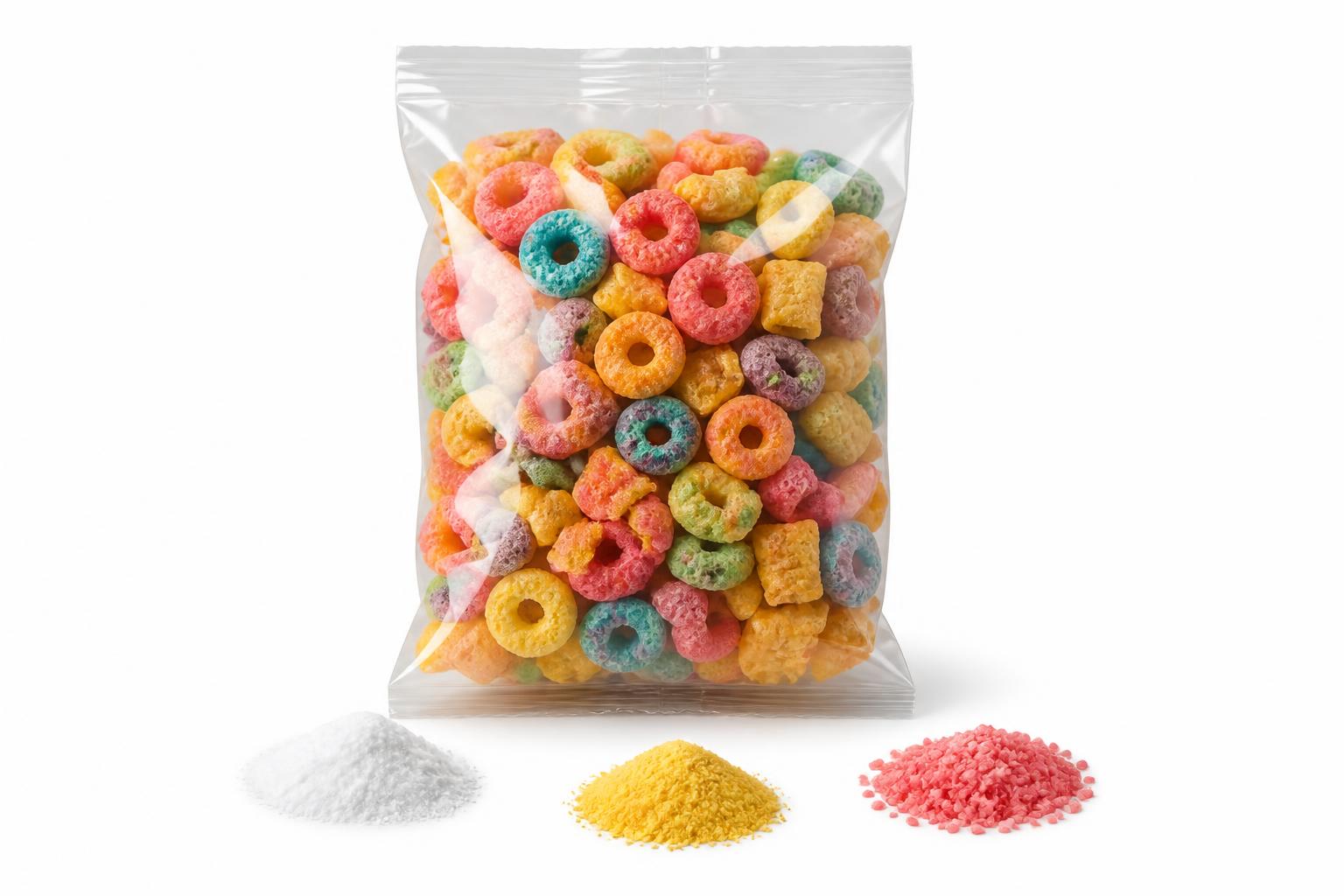
Most mainstream US cereals, including many marketed as "whole grain" or "heart healthy," contain flavor systems, added vitamins in synthetic form, and sugar in multiple guises. Better options at Whole Foods and Trader Joe's include plain rolled oats, shredded wheat with no added ingredients, or granolas with five or fewer recognizable components. Check the ingredient list, not the front-of-pack claims.
Bread and wraps
Store bread is one of the most common UPF sources in American households. A sourdough with flour, water, salt, and starter is NOVA Group 2 or 3. A "whole wheat" sandwich loaf with dough conditioners, azodicarbonamide, and added sugars is NOVA Group 4. At Costco and Walmart, the ingredient count on bread varies widely by brand, so scanning before buying matters.
Flavored yogurts and dairy drinks
Plain Greek yogurt is minimally processed. Yogurt with "fruit on the bottom," added pectin, modified starch, and natural flavor is closer to a dessert product. The swap is simple: buy plain yogurt and add your own fruit.
Plant-based meat alternatives
This category is almost entirely NOVA Group 4 regardless of how it is marketed. Products like Beyond Burger and many store-brand veggie patties rely on methylcellulose, pea protein isolate, natural flavor, and multiple stabilizers to achieve their texture. They may fit certain dietary goals, but they are not "less processed" than a conventional beef burger.
Snack foods and protein bars
This is where ingredient lists get longest fastest. Many bars sold at Target and Whole Foods as "clean" or "real food" contain five or more industrial additives. Reading the back panel rather than the front is the only reliable filter.
Practical swaps that reduce ultra-processed food without perfection
The goal is not a zero-UPF diet. Research from NIH-funded cohort studies suggests that the overall dietary pattern matters more than eliminating any single product. A reasonable approach:
- Anchor meals in NOVA Group 1 and 2 foods: eggs, plain meat, fish, legumes, whole grains, fresh or frozen vegetables and fruit. These require no label reading.
- Apply the five-ingredient heuristic loosely: not as a rule, but as a prompt. If a product has more than five ingredients and several are unfamiliar, check whether a simpler version exists nearby.
- Swap one category at a time: replacing breakfast cereal with oats, or switching from flavored yogurt to plain, has more impact than trying to overhaul every meal simultaneously.
- Use frozen vegetables freely: plain frozen vegetables are NOVA Group 1 and often cheaper than fresh. The ultra-processed version is the one with a sauce packet or seasoning blend added.
- Cook sauces and dressings occasionally: most bottled dressings are NOVA Group 4. A vinaigrette made with olive oil, vinegar, and mustard takes two minutes and avoids the emulsifier problem entirely.
What the science actually says (without overstating it)
A growing body of observational research, including a 2024 umbrella review published in the BMJ, associates high UPF intake with increased risk of several chronic conditions. These are associations from dietary surveys, not controlled trials, so they do not prove causation at the individual level. Researchers at IARC and elsewhere continue to study the mechanisms, which may involve additive interactions, disrupted satiety signaling, or the displacement of more nutritious foods rather than any single ingredient.
The honest takeaway: eating less ultra-processed food is a reasonable, evidence-informed goal. It does not require treating every additive as toxic or every packaged food as harmful.
Conclusion
Learning how to avoid ultra processed foods comes down to three habits: reading the ingredient list instead of the front panel, knowing which store categories are highest-risk, and making gradual swaps rather than pursuing perfection. The NOVA framework gives you a consistent lens, and US grocery stores, even mainstream ones, carry enough minimally processed options to make this realistic on any budget. If you want a faster way to apply this at the shelf, Osana lets you scan any barcode or ingredient label and instantly see processing level, flagged additives, and cleaner alternatives.
Frequently asked questions
Is it realistic to avoid UPF completely?
For most people in the US, no, and the evidence does not suggest you need to. Reducing high-frequency UPF sources like daily snack foods, sweetened drinks, and processed breakfast items is more practical and still meaningful.
Are organic products less ultra-processed?
Not necessarily. Organic certification addresses pesticide use and farming practices, not processing level. An organic cookie with carrageenan and natural flavor is still NOVA Group 4.
How do I reduce ultra processed foods for my kids without major battles?
Start with one category, usually breakfast or snacks, and swap gradually. Plain oats with fruit instead of flavored instant packets, or whole-grain crackers with real cheese instead of processed cheese snacks, are low-resistance starting points.
Does "minimally processed" on a label mean anything official?
No. It is a marketing term with no FDA regulatory definition. The NOVA classification is a research tool, not a labeling standard. You have to assess the ingredient list yourself.
Are all additives in ultra-processed foods harmful?
No. Many additives are well-studied and considered safe at typical exposure levels by the FDA and other regulatory bodies. The concern with UPFs is less about any single additive and more about the overall dietary pattern and what these products displace.
What is the fastest way to spot a UPF at the store?
Flip to the ingredient list and look for ingredients you would not find in a home kitchen: emulsifiers, flavor systems, protein isolates, or synthetic color additives. The more of these present, the more likely the product is NOVA Group 4.
Get the cleaner swaps list before your next grocery run.
One short email a week: new label checks and better-for-you products we actually tested.
No spam. Unsubscribe anytime.

Choose cleaner swaps before they land in your cart.
Use Osana at Whole Foods, Trader Joe's, Target, Costco, or Walmart to compare labels faster and shop with more confidence.