Healthiest granola: how popular brands compare on sugar, fat, and ingredients
 By Clement6 min read
Find the controversial ingredients already in your kitchen.
Scan packaged foods at home, understand ingredients, and find healthier alternatives in seconds.




 Scan with Osana
The healthiest granola is the one with whole grains, nuts, or seeds listed first, no more than about 5 grams of added sugar per serving, a better-quality fat, and a short ingredient list. Many granolas look wholesome but contain as much added sugar as a frosted cereal, especially once you pour a realistic bowl. This guide compares popular granola brands you can find at Target, Walmart, Costco, Whole Foods, and Trader Joe's, and gives you clear criteria to choose a better bag.
How to judge a healthy granola
Granola labels can be confusing because serving sizes vary from 1/4 cup to 2/3 cup. Before you compare brands, use these five criteria:
- Added sugar per realistic serving. The added sugars line is the most useful number. Aim for 5 grams or less per 1/3 cup, and multiply if you eat more.
- First ingredients. Whole grain oats, nuts, or seeds should come first, not sugar or syrup.
- Type of fat. Coconut oil, olive oil, or the natural fat from nuts are common in premium granolas. Many mainstream brands use canola, soybean, or sunflower oil.
- Protein and fiber. Look for at least 3 grams of fiber and 4 grams of protein per serving, ideally from nuts, seeds, and grains rather than isolates.
- Processing level. Short lists with recognizable ingredients beat granolas with protein isolates, added fibers, and flavor additives.
Healthiest granola brands compared
| Granola | What stands out | What to watch |
|---|---|---|
| KIND ZEROg Added Sugar Granola | Almonds are the first ingredient, sweetness comes from dried fruit | Higher in fat and calories per cup because it is nut-based |
| Purely Elizabeth Original Ancient Grain | Organic oats, quinoa, amaranth, chia, coconut oil | Coconut sugar still counts as added sugar, about 6 grams per serving |
| Nature's Path Pumpkin Seed + Flax | Organic, whole grain oats, pumpkin and flax seeds | Uses cane sugar, brown rice syrup, and soy oil |
| Bear Naked granolas | Simple oats and nuts in many flavors | Small 1/4 cup serving makes sugar look lower |
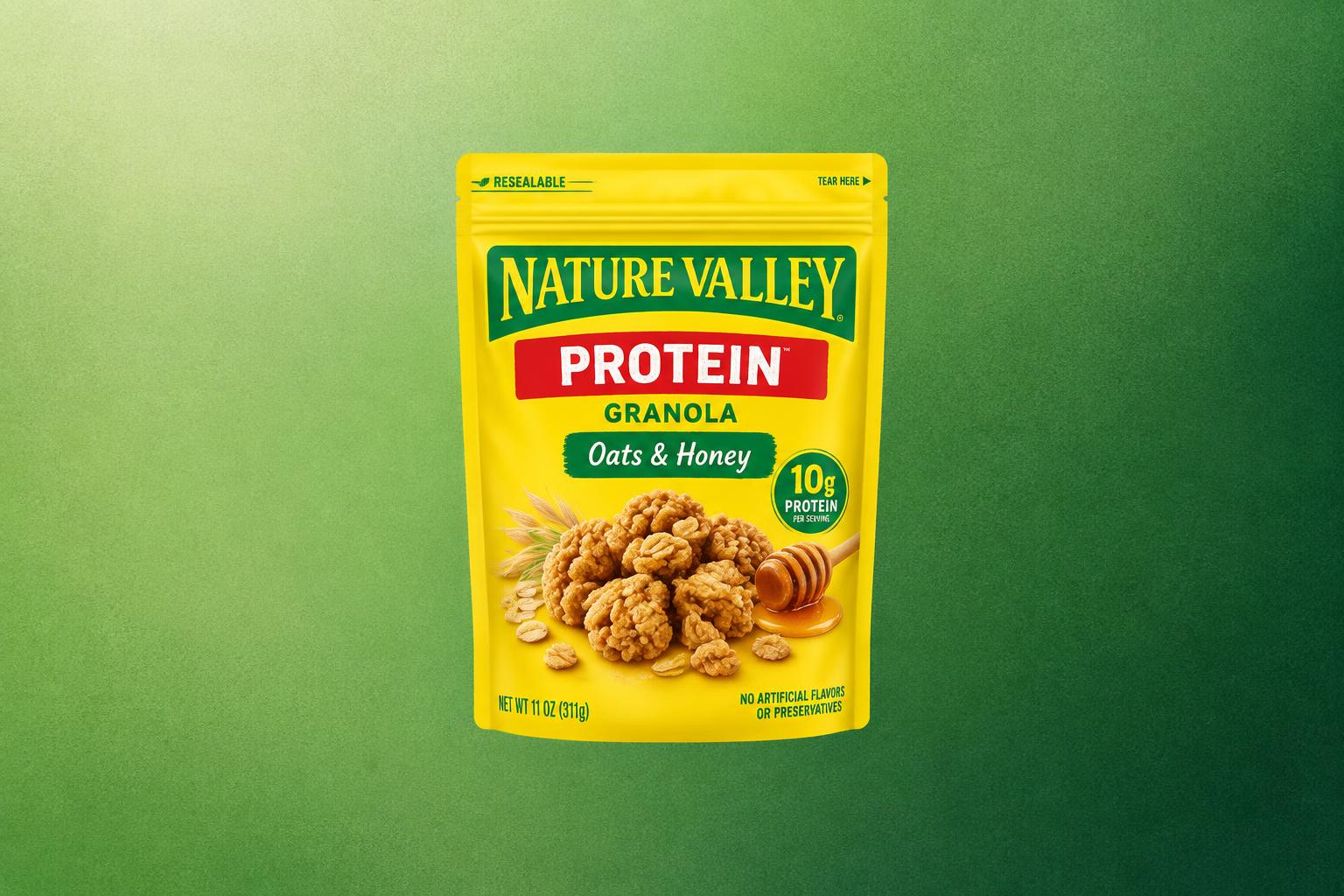
| Nature Valley Protein Oats and Honey | Higher protein per serving | Sugar is the second ingredient, uses soy protein isolate and canola or sunflower oil |
| Quaker Simply Granola Oats, Honey, Raisins and Almonds | Widely available, includes almonds and raisins | Brown sugar, canola oil, and glycerin-coated raisins |
Formulas change, so treat this table as a guide to what to look for and confirm the label on the bag you buy.
The lowest sugar options
Granolas built around nuts and seeds, like KIND ZEROg Added Sugar Granola, avoid added sweeteners altogether and use dried fruit or spices for flavor. Nature's Path has also introduced granola with zero grams of added sugar. These are the best choices if you want granola with less sugar but still want real crunch. The trade-off is higher calories per cup, because nuts are energy-dense, so a smaller pour goes further.
The best "everyday" balance
Purely Elizabeth and similar organic, ancient-grain granolas sit in the middle. They use coconut sugar or maple syrup, but in moderate amounts, with whole grains, seeds, and coconut oil. Their ingredient lists are short and easy to read.
The ones to compare carefully
Mainstream protein granolas and honey-oat granolas are often the sweetest. Sugar may appear in two or three forms, such as sugar, honey, and molasses, and protein often comes from isolates rather than nuts or seeds. They are not off limits, but they work better as a topping than as a full bowl.
Watch the serving size
Serving size is where granola labels mislead the most. The FDA explains on its guide to the Nutrition Facts label that serving sizes reflect what people typically eat, but for granola those sizes are often small:
- A 1/4 cup serving with 5 grams of added sugar becomes 15 grams in a 3/4 cup bowl.
- A 2/3 cup serving with 10 grams may actually be similar per spoonful to a smaller serving with 5 grams.
To compare fairly, convert each brand to the same amount, such as per 1/3 cup or per 30 grams. That one step often changes which granola looks healthiest.
Ingredients worth knowing
- Whole grain oats are the base of most granolas and provide fiber.
- Coconut sugar, maple syrup, honey, and brown rice syrup all count as added sugar, despite sounding more natural.
- Canola, soybean, and sunflower oil are common in mainstream brands. Our list of seed oils covers every name.
- Soy or whey protein isolate raises protein but makes the product more processed.
- Chicory root fiber and inulin raise fiber numbers and can cause bloating in some people.
- Mixed tocopherols are vitamin E based antioxidants that keep oils from going rancid.
If you want a whole grain label you can trust, the Whole Grains Council's Whole Grain Stamp shows how many grams of whole grain are in a serving.
How to use granola in a healthier way
Granola is easiest to fit into a balanced breakfast when it is a topping rather than the base:
- Sprinkle 2 to 3 tablespoons on plain Greek yogurt with berries. Our guide to healthy yogurt brands helps you pick the yogurt.
- Mix half granola, half plain rolled oats or nuts to cut sugar without losing crunch.
- Add it to smoothie bowls for texture instead of using it as the main ingredient.
- Pack small portions in containers for work or school instead of eating from the bag.
A quick decision guide
| If you want | Choose |
|---|---|
| The least added sugar | Nut and seed based granola with zero added sugar |
| A classic oat granola with simple ingredients | Organic ancient grain granola with coconut oil |
| More protein | Nut-forward granola or add Greek yogurt rather than relying on isolates |
| A budget option | A store brand with oats, nuts, and under 6 grams added sugar per serving |
| Gluten free | A certified gluten-free granola, since regular oats can be cross-contaminated |
Conclusion
The healthiest granola starts with whole grains, nuts, or seeds, keeps added sugar around 5 grams or less per realistic serving, uses a better fat, and avoids long lists of isolates and additives. Nut-based zero added sugar granolas and simple organic ancient grain blends are strong choices, while sweet protein and honey-oat granolas work better as a topping than a full bowl. Comparing brands by the same serving size is the single most useful habit at the shelf. If you want those label comparisons done in seconds, try scanning your granola with Osana.
Frequently asked questions
What is the healthiest granola to buy?
Look for granola with nuts, seeds, or whole grain oats listed first, 5 grams or less of added sugar per 1/3 cup, and a short ingredient list. Zero added sugar nut-based granolas are the lowest in sugar.
Is granola healthier than cereal?
Not always. Many granolas have more sugar and calories per cup than plain cereals. Compare added sugar and serving size directly.
Is coconut sugar healthier than regular sugar?
Coconut sugar is still added sugar and counts toward the same daily limit. It has small amounts of minerals, but not enough to make a meaningful difference.
How much granola should I eat?
A typical serving is 1/4 to 1/3 cup. Using granola as a topping on yogurt or fruit keeps portions reasonable.
Get the cleaner swaps list before your next grocery run.
One short email a week: new label checks and better-for-you products we actually tested.
No spam. Unsubscribe anytime.

Choose cleaner swaps before they land in your cart.
Use Osana at Whole Foods, Trader Joe's, Target, Costco, or Walmart to compare labels faster and shop with more confidence.