Healthy yogurt brands: how to compare the tubs in your US grocery cart
 By Clement7 min read
Find the controversial ingredients already in your kitchen.
Scan packaged foods at home, understand ingredients, and find healthier alternatives in seconds.




 Scan with Osana
The healthiest yogurt brands are usually the ones with the shortest ingredient list: milk, live cultures, and little or nothing else. In a US dairy aisle, that generally means plain Greek, Icelandic (skyr), or whole-milk European-style yogurt from brands like Fage, Siggi's, Chobani, Stonyfield Organic, Wallaby, Straus, Maple Hill, and store lines such as Kirkland Signature, Good & Gather and Great Value. The fastest way to compare them is four numbers on the Nutrition Facts panel plus one glance at the ingredient list.
This guide is about picking a tub in the store, not about diagnosing anything. Nutrition needs vary, so treat the numbers below as shopping heuristics rather than medical advice.
The five-second yogurt test
When you pick up any container, check these in order:
- Added sugars on the Nutrition Facts panel. Plain yogurt should show 0 g added sugar. Flavored yogurts often run 8 to 15 g per single-serve cup, which is close to a cookie.
- Protein per serving. Regular yogurt lands around 5 to 9 g per 5.3 oz cup. Greek and skyr typically hit 15 to 20 g for the same size.
- Sodium. Most yogurts sit at 50 to 90 mg per cup, which is minor. Anything meaningfully higher usually signals added stabilizers or a savory formulation.
- Ingredient list length. Milk and cultures is the gold standard. Pectin, locust bean gum and cornstarch are texture agents, not red flags on their own, but they tell you the product was engineered rather than strained.
- Serving size mismatch. Big tubs list 3/4 cup (170 g). Single cups are often 5.3 oz (150 g). Compare per 100 g when in doubt.
Fiber is the one nutrient yogurt rarely delivers. Dairy yogurt has essentially none, so if you want fiber, it comes from what you add: berries, chia, ground flax, or a spoon of rolled oats. Some plant-based yogurts made from oats or almonds list 1 to 3 g, but that is not a reason on its own to switch.
How to choose healthy yogurt by category
Greek and skyr: the protein picks
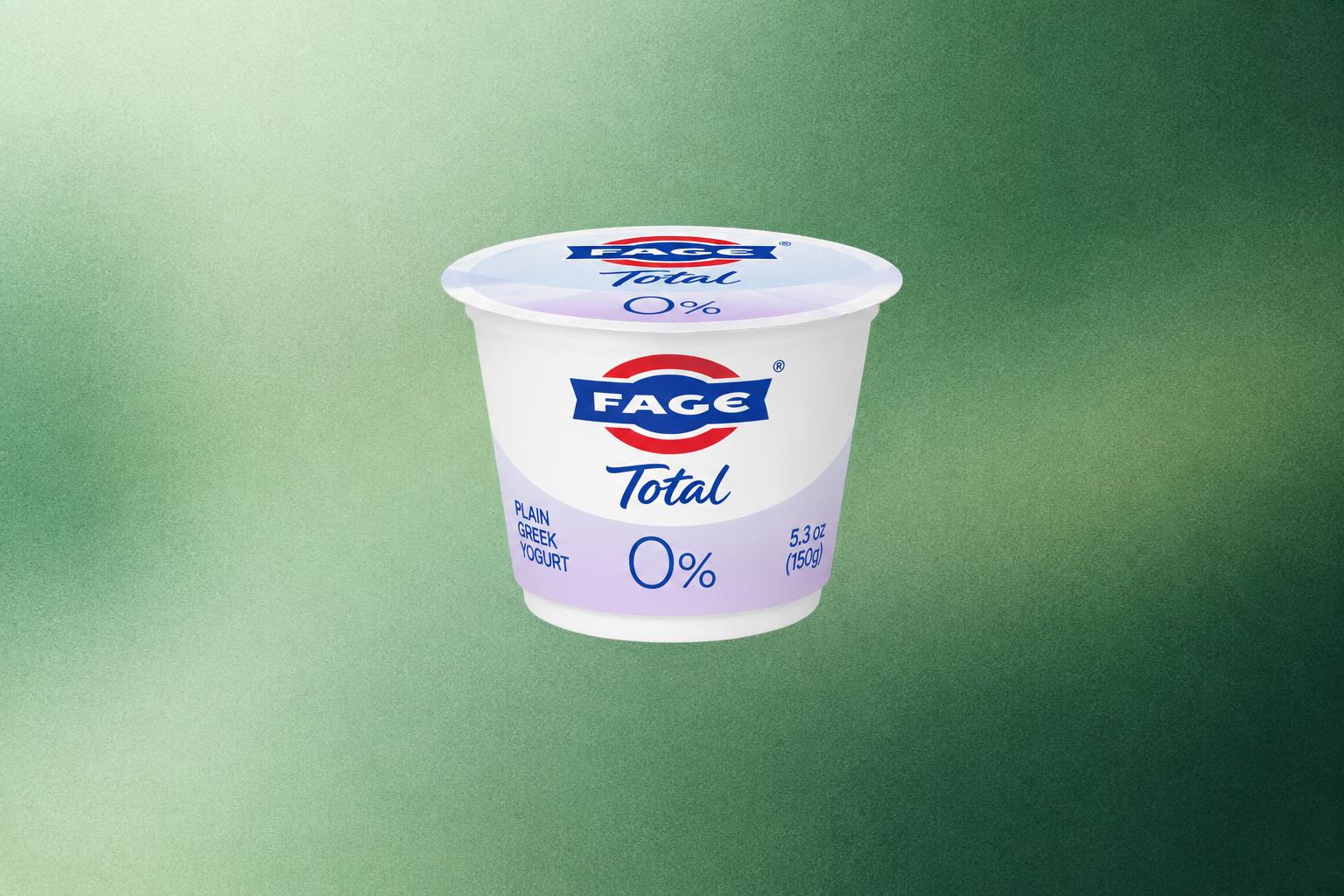
Strained yogurts remove whey, which concentrates protein and cuts lactose. Fage Total 5% plain and Fage 0% plain are milk and cultures only. Siggi's plain skyr follows the same pattern and the brand built its identity on lower sugar flavored versions, typically 5 to 9 g total sugars in the fruit cups rather than the 12 to 15 g common elsewhere. Chobani Plain and Kirkland Signature Organic Greek plain from Costco are widely available, budget-friendly versions of the same idea.
If you are buying for a family, the whole-milk versions are often the more satisfying purchase. Dietary guidance in the US has long emphasized low-fat dairy, but the current Dietary Guidelines for Americans allow dairy in various fat levels within a healthy pattern, and whole-milk plain yogurt keeps added sugar at zero while staying palatable enough that people actually eat it plain.
Traditional and European-style
Stonyfield Organic, Straus Family Creamery, Maple Hill (100% grass-fed), and Brown Cow are cream-top or whole-milk yogurts with simple lists. They carry less protein per ounce than Greek because they are unstrained, roughly 8 g per cup, but the ingredient quality is strong and the texture suits cooking, dressings and overnight oats.
Organic labeling means the milk met USDA organic production rules, including no antibiotics and required pasture access for the herd. It does not automatically mean lower sugar. Plenty of organic yogurts are sweetened heavily.
Low and no-sugar flavored options
This is where labels get slippery. Some light yogurts swap sugar for sucralose, acesulfame potassium, stevia leaf extract or monk fruit. Others use allulose. None of these are obviously disqualifying, but they change what you are buying, and taste preferences vary a lot. If you want to understand how the plant-derived options compare on a label, our breakdown of allulose versus stevia on US labels walks through the differences.
A simpler move: buy the big tub of plain and sweeten one serving at home with half a teaspoon of honey or mashed fruit. You will almost always land under the added-sugar total of a flavored cup, and the cost per ounce drops sharply.
Plant-based yogurt
Coconut, almond, oat and cashew yogurts vary enormously. Coconut-based tubs can be low in protein (1 to 2 g) and relatively high in saturated fat. Soy-based options like Silk soy yogurt are the closest plant match on protein. Check for added calcium and vitamin D, since plant yogurts are not required to match dairy's nutrient profile. Also check the sugar line, because many rely on cane sugar or fruit juice concentrate to mask base flavors.
Processing level: where yogurt actually sits
Plain yogurt is one of the least processed items in the refrigerated aisle. Under the NOVA framework, plain yogurt with only milk and cultures is a processed food, group 3, not an ultra-processed one. Add sweeteners, flavors, colors, thickeners and starches and the same product moves into group 4. If you want the full logic behind those groupings, see our explainer on the NOVA food classification with US grocery examples.
That distinction matters because reviews in journals including the BMJ have linked higher ultra-processed food intake with worse health outcomes at a population level, while fermented dairy consistently shows up as one of the better-performing categories. The practical read: yogurt is a good place to trade a heavily formulated version for a simple one without giving anything up.
Live cultures, probiotics and what the label can tell you
Look for "live and active cultures" and named strains such as Lactobacillus bulgaricus, Streptococcus thermophilus, Lactobacillus acidophilus or Bifidobacterium lactis. Under FDA standards of identity, products called yogurt must be fermented with specific cultures, though heat treatment after culturing can reduce the live count, and such products must say so on the label.
Health claims about gut benefits are strain-specific and dose-specific. The NIH Office of Dietary Supplements notes that evidence differs substantially between strains, so a generic "probiotic" flag on the front of a tub is marketing, not proof of a particular effect.
What to skip, and what is fine
Common in flavored yogurt: modified corn starch, gelatin, pectin, natural flavors, carmine or fruit and vegetable juice for color, and sometimes titanium dioxide in white-coated yogurt products. Titanium dioxide is one of the additives European regulators restricted, which is part of why it surfaces in the "banned in Europe" videos many US shoppers now see, and it is a reasonable one to avoid if you prefer to. Gums and pectin, by contrast, are texture agents used in small amounts and are not the same conversation.
The honest summary: the biggest lever in this aisle is sugar, not additives. A plain tub solves most of it at once.
A quick cart list
- Best all-round value: Kirkland Signature Organic plain Greek or Great Value plain Greek
- Best protein per dollar: Fage Total plain, large tub
- Lowest-sugar flavored: Siggi's fruit skyr cups
- Best for cooking and cream-top texture: Stonyfield Organic or Straus plain whole milk
- Best grass-fed option: Maple Hill plain
Conclusion
The best healthy yogurt is rarely the one with the loudest front-of-pack claim. Buy plain, buy the largest tub your family will finish, check added sugars first and protein second, and sweeten at home. If you would rather see the ingredient breakdown and processing flags instantly while standing in the dairy aisle, scan the barcode with Osana and compare two tubs before either one goes in the cart.
FAQ
Is Greek yogurt always healthier than regular yogurt? Not always. Greek yogurt has more protein and less lactose per ounce, but a sweetened Greek cup can carry more added sugar than a plain regular one. Compare the added sugar line before the protein line.
Does higher price mean a healthier yogurt? No. Store brands like Kirkland Signature, Good & Gather and Great Value sell plain Greek yogurt with the same two-ingredient list as premium brands at a fraction of the cost per ounce.
How much added sugar is reasonable in a flavored yogurt? As a shopping rule, under 8 g per serving is a solid ceiling for a flavored cup. Plain versions show 0 g added sugar while still listing 5 to 12 g total sugars from naturally occurring lactose.
Are yogurt drinks and tubes as good as regular yogurt? They can be convenient for kids' lunchboxes, but drinkable and tube formats are usually sweetened and often thinner on protein. Check the per-container numbers rather than per 100 g, since portions are small.
What should I look for on plant-based yogurt labels? Protein above 5 g if you are using it as a meal component, added calcium and vitamin D, and a sugar line that is not inflated by cane sugar or juice concentrate.

Choose cleaner swaps before they land in your cart.
Use Osana at Whole Foods, Trader Joe's, Target, Costco, or Walmart to compare labels faster and shop with more confidence.