List of seed oils: the complete label-name guide for US shoppers
 By Clement7 min read
Find the controversial ingredients already in your kitchen.
Scan packaged foods at home, understand ingredients, and find healthier alternatives in seconds.




 Scan with Osana
The short answer
Seed oils are edible oils pressed or extracted from the seeds of plants, and the most common ones on US labels are canola (rapeseed), soybean, corn, sunflower, safflower, cottonseed, grapeseed, rice bran, sesame, peanut, and blends listed as "vegetable oil." Yes, canola oil is a seed oil. No, olive oil is not a seed oil, because it is pressed from the fruit of the olive, not from a seed.
Below is the complete reference list, grouped by type, with the exact label wording you will actually read in the aisles at Whole Foods, Trader Joe's, Target, Costco, and Walmart.
What are seed oils, technically
"Seed oil" is a culinary and consumer term, not a legal FDA category. It simply describes oils whose fat comes from a seed rather than from a fruit, nut, animal, or milk. Most of them are extracted at scale with mechanical pressing plus a hexane solvent step, then refined, bleached, and deodorized to make them neutral, shelf stable, and cheap. That industrial refining is a big reason they dominate packaged food.
Nutritionally, most seed oils are high in polyunsaturated fat, especially the omega-6 fatty acid linoleic acid. Some, like high-oleic sunflower and canola, are mostly monounsaturated. The current evidence base on replacing saturated fat with polyunsaturated vegetable oils is more favorable than social media suggests, and major reviews such as the American Heart Association advisory on dietary fats and the NIH fact sheet on omega-3 and omega-6 fatty acids are worth reading before you overhaul your pantry. The practical reason many shoppers cut back is different: refined seed oils are a marker of heavily processed food, and cutting them tends to cut ultra-processed snacks along the way.
The complete list of seed oils
Field and commodity seed oils (the most common in packaged food)
- Canola oil, also labeled rapeseed oil, low erucic acid rapeseed oil, or LEAR oil
- Soybean oil, sometimes "partially hydrogenated soybean oil" on older or imported products
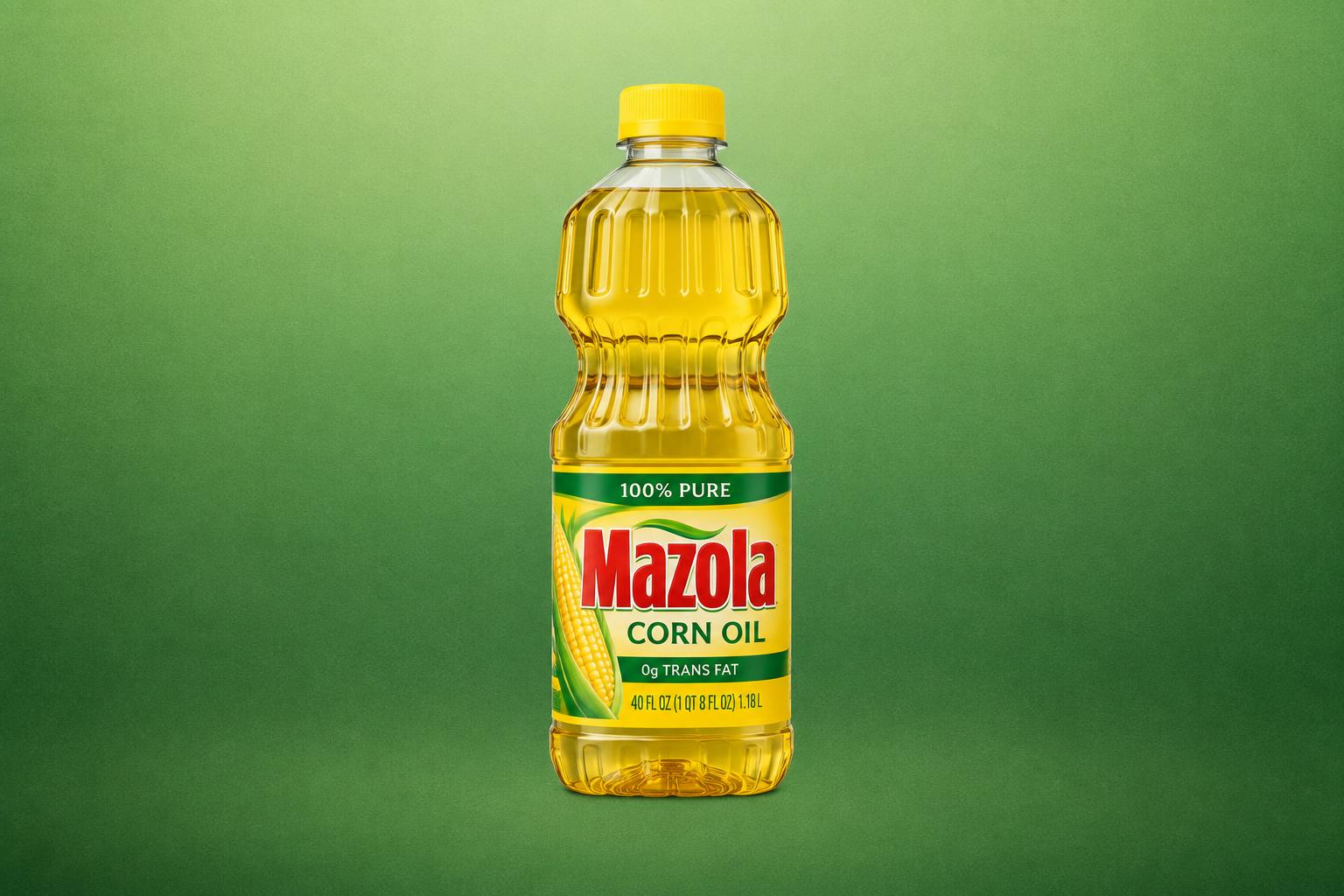
- Corn oil, technically from the germ of the corn kernel and counted as a seed oil
- Cottonseed oil, common in fried snacks, crackers, and commercial shortening
- Sunflower oil, including high-oleic sunflower oil and mid-oleic (NuSun) sunflower oil
- Safflower oil, including high-oleic safflower oil
- Rice bran oil, common in Asian grocery aisles and some chip brands
- Grapeseed oil, a byproduct of winemaking, often marketed as premium
Culinary and specialty seed oils
- Sesame oil, both light and toasted
- Peanut oil, botanically a legume seed and counted as a seed oil in practice
- Mustard seed oil, widely used in South Asian cooking
- Pumpkin seed oil
- Flaxseed oil, also labeled linseed oil
- Hemp seed oil
- Chia seed oil
- Black seed oil, also labeled nigella sativa oil
- Poppy seed oil
- Camelina oil, sometimes called false flax
- Niger seed oil
- Watermelon seed oil, marketed as kalahari melon oil
Blend and umbrella terms you will see on labels
These are the sneaky ones, because they hide which seed was used:
- Vegetable oil, in the US almost always soybean, canola, corn, or a blend
- "Vegetable oil (soybean and/or canola oil)", the hedge wording used when suppliers change
- Shortening or vegetable shortening, usually palm plus soybean or cottonseed
- Interesterified oil or fully hydrogenated soybean oil, refined structures used to replace trans fats
- High-oleic vegetable oil, often sunflower, safflower, or canola
- Monoglycerides and diglycerides, lecithin (soy), and polysorbates, additives derived from seed oils rather than oils themselves
Which common oils are not seed oils
This is where most shoppers get tripped up. These are pressed from fruits, nuts, animals, or dairy:
- Olive oil and olive pomace oil, from olive fruit
- Avocado oil, from avocado fruit pulp
- Coconut oil, from coconut flesh
- Palm oil and palm kernel oil, from the fruit and kernel of the oil palm (palm kernel is a seed-like kernel, but it is standardly classed with palm, not with seed oils)
- Butter, ghee, beef tallow, lard, duck fat, fish oil, all animal fats
- Almond, walnut, macadamia, pistachio, hazelnut, and pecan oils, tree nut oils
Note that not being a seed oil does not automatically mean better. Palm oil raises sustainability and saturated fat questions, and "olive oil blend" on a label often means olive oil plus canola. Turn the bottle around and read the ingredient statement, not the front label.
How to spot seed oils in a real grocery cart
The FDA requires ingredients in descending order by weight, so position tells you how much is in there. A few category patterns worth knowing:
- Salad dressings and mayo: soybean or canola is usually the first ingredient. "Avocado oil dressing" often means avocado oil plus canola.
- Chips and crackers: sunflower, safflower, corn, or cottonseed oil, frequently as a blend.
- Breads and buns: soybean oil plus dough conditioners. If you compare loaves, the same logic in our healthiest bread at Walmart guide applies to the oil line too.
- Protein bars, granola, and cereals: canola oil, sunflower oil, or "vegetable oil."
- Frozen meals and rotisserie chicken: soybean oil in the sauce or the marinade injection.
- Nut butters: palm oil or "fully hydrogenated vegetable oil" added to stop separation.
Two label habits pay off fast. First, scan the first five ingredients, since that is where the bulk of the product lives. Second, treat vague oil wording as an unknown, because "vegetable oil" tells you nothing about the actual seed. And keep this in perspective: an oil line is one signal among many, and the overall degree of processing usually matters more, which is what the NOVA food classification system is designed to capture.
Why seed oils became a search trend
Interest surged alongside clean-eating and MAHA-adjacent content, where refined seed oils are often named as a marker of industrial food. As consumer context, that attention is real and it has pushed several US restaurant chains to switch to beef tallow or avocado oil. As science, the picture is more nuanced than the videos suggest, and health agencies including the FDA's guidance on dietary fats and the World Health Organization's saturated fat intake guideline still recommend replacing saturated fat with unsaturated fats. A reasonable middle path: cook with fats you like, and spend your attention on reducing ultra-processed packaged food rather than on hunting one molecule.
Conclusion
Seed oils are simply oils from seeds, and the working list is short enough to memorize: canola, soybean, corn, cottonseed, sunflower, safflower, grapeseed, rice bran, sesame, peanut, plus the specialty oils and anything labeled "vegetable oil." Olive, avocado, coconut, and animal fats sit outside that group. Once you know the names, the only remaining task is reading the back of the package, and if you would rather not do that in the aisle, you can scan the barcode with Osana and see the oils and additives in a product in a couple of seconds.
Frequently asked questions
Is canola oil the same as rapeseed oil?
Effectively yes. Canola is a low erucic acid variety of rapeseed developed in Canada. US labels say canola oil, European labels usually say rapeseed oil.
Is peanut oil a seed oil even though peanuts are legumes?
Botanically peanuts are legume seeds, not tree nuts, so peanut oil is generally grouped with seed oils in everyday usage.
Is "vegetable oil" always a seed oil in the US?
Almost always. It typically means soybean, canola, corn, or a blend of those. If a product uses palm or coconut, manufacturers usually name it.
Which seed oil is the most refined?
Commodity oils like soybean, canola, corn, and cottonseed are usually fully refined, bleached, and deodorized. Cold-pressed or expeller-pressed versions, and toasted sesame oil, are less processed.
Should I throw out everything with seed oils?
No. A more useful step is cutting back on heavily processed packaged foods overall, which naturally lowers refined oil intake without turning grocery shopping into a project.

Choose cleaner swaps before they land in your cart.
Use Osana at Whole Foods, Trader Joe's, Target, Costco, or Walmart to compare labels faster and shop with more confidence.