Healthy Snacks for Kids: A Family Shopping Guide
 By Clement7 min read
Find the controversial ingredients already in your kitchen.
Scan packaged foods at home, understand ingredients, and find healthier alternatives in seconds.




 Scan with Osana
What makes a snack actually healthy for kids?
The best healthy snacks for kids deliver real nutrients, keep added sugar low, and have short ingredient lists you can actually read. Whether you are grabbing something off the shelf at Target or packing a lunchbox from scratch, the difference between a nourishing snack and a dressed-up treat usually comes down to three numbers on the label: added sugar, protein, and fiber.
This guide compares both packaged and whole-food options across those metrics so you can shop smarter at Whole Foods, Trader Joe's, Costco, or Walmart without spending 20 minutes decoding labels in the aisle.
The label numbers that matter most
Before comparing specific snacks, it helps to know what targets are reasonable for a child's snack portion.
- Added sugar: The American Heart Association recommends children aged 2 to 18 consume less than 25 grams of added sugar per day. A single snack ideally stays under 6 grams.
- Protein: 3 to 6 grams per snack helps with satiety and stable energy, especially after school.
- Fiber: Even 2 to 3 grams per serving makes a meaningful contribution to a child's daily 14 to 25 gram target.
- Sodium: The FDA's guidance suggests limiting sodium across the day. For a single kids snack, under 200 mg is a reasonable benchmark.
- Ingredient list length: Shorter is generally better. If you cannot pronounce the fourth ingredient, that is a signal worth investigating.
For a deeper look at how added sugar differs from total sugar on a label, the added sugar vs total sugar breakdown is worth bookmarking before your next grocery run.
Whole-food snacks: the easiest wins
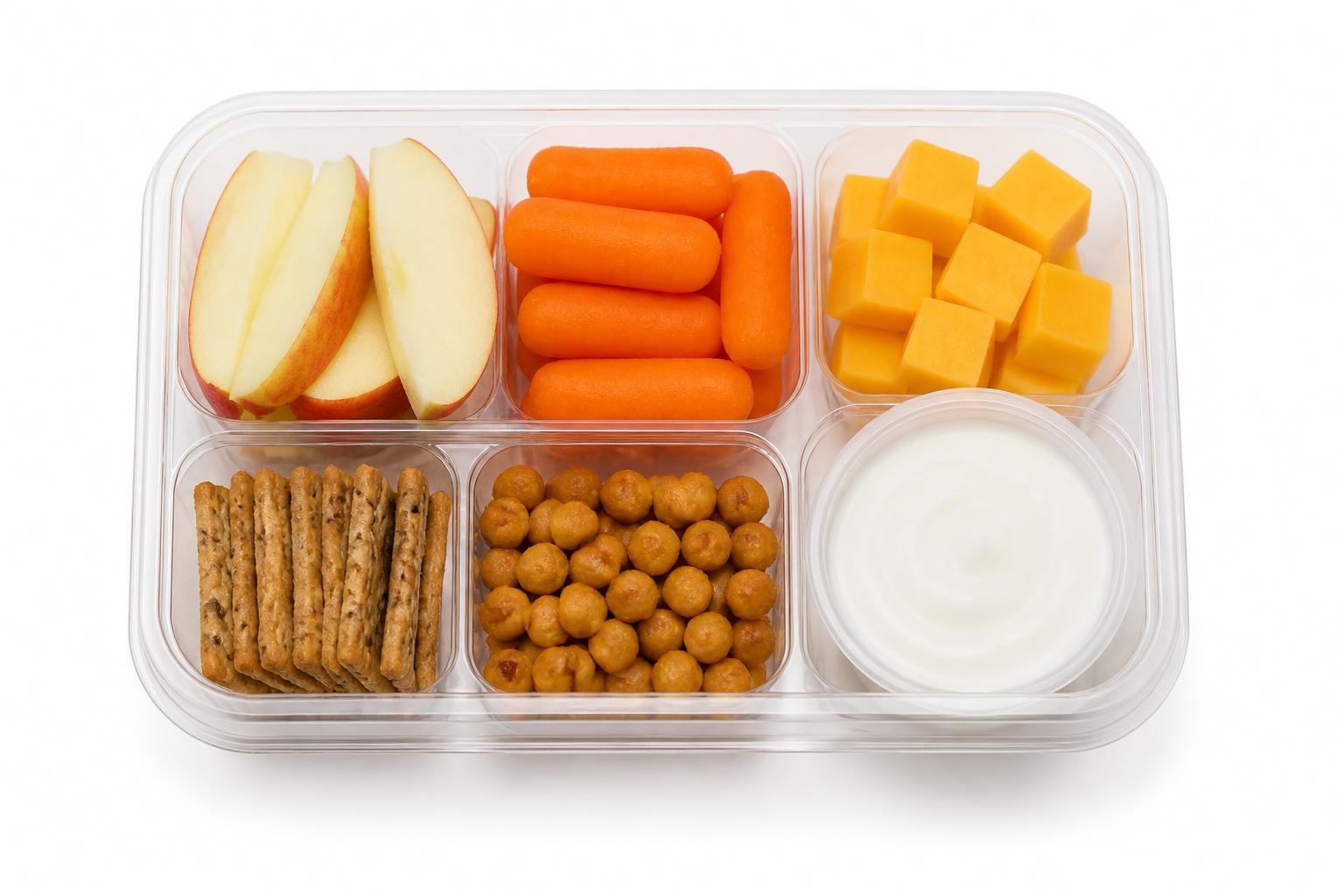
Whole foods require zero label reading and consistently outperform packaged options on every metric that matters.
Produce and dairy combinations
- Apple slices with almond butter: roughly 4 g fiber, 4 g protein, 0 g added sugar. Available pre-sliced at Costco and Trader Joe's.
- Baby carrots with hummus: 2 g fiber, 3 g protein, 0 g added sugar. Hummus cups from brands like Hope or Cedar's keep sodium under 130 mg per serving.
- String cheese with grapes: 6 g protein, 0 g added sugar. Organic Valley and Horizon are widely available at Walmart and Target.
- Greek yogurt (plain, full-fat) with berries: 10 to 15 g protein, 0 g added sugar if you skip the flavored varieties. Stonyfield Organic and Siggi's are solid picks.
The pattern here is pairing something with natural fiber or water content alongside a protein source. That combination slows glucose absorption, which research published in Nutrients links to steadier energy and reduced overconsumption in children.
Best healthy packaged snacks for kids: what to look for
Convenience matters. Parents need grab-and-go options that hold up in a lunchbox. The good news is that the packaged snack aisle has improved, but quality varies enormously even within the same brand line.
Snack bars and bites
Look for bars where the first two ingredients are a whole food (dates, oats, nuts) rather than a refined grain or syrup.
- Larabar Kids (Apple Pie or Banana Chocolate Chip): 3 to 4 ingredients, 3 g fiber, under 10 g total sugar, 0 g added sugar. Sold at most major retailers.
- RxBar Kids: 5 g protein, 5 g added sugar, no artificial flavors. The ingredient list is printed on the front of the package.
- KIND Kids bars: 5 g added sugar or less in most flavors, 3 g protein. Check the flavor because chocolate-heavy varieties climb higher.
Avoid bars where the second or third ingredient is cane sugar, brown rice syrup, or tapioca syrup. Those are low sugar kids snacks in marketing only.
Crackers and savory snacks
- Simple Mills Almond Flour Crackers: 3 g protein, 1 g fiber, under 160 mg sodium, no seed oils. Available at Whole Foods and Target.
- Mary's Gone Crackers (Original): 3 g protein, 3 g fiber, 115 mg sodium. A solid choice for kids who like a crunchier texture.
- Trader Joe's Organic Popcorn: 2 g fiber, 75 mg sodium, short ingredient list. Popcorn is a genuinely whole-grain snack when it is not loaded with additives.
For savory snacks, the main pitfall is sodium and seed oils like soybean or canola oil appearing high on the ingredient list. If you want to understand how to spot those quickly, the guide on how to read food ingredient labels walks through the process step by step.
Pouches and fruit snacks
Fruit pouches are convenient but often strip out fiber. A squeezable applesauce pouch typically has 0 g fiber and 10 to 12 g of naturally occurring sugar with no satiety benefit. They are fine occasionally, but they should not replace whole fruit.
Fruit snacks labeled "made with real fruit juice" are generally candy with a wellness rebrand. Check the added sugar line. If it is above 8 g per pouch, treat it as a treat.
A quick comparison table
| Snack | Protein | Fiber | Added Sugar | Sodium |
|---|---|---|---|---|
| Apple + almond butter | 4 g | 4 g | 0 g | 0 mg |
| String cheese + grapes | 6 g | 1 g | 0 g | 170 mg |
| Larabar Kids | 2 g | 3 g | 0 g | 30 mg |
| RxBar Kids | 5 g | 3 g | 5 g | 105 mg |
| Simple Mills Crackers | 3 g | 1 g | 0 g | 150 mg |
| Typical fruit snack pouch | 0 g | 0 g | 10 g | 25 mg |
Practical tips for shopping with kids in mind
- Read the added sugar line first, not the total sugar line. Fruit has natural sugar. Added sugar is what the manufacturer put in.
- Scan the ingredient list from the bottom up to catch minor additives like carrageenan, artificial flavors, or synthetic preservatives that appear in small amounts.
- Buy the plain version and add flavor yourself. Plain Greek yogurt with a drizzle of honey beats strawberry-flavored yogurt with 15 g of added sugar every time.
- Watch portion sizes on "healthy" snacks. A serving of nut butter crackers is often two crackers. The whole sleeve is four servings.
- Shop the perimeter first. Produce, dairy, and whole nuts require no label reading and anchor a strong snack rotation.
Conclusion
The best healthy snacks for kids are not necessarily the ones marketed to children with cartoon characters and "made with whole grains" banners. They are the ones with short ingredient lists, meaningful protein or fiber, and added sugar you can count on one hand. Whole foods win on every metric, but a handful of packaged options from brands like Larabar, RxBar, and Simple Mills hold up well when you compare labels honestly. The skill is knowing which numbers to check and which marketing phrases to ignore. If you want to make that process faster at the shelf, Osana's barcode and ingredient scanner lets you check any product in seconds so you can shop with confidence.
Frequently asked questions
How much added sugar is too much in a kids snack?
The American Heart Association recommends under 25 g of added sugar per day for children over 2. Keeping a single snack under 6 g of added sugar leaves room for the rest of the day.
Are fruit pouches healthy for kids?
They are convenient and not harmful in moderation, but most pouches remove the fiber from whole fruit and provide little satiety. Whole fruit or apple slices are a better everyday choice.
What packaged snacks are lowest in sugar for kids?
Larabar Kids, RxBar Kids, plain rice cakes, Simple Mills crackers, and unsalted nuts or seeds are among the lowest added sugar packaged options widely available in US grocery stores.
How do I know if a snack bar is ultra-processed?
Check whether the first few ingredients are whole foods you recognize, and look for additives like artificial flavors, emulsifiers, or multiple types of sweetener. A bar with five whole-food ingredients is very different from one with fifteen items including modified starches and syrups.
Are "made with whole grains" snacks actually healthy?
Not automatically. Whole grain can appear as a minor ingredient while refined flour and added sugar dominate. Always check where whole grain appears in the ingredient list and what the fiber count actually is.
Can kids eat the same snacks as adults?
Generally yes, with portion adjustments. Many snacks marketed specifically to children are simply smaller portions of adult products with more sugar and brighter packaging. Adult-oriented options like plain nuts, cheese, or Simple Mills crackers are often cleaner choices.
Get the cleaner swaps list before your next grocery run.
One short email a week: new label checks and better-for-you products we actually tested.
No spam. Unsubscribe anytime.

Choose cleaner swaps before they land in your cart.
Use Osana at Whole Foods, Trader Joe's, Target, Costco, or Walmart to compare labels faster and shop with more confidence.