High Protein Foods List: A Practical Grocery Guide
 By Clement7 min read
What counts as a high protein food?
A high protein food generally provides at least 10 grams of protein per serving, though the FDA allows a "good source of protein" claim at 10-19% of the Daily Value and an "excellent source" claim at 20% or more. For women in their 40s and 50s, adequate protein intake supports muscle maintenance, satiety, and overall metabolic health, according to guidance from the National Institutes of Health. The current Recommended Dietary Allowance sits at 0.8 grams per kilogram of body weight per day, though many researchers suggest active women in midlife benefit from more.
This guide covers the best whole-food and packaged options you will actually find at Whole Foods, Trader Joe's, Costco, and Walmart, plus the label checks worth doing before anything goes in your cart.

Find the controversial ingredients already in your kitchen.
Scan packaged foods at home, understand ingredients, and find healthier alternatives in seconds.




 Scan with Osana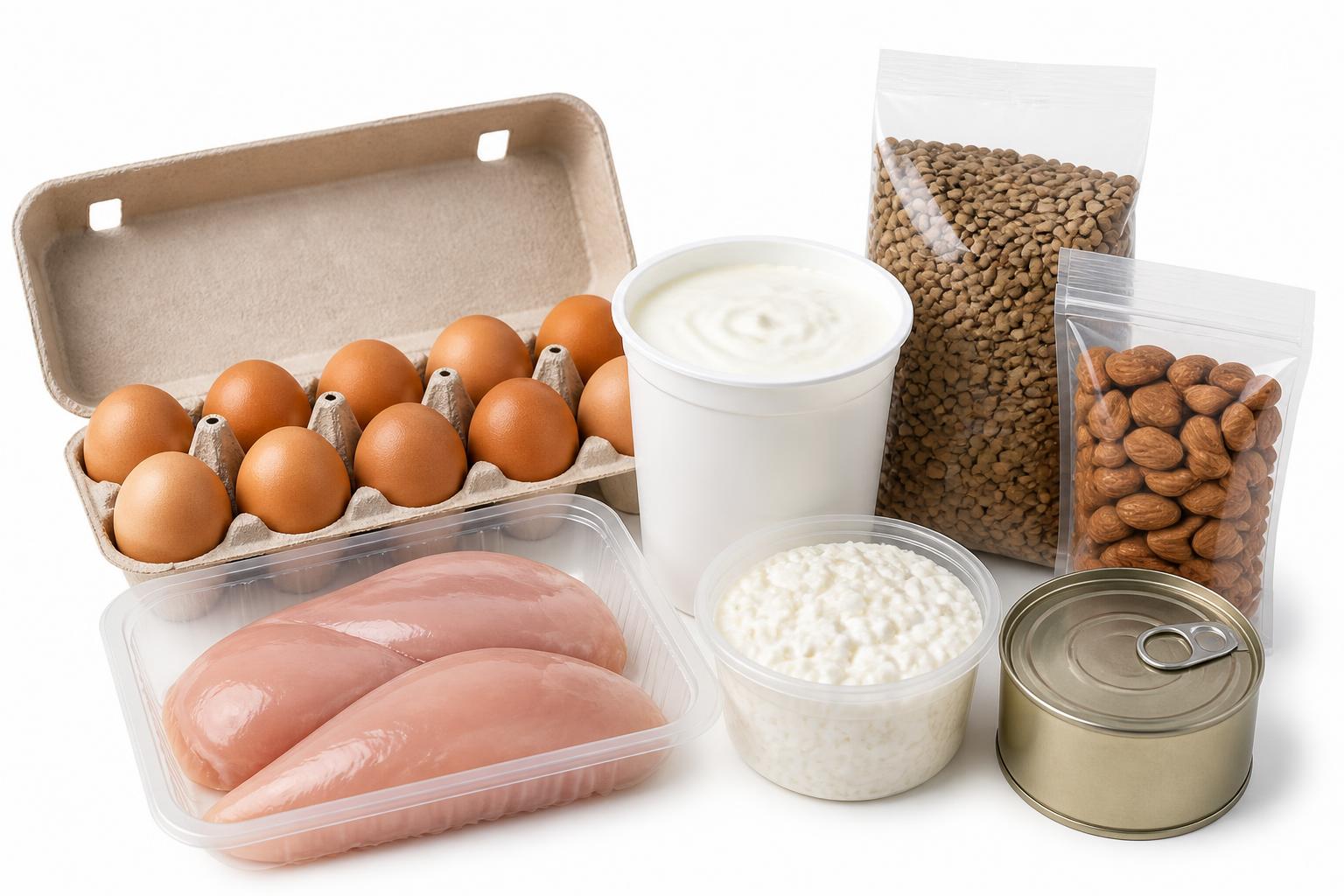
Whole foods that belong on every protein rich foods list
Animal proteins
Animal sources remain the most concentrated and complete options on any foods high in protein list because they supply all nine essential amino acids.
- Chicken breast - roughly 26 g per 3 oz cooked serving, widely available fresh or frozen at every major retailer.
- Canned tuna and salmon - 20-25 g per 3 oz serving, shelf-stable, and easy to portion. Look for "skipjack" or "light" tuna for lower mercury exposure.
- Eggs - 6 g per large egg, with the yolk contributing roughly half. Pasture-raised eggs are common at Whole Foods and Trader Joe's.
- Greek yogurt - 15-20 g per 5-7 oz container depending on brand. Plain, full-fat versions tend to have shorter ingredient lists.
- Cottage cheese - a quieter option that has surged in popularity; a half-cup provides about 14 g of protein.
- Lean beef and turkey - 93% lean ground turkey or sirloin delivers 22-25 g per 3 oz cooked.
Plant proteins
Plant sources are valuable additions, especially for women reducing red meat intake.
- Edamame - 17 g per cup cooked, available frozen at Costco and Trader Joe's in large bags.
- Lentils - 18 g per cooked cup and a strong source of fiber. Canned versions at Walmart make weeknight cooking faster.
- Black beans and chickpeas - 15 g per cooked cup. Canned options with no added salt are easy to find.
- Tofu and tempeh - firm tofu provides about 10 g per half-cup; tempeh offers closer to 15-16 g and has a denser texture that holds up in stir-fries.
- Quinoa - 8 g per cooked cup and one of the few plant foods considered a complete protein source, per the Harvard T.H. Chan School of Public Health.
Best high protein foods in packaged form, and what to check on the label
Packaged protein products are convenient, but the ingredient list deserves a quick scan before you commit.
Greek yogurt and skyr
Brands like Siggi's, Fage, and Chobani Zero Sugar are popular at Target and Whole Foods. Check that protein grams per serving are at least 12-15 g and that added sugars are low. Flavored varieties can carry 10-15 g of added sugar, which effectively turns a protein food into a dessert.
Canned fish
Wild Planet, Safe Catch, and Kirkland Signature (Costco) are common picks. Look for products with two or three ingredients: fish, water, and sometimes salt. Avoid cans that list "broth" or "vegetable broth" without specifying what that means, as it can mask flavor additives.
Packaged deli meats and jerky
These are convenient protein sources, but many contain sodium nitrite and nitrate. If that is a concern for your household, it is worth reading what the evidence actually says about nitrates and nitrites in food before deciding which products to buy regularly.
Protein bars
A crowded category with wide quality variation. Some bars list 20 g of protein but also carry 20-plus grams of added sugar or a long roster of additives. Prioritize bars where a whole protein source, such as whey, egg white, or pea protein, appears as the first ingredient. For a deeper look at what to avoid, reading a label guide on ingredients to avoid in protein bars is a useful next step.
Edamame pasta and lentil pasta
Brands like Banza (chickpea) and Explore Cuisine (edamame) deliver 20-25 g of protein per serving compared to roughly 7 g for standard pasta. The ingredient list is usually one or two items, which is a good sign.
How to read a protein label without getting tricked
The Nutrition Facts panel lists protein in grams, but it does not show protein quality. A few things to keep in mind at the shelf:
- Check the serving size first. A bar listed as "20 g protein" may be based on a serving that is the entire package, or it may be based on half the package. Serving size confusion is one of the most common label traps.
- Scan the ingredient list for protein source. "Protein blend" can mean a mix of lower-quality sources padded with cheap fillers. Look for a named source early in the list.
- Watch added sugars. High protein does not offset high sugar. The FDA's updated Nutrition Facts label now requires added sugars to be listed separately, making this easier to spot.
- Note sodium. Many high-protein packaged foods, especially deli meats, jerky, and canned fish, are also high in sodium. The American Heart Association recommends no more than 2,300 mg per day for most adults.
A simple protein-focused shopping list by store
- Whole Foods / Trader Joe's - plain Greek yogurt, pasture-raised eggs, wild-caught canned salmon, edamame, tempeh, lentil pasta.
- Costco - Kirkland canned tuna and salmon, rotisserie chicken, large bags of frozen edamame, cottage cheese in bulk.
- Target / Walmart - canned beans, 93% lean ground turkey, Fage or Chobani plain Greek yogurt, Banza pasta.
Conclusion
Building a protein rich foods list does not require expensive supplements or specialty stores. Whole foods like eggs, Greek yogurt, canned fish, legumes, and lean poultry cover most needs and are available at every major US retailer. When you reach for packaged options, a 30-second label check, starting with the serving size, the named protein source, and the added sugar line, goes a long way toward separating genuinely useful products from marketing noise. If you want that label check to take closer to three seconds, the Osana app lets you scan any barcode or ingredient list and instantly flags additives, ultra-processed ingredients, and cleaner alternatives right at the shelf.
Frequently asked questions
How much protein does a woman in her 40s actually need per day?
The RDA is 0.8 g per kilogram of body weight, but research suggests active women in midlife may benefit from 1.0-1.2 g per kilogram to support muscle maintenance. Talk to a registered dietitian for a personalized target.
Is plant protein as effective as animal protein?
Animal proteins are complete and highly bioavailable, but a varied plant-based diet that combines sources such as legumes, grains, and soy can meet protein needs. Soy-based foods like tofu, tempeh, and edamame are considered complete proteins.
What is a realistic high protein breakfast without a protein powder?
Two eggs plus half a cup of cottage cheese or a 5 oz plain Greek yogurt with a handful of nuts provides 25-30 g of protein with minimal processing.
Can I get enough protein from packaged foods alone?
Yes, but the label check matters more. Prioritize products with a named protein source early in the ingredient list, low added sugar, and a reasonable sodium level.
Are high protein foods automatically healthy?
Not always. Some high-protein packaged foods also carry heavy sodium loads, artificial sweeteners, or long additive lists. Protein content is one factor among several worth checking.
What is the difference between a complete and incomplete protein?
A complete protein supplies all nine essential amino acids in adequate amounts. Animal proteins and a few plant sources like quinoa, soy, and buckwheat are complete. Most other plant proteins are incomplete but can be combined across meals to cover all amino acids.
Get the cleaner swaps list before your next grocery run.
One short email a week: new label checks and better-for-you products we actually tested.
No spam. Unsubscribe anytime.

Choose cleaner swaps before they land in your cart.
Use Osana at Whole Foods, Trader Joe's, Target, Costco, or Walmart to compare labels faster and shop with more confidence.