Ingredients to avoid in cereal: a label decoder
 By Clement8 min read
What to watch for before you pour that bowl
The most important ingredients to avoid in cereal are not always the ones with the scariest names. Some are hiding behind familiar-sounding words like "natural flavors" or listed as a single letter and number at the end of a long ingredient deck. Knowing what to look for before you drop a box in your cart takes less time than you think, especially once you know the short list.
This guide focuses on label decoding for the cereal category specifically. If you want product recommendations, that is a separate conversation. Here the goal is to help you read the box you are already holding.

Find the controversial ingredients already in your kitchen.
Scan packaged foods at home, understand ingredients, and find healthier alternatives in seconds.




 Scan with Osana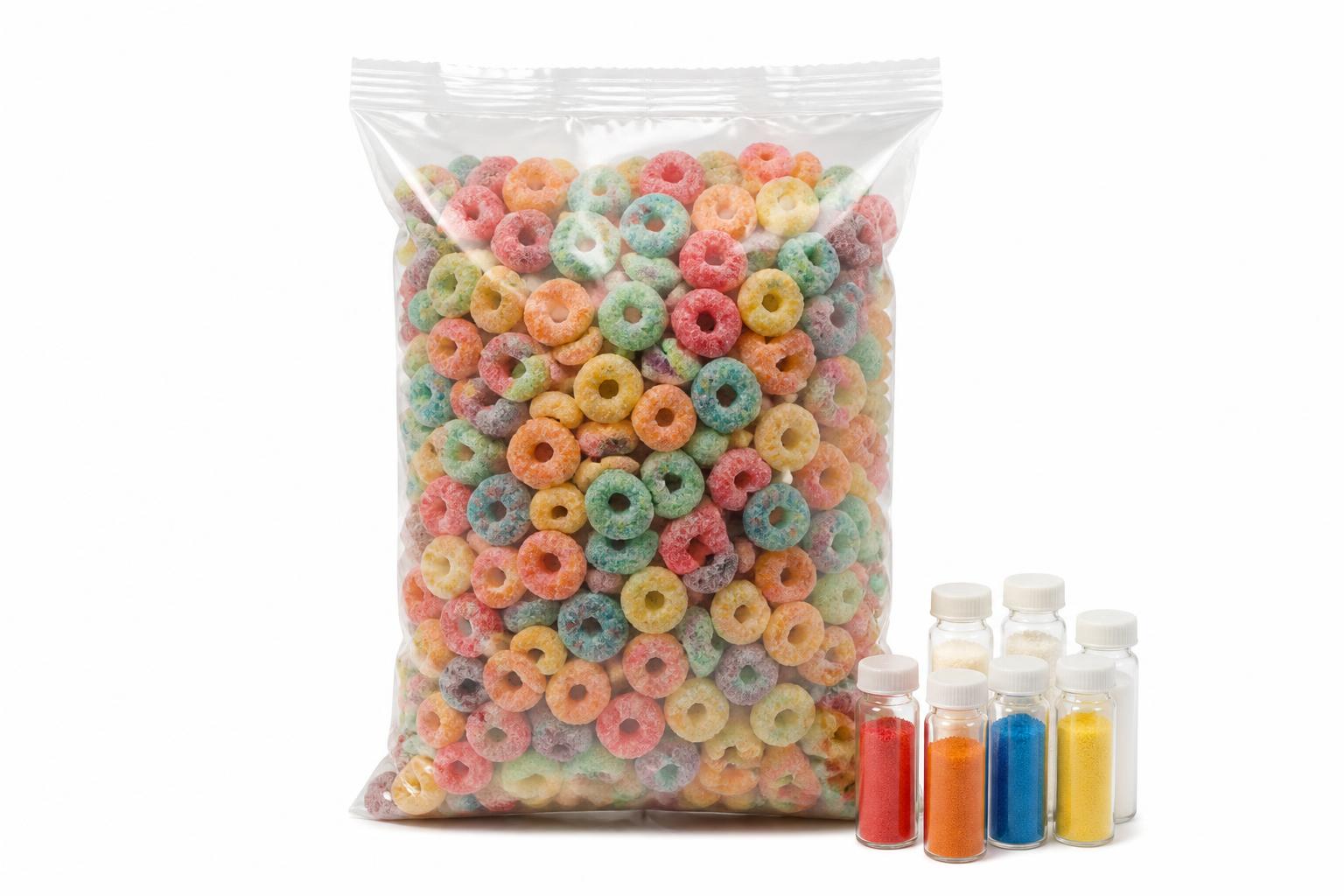
The cereal label problem
Cereal is one of the most heavily processed categories in the grocery store. A typical box marketed to kids or adults as a "wholesome" breakfast can contain a dozen or more additives on top of the base grain. The front of the box says "whole grain" or "good source of fiber." The back tells a different story.
The ingredient list is where the real information lives. By law, ingredients are listed in descending order by weight, so what comes first matters most. But the additives that raise the most questions often appear near the end, in small print, and in quantities that are easy to overlook.
Ingredients worth flagging in cereal
BHT and BHA
BHT in cereal (butylated hydroxytoluene) is one of the most commonly flagged preservatives in this category. It is added to the packaging or directly to the cereal to prevent the oils in the grain from going rancid. BHA (butylated hydroxyanisole) is used the same way.
Both are synthetic antioxidants that the FDA considers generally recognized as safe at current use levels. However, the National Toxicology Program has classified BHA as reasonably anticipated to be a human carcinogen based on animal studies, and the European Food Safety Authority has ongoing reviews of both compounds. Several European countries restrict or limit their use in foods, which is part of why US consumers have grown more attentive to them.
On a cereal label, look for "BHT added to packaging to preserve freshness" or "BHT" listed directly in the ingredients.
Artificial colors
Artificial colors in cereal are among the most visible additives in the category. Red 40, Yellow 5, Yellow 6, and Blue 1 show up in fruit-flavored cereals, frosted varieties, and many products aimed at children. These are petroleum-derived dyes approved by the FDA, but they carry a warning label requirement in the European Union following a 2007 study linking certain dyes to increased hyperactivity in children.
The FDA reviewed that study and concluded the evidence was not sufficient to require a US warning label, but the agency has been under increasing pressure to revisit that position. Consumer interest in this topic has grown significantly, partly driven by social media content comparing US and EU food standards.
For families with young children, artificial colors in cereal are one of the most practical things to scan for.
High fructose corn syrup and added sugars
Many cereals list sugar as the second or third ingredient, and some use high fructose corn syrup as a secondary sweetener. HFCS is not banned anywhere and is metabolized similarly to table sugar, but its presence in a cereal marketed as healthy is a useful signal about overall product quality. A cereal with three different sugar sources in the first five ingredients is worth a second look regardless of the front-of-pack claims.
Artificial flavors and "natural flavors"
Artificial flavors are synthesized compounds used to mimic fruit, vanilla, honey, or other tastes. Natural flavors are derived from natural sources but can be processed in ways that make them functionally similar to artificial ones. Neither term tells you much about what is actually in the product. In cereal, both are common in flavored varieties.
If you want to understand what "natural flavors" actually means on a label, our guide to natural flavors in food breaks it down in plain language.
Cereal additives used as emulsifiers and stabilizers
Less discussed but worth knowing: cereal additives like soy lecithin and mono- and diglycerides are used to improve texture and shelf stability. Soy lecithin is generally considered low-risk, but it is worth noting for anyone managing soy allergies or sensitivities. Mono- and diglycerides can be derived from partially hydrogenated oils and may contain trace trans fats even when the nutrition label reads zero, because FDA rounding rules allow amounts below 0.5 grams per serving to be listed as zero.
Synthetic vitamins added in high amounts
Many cereals are fortified with synthetic vitamins, which is not inherently a problem. But some products add niacinamide, zinc oxide, and reduced iron in amounts that push a single serving close to or above 100% of the daily value for multiple nutrients. For adults eating varied diets, this can contribute to unintentional over-supplementation. It is worth checking the nutrition panel alongside the ingredient list.
How to actually read a cereal label at the store
Here is a practical approach for the cereal aisle:
- Flip the box immediately. Ignore the front panel entirely for your first pass.
- Check the first three ingredients. If sugar, HFCS, or a refined flour is listed before whole grain, that tells you a lot.
- Scan the end of the ingredient list for BHT, BHA, artificial colors (any name ending in a number), and artificial flavors.
- Check the nutrition panel for added sugars per serving and the serving size itself, which is often smaller than what most people actually pour.
- If you see five or more additives you do not recognize, that is a reasonable signal to look for a cleaner alternative or scan the barcode for more detail.
For a broader framework on reading any food label, how to read food ingredient labels walks through the full process step by step.
A note on US versus EU standards
One reason this topic gets so much attention is that several additives common in US cereals are restricted or require warning labels in the European Union. This does not automatically mean they are dangerous at US use levels, but it is a legitimate reason to want more information before buying. The regulatory gap is real, and consumers have every right to factor it into their choices.
The FDA maintains a database of food additives that is publicly searchable if you want to look up a specific compound.
Conclusion
Reading a cereal label well takes about 60 seconds once you know the short list: BHT, artificial colors, multiple sugar sources, artificial flavors, and emulsifiers worth noting. You do not need to memorize every additive, but knowing the category helps you make faster, more confident decisions in the store. If you want to skip the manual lookup entirely, Osana lets you scan any cereal barcode and get an instant breakdown of flagged additives, ultra-processed food signals, and what the label is actually telling you.
Frequently asked questions
Is BHT in cereal dangerous?
BHT is FDA-approved at current use levels in food. Some health agencies have flagged concerns based on animal studies, and it is restricted in some European products. The evidence in humans is not conclusive, but many shoppers prefer to avoid it when a cleaner option is available.
Which cereals are most likely to contain artificial colors?
Fruit-flavored cereals, frosted varieties, and cereals marketed to children are the most common sources of artificial colors like Red 40, Yellow 5, and Blue 1. Plain oat-based or bran cereals typically do not contain them.
What does BHT added to packaging mean?
It means BHT is applied to the inner bag or liner to slow oxidation of the cereal inside. The compound can migrate into the food in small amounts. It still counts as a cereal additive worth noting if you are trying to reduce your exposure.
Are natural flavors in cereal a problem?
Not necessarily, but the term is vague. Natural flavors can cover hundreds of compounds derived from plant or animal sources and processed in various ways. If you are avoiding specific allergens or trying to eat minimally processed foods, the lack of transparency around natural flavors is worth being aware of.
How much added sugar is too much in a cereal?
The American Heart Association recommends no more than 25 grams of added sugar per day for women and 36 grams for men. Many popular cereals contain 10 to 15 grams of added sugar per serving, which is a significant portion of that daily limit before you add anything else to your diet.
Can I trust the "whole grain" claim on cereal boxes?
The claim means whole grain is present, but it does not mean it is the primary ingredient. Always check the ingredient list. If a refined flour or sugar appears before the whole grain, the product is not as grain-forward as the front label implies.
Get the cleaner swaps list before your next grocery run.
One short email a week: new label checks and better-for-you products we actually tested.
No spam. Unsubscribe anytime.

Choose cleaner swaps before they land in your cart.
Use Osana at Whole Foods, Trader Joe's, Target, Costco, or Walmart to compare labels faster and shop with more confidence.