Stevia vs Monk Fruit: What the Evidence Actually Says
 By Clement7 min read
Find the controversial ingredients already in your kitchen.
Scan packaged foods at home, understand ingredients, and find healthier alternatives in seconds.




 Scan with Osana
Stevia vs monk fruit: the short answer
Both stevia and monk fruit are zero-calorie, plant-derived sweeteners used as sugar alternatives in hundreds of US grocery products. Stevia comes from the leaves of Stevia rebaudiana, while monk fruit sweetener is extracted from a small melon native to southern China. Neither adds calories or raises blood sugar the way table sugar does, but they differ in taste profile, processing steps, label names, and the depth of long-term research behind them.
If you are standing in the aisle at Whole Foods or Target comparing two protein bars or flavored waters, this guide will help you read the label, understand what you are actually buying, and weigh what current science does and does not yet confirm.
What stevia actually is on a label
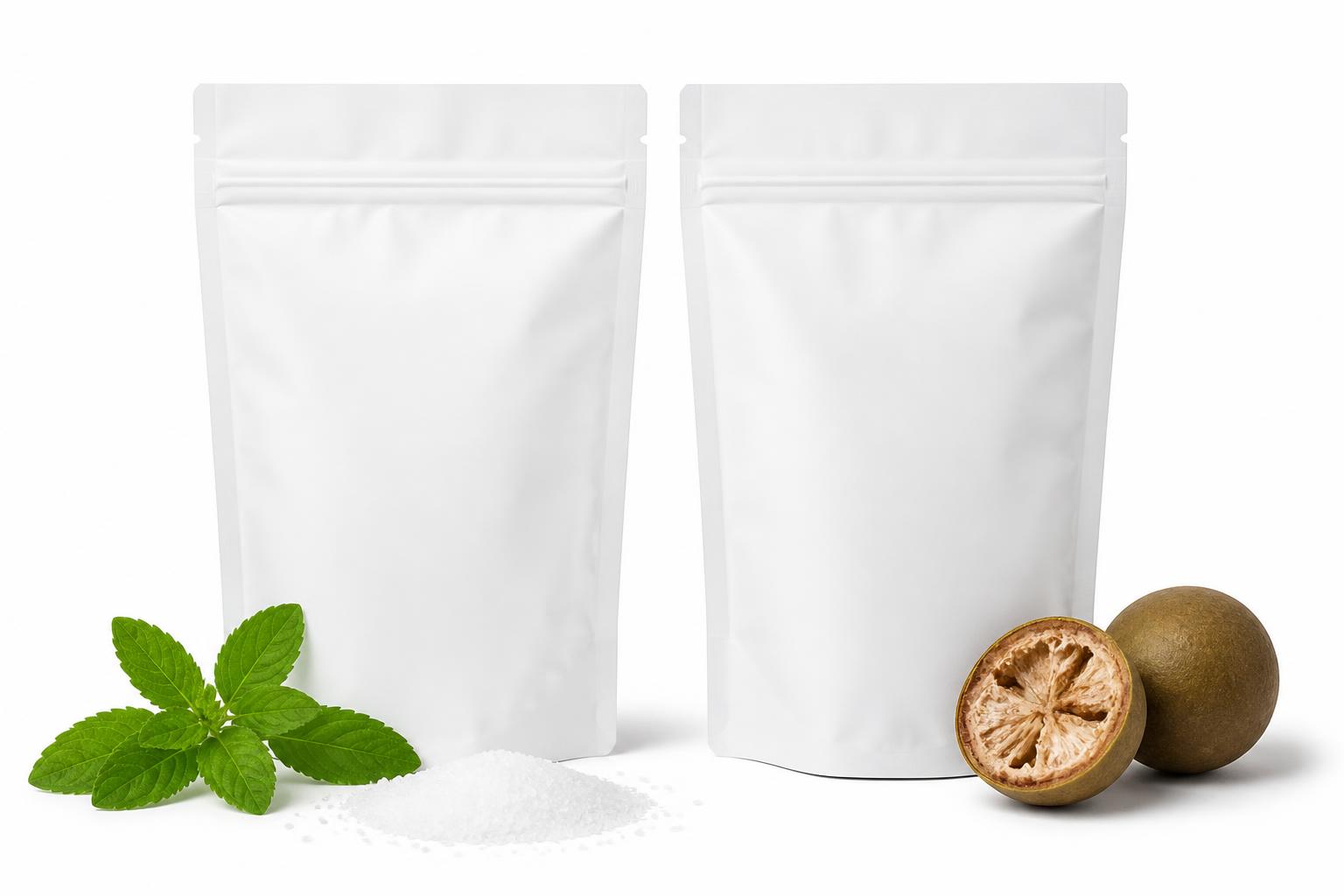
Stevia the plant is minimally processed. Stevia the grocery ingredient is not always the same thing. Most products use purified steviol glycosides, primarily rebaudioside A (Reb-A), extracted and sometimes blended with fillers like erythritol, inulin, or dextrose to improve texture and reduce the bitter aftertaste many people notice.
Common label names to recognize:
- Stevia leaf extract
- Rebaudioside A or Reb-A
- Steviol glycosides
- Stevia (sometimes listed generically)
The FDA has granted GRAS (Generally Recognized as Safe) status to high-purity steviol glycosides. The FDA has not authorized whole stevia leaf or crude stevia extract for use as a food additive, though you will occasionally see whole-leaf stevia in herbal supplements. You can review the FDA's GRAS notice inventory for the specific submissions on steviol glycosides.
What monk fruit sweetener actually is on a label
Monk fruit sweetener is derived from Siraitia grosvenorii, a fruit grown primarily in China. Its sweetness comes from compounds called mogrosides, most commonly mogroside V. Like stevia, the raw fruit is heavily processed before it reaches your grocery shelf, and finished products are almost always blended with erythritol or other bulking agents.
Common label names:
- Monk fruit extract
- Luo han guo
- Mogroside V
- Monk fruit sweetener
Monk fruit extract also holds GRAS status with the FDA. Because monk fruit is a newer ingredient in the US market compared to stevia, there is less published long-term human data, though early evidence has not raised safety flags. The FDA's overview of high-intensity sweeteners covers both.
Monk fruit vs stevia: how they compare side by side
| Factor | Stevia | Monk fruit |
|---|---|---|
| Sweetness vs sugar | 200-400x sweeter | 150-250x sweeter |
| Taste profile | Can have bitter or licorice aftertaste | Generally cleaner, slightly fruity |
| FDA status | GRAS (purified glycosides) | GRAS |
| Long-term human studies | More available, still limited | Fewer, emerging |
| Typical grocery blends | Often with erythritol or inulin | Often with erythritol or allulose |
| Price at retail | Lower | Higher |
For everyday grocery shopping, the practical difference is often the blend, not the sweetener itself. A monk fruit product blended with erythritol and a stevia product blended with erythritol may deliver very similar ingredient profiles. Reading past the front-of-pack claim to the full ingredient list matters more than the headline sweetener name.
Where you will find them in US grocery stores
Both sweeteners appear across a wide range of categories at Whole Foods, Trader Joe's, Target, Costco, and Walmart:
- Protein bars and powders - Quest, RXBar alternatives, many store-brand bars
- Flavored sparkling waters and drinks - Zevia (stevia-sweetened), some Olipop formulas
- Yogurt and dairy alternatives - especially reduced-sugar or keto-positioned products
- Cereals and granolas - often combined with small amounts of honey or cane sugar
- Condiments and sauces - sugar-free ketchup, BBQ sauce, salad dressings
- Baking sweeteners - Lakanto (monk fruit plus erythritol), Truvia (stevia plus erythritol), Swerve
If you are shopping for your kids, it is worth noting that many "no added sugar" products marketed to children use stevia or monk fruit alongside other sweeteners. Our guide to healthy snacks for kids covers what else to look for on those labels.
What the current science says, and where uncertainty remains
Stevia has a longer research record. A 2020 review in Nutrients found that steviol glycosides appear safe at typical consumption levels and may have a neutral or modest beneficial effect on blood glucose response. However, most studies are short-term and industry-funded, which the authors note as a limitation.
Monk fruit research is thinner. Animal studies suggest mogrosides may have antioxidant properties, but robust long-term human clinical trials are limited. The FDA's GRAS determination is based on available evidence, not a guarantee of long-term safety at all consumption levels.
A broader concern raised in recent nutrition research is the cumulative sweetener load: consuming multiple zero-calorie sweeteners across a day, across many product categories, in amounts that exceed what early safety studies modeled. A 2023 WHO guideline advised against using non-sugar sweeteners for weight control, noting insufficient evidence of long-term benefit and some signals worth monitoring. This applies to all non-sugar sweeteners, including stevia and monk fruit.
The honest summary: both appear safe for most adults at moderate intake based on current evidence. Neither is proven harmful, and neither has a decades-long human safety record at the scale of current consumption.
Practical label-reading advice
- Look past the front of pack. "Sweetened with monk fruit" on the front does not tell you what else is in the product. Check the full ingredient list.
- Identify the blend. Most stevia and monk fruit products include erythritol or another bulking agent. If erythritol is the first or second ingredient, it is the dominant component.
- Check serving size context. A product with stevia listed last in a long ingredient list contains very little. Context matters.
- Watch for hidden sugar alongside. Some products combine stevia or monk fruit with cane sugar, honey, or fruit juice concentrate. The hidden names for sugar on US food labels article can help you spot them.
- Consider the whole product, not just the sweetener. A protein bar sweetened with monk fruit can still contain seed oils, carrageenan, or artificial flavors worth knowing about.
Conclusion
When comparing stevia or monk fruit, neither is a clear winner for every shopper or every product. Stevia has more research behind it; monk fruit has a cleaner taste profile for many people. Both are FDA GRAS, both are commonly blended with other ingredients, and both sit in a space where long-term population-level data is still catching up to how widely they are now used. The most useful habit is reading the full ingredient list rather than trusting the front-of-pack claim. If you want to scan your groceries and instantly see what sweeteners, additives, and ultra-processed ingredients are hiding in your pantry staples, Osana makes that a one-second barcode scan.
Frequently asked questions
Is stevia or monk fruit better for weight loss?
Neither has strong evidence supporting long-term weight loss. The WHO's 2023 guidance notes that non-sugar sweeteners have not been shown to help with sustained weight management and recommends reducing overall sweetness preference instead.
Which tastes better, stevia or monk fruit?
Most people find monk fruit has a cleaner, less bitter aftertaste than stevia. Taste is subjective, and the blend matters as much as the base sweetener.
Are stevia and monk fruit safe for children?
Both are FDA GRAS, but long-term pediatric data is limited. Most pediatric nutrition guidance recommends reducing all sweeteners, including zero-calorie ones, in children's diets rather than substituting freely.
Can I use stevia and monk fruit if I have diabetes?
Both have minimal direct impact on blood glucose compared to sugar, but always consult your healthcare provider. The full product, not just the sweetener, affects glycemic response.
Why do so many products combine stevia or monk fruit with erythritol?
Both sweeteners are intensely sweet in small amounts and do not provide the bulk or texture that sugar does. Erythritol, allulose, or inulin are added to replicate that texture and reduce the aftertaste.
Are stevia and monk fruit approved in Europe?
Stevia (steviol glycosides) is approved as a food additive in the EU under E960. Monk fruit extract does not currently have EU-wide approval as a food additive, though it is permitted in some contexts. Regulatory status differs by region and product category.
Get the cleaner swaps list before your next grocery run.
One short email a week: new label checks and better-for-you products we actually tested.
No spam. Unsubscribe anytime.

Choose cleaner swaps before they land in your cart.
Use Osana at Whole Foods, Trader Joe's, Target, Costco, or Walmart to compare labels faster and shop with more confidence.