Hidden Names for Sugar on US Food Labels
 By Clement7 min read
Find the controversial ingredients already in your kitchen.
Scan packaged foods at home, understand ingredients, and find healthier alternatives in seconds.



 Scan with Osana
What are the hidden names for sugar on ingredient labels?
Sugar appears under more than 60 different names on US food labels, and manufacturers are not required to list them together. The FDA requires that added sugars be disclosed in grams on the Nutrition Facts panel, but the ingredient list is where the real detective work happens. Knowing the other names for sugar is one of the most practical label-reading skills you can develop.
Why manufacturers use so many sugar names
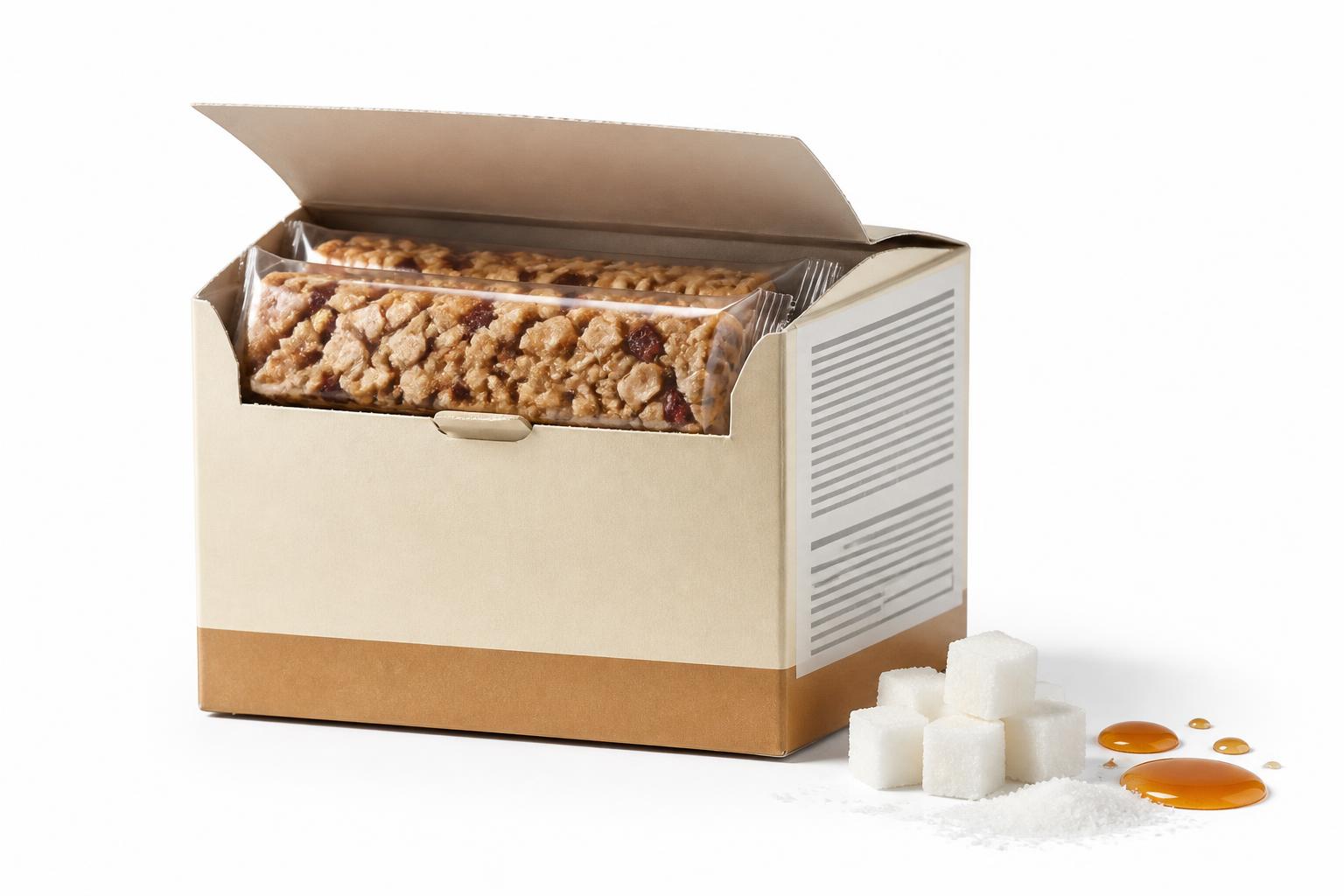
Using multiple sweeteners lets a brand push each one lower on the ingredient list, since ingredients are ranked by weight in descending order. A product with cane sugar, brown rice syrup, and dextrose near the top effectively has sugar as its dominant ingredient, even if no single form appears first. This is a legal and common formulation strategy, not a regulatory loophole.
The FDA defines added sugars as sugars added during processing or packaged as such, including free sugars, syrups, naturally occurring sugars in concentrated fruit or vegetable juices, and honey. That definition covers a wide range of ingredients, many of which sound nothing like "sugar."
The full list: sugar names on ingredient labels
Below is a practical reference organized by category. You will see these on cereals, protein bars, yogurt, granola, sauces, and packaged snacks at every major US grocery store.
Syrups and liquid sweeteners
- High fructose corn syrup (HFCS)
- Corn syrup
- Brown rice syrup
- Tapioca syrup
- Maple syrup
- Agave nectar / agave syrup
- Molasses
- Sorghum syrup
- Barley malt syrup
- Rice bran syrup
- Oat syrup
Crystalline and granulated sugars
- Cane sugar
- Beet sugar
- Raw sugar
- Turbinado sugar
- Muscovado sugar
- Coconut sugar
- Palm sugar
- Demerara sugar
- Sucanat
- Evaporated cane juice
- Invert sugar
Glucose, fructose, and related compounds
- Dextrose (another name for glucose, common in protein bars and bread)
- Fructose
- Glucose
- Galactose
- Maltose
- Lactose
- Sucrose
Concentrated fruit and juice sweeteners
- Fruit juice concentrate (apple, grape, pear)
- Date paste / date syrup
- Raisin paste
- Prune juice concentrate
- Dried cane syrup
Other names that signal added sugar
- Honey
- Treacle
- Caramel
- Malt extract
- Maltodextrin (partially, though it behaves more like a starch)
- Carob syrup
- Chicory syrup
- D-ribose
This is not an exhaustive list, but it covers the vast majority of what you will encounter at Whole Foods, Trader Joe's, Costco, and Walmart.
How to spot hidden sugars in food at the store
Step 1: Check the Nutrition Facts panel first
The Nutrition Facts label now requires a dedicated line for Added Sugars with a percent Daily Value based on 50 grams per day. If a product has 12g of added sugars per serving, that is 24% of the daily limit before you have eaten anything else. For a deeper walkthrough of the full label, see our Nutrition Facts label explained: a practical US guide.
Step 2: Scan the ingredient list for multiple sugar names
Count how many sweeteners appear. A granola bar at Target might list oats first, then brown rice syrup, then cane sugar, then honey. Three sweeteners in the top five ingredients is a signal worth noticing, even if each individual amount seems small.
Step 3: Watch for fruit juice concentrates in "healthy" products
Apple juice concentrate and grape juice concentrate are common in products marketed as no-added-sugar. The FDA does count these as added sugars when used as sweeteners, so they will appear in the Added Sugars line. A Whole Foods 365 fruit snack or a Trader Joe's dried mango strip may carry more sugar than a standard candy bar per serving.
Step 4: Notice where sugar names fall in the list
Ingredients are listed by weight. If any sugar name appears in the first three ingredients, the product is likely high in added sugar. If three or more sugar names appear anywhere in the list, the combined amount may be significant even if none ranks first individually.
Real label examples from common US products
Flavored oat milk (Costco Kirkland or Silk): Look for cane sugar or brown rice syrup. Unsweetened versions list only oats, water, and oil.
Protein bars (RXBAR, Kind, Clif): Dates and honey are common primary sweeteners. These count as added sugars on the label even though they are whole-food derived.
Pasta sauce (Rao's vs. store brand): Many store-brand marinara sauces add cane sugar or dextrose. Rao's Homemade does not, which is why it reads differently on the label.
Breakfast cereal: Whole grain cereals at Walmart or Target often list sugar, brown sugar, and molasses as separate ingredients. Our ingredients to avoid in cereal: a label decoder covers this category in detail.
Yogurt: Flavored Greek yogurt at Costco can contain 15-20g of added sugars per cup from cane sugar or fruit juice concentrate, while plain versions contain zero.
A note on "natural" sugar names
Coconut sugar, honey, maple syrup, and date syrup are often marketed as healthier alternatives. Nutritionally, the differences are modest. The American Heart Association recommends limiting all added sugars to no more than 25g per day for women and 36g for men, regardless of source. A tablespoon of honey and a tablespoon of white sugar have nearly identical effects on blood glucose.
Conclusion
The ingredient list is where sugar hides, and knowing its many aliases puts you in control at the shelf. Check the Added Sugars line on the Nutrition Facts panel, count the number of sweetener names in the ingredient list, and pay attention to where they fall. If you want to stop squinting at tiny type in the grocery aisle, the Osana app lets you scan any barcode or ingredient label and instantly flags hidden sugars, ultra-processed ingredients, and additives so you can make a faster, more confident decision.
Frequently asked questions
How many hidden names for sugar exist on US food labels?
Researchers and nutritionists have identified more than 60 names for added sugars that appear on US ingredient labels. The FDA requires the total amount to be disclosed as "Added Sugars" in grams, but each individual sweetener is listed separately by its own name.
Is high fructose corn syrup the same as regular sugar?
HFCS and table sugar (sucrose) are chemically similar but not identical. Sucrose is 50% glucose and 50% fructose. HFCS typically comes in 55% fructose / 45% glucose (HFCS-55, used in sodas) or 42% fructose (HFCS-42, used in baked goods). Both are classified as added sugars under FDA rules.
Does "no added sugar" mean a product has no sugar?
No. "No added sugar" means no sugar was added during processing, but a product can still contain naturally occurring sugars from fruit, dairy, or other ingredients. These will appear in the Total Sugars line but not the Added Sugars line on the Nutrition Facts panel.
Are coconut sugar and honey healthier than white sugar?
They contain trace minerals and have a slightly lower glycemic index in some studies, but the differences are small enough that the American Heart Association treats all added sugars the same for daily limit purposes. Marketing language like "unrefined" or "natural" does not change the caloric or metabolic impact meaningfully.
Why do some labels say "evaporated cane juice" instead of sugar?
This was a marketing practice to make sugar sound less processed. The FDA issued guidance in 2016 clarifying that "evaporated cane juice" is a misleading name and that products using it should declare it as sugar. You may still see it on older or reformulated products.
How do I quickly find all sugar names on a label in the store?
Look for any ingredient ending in "-ose" (dextrose, fructose, maltose), any word containing "syrup," any word containing "sugar," and common whole-food sweeteners like honey, molasses, and fruit juice concentrate. If you spot more than two of these in one ingredient list, the product likely has a meaningful amount of added sugar regardless of what the front of the package claims.

Choose cleaner swaps before they land in your cart.
Use Osana at Whole Foods, Trader Joe's, Target, Costco, or Walmart to compare labels faster and shop with more confidence.