Anti Inflammatory Grocery List: What to Buy in 2026
 By Clement7 min read
Find the controversial ingredients already in your kitchen.
Scan packaged foods at home, understand ingredients, and find healthier alternatives in seconds.




 Scan with Osana
What belongs on an anti inflammatory grocery list
An anti inflammatory grocery list focuses on whole foods and minimally processed packaged options that research links to lower markers of chronic inflammation. It is not a treatment plan or a cure, but a practical framework for making better choices at Whole Foods, Trader Joe's, Target, or Costco every week.
The 2023 dietary guidelines research from the NIH consistently highlights vegetables, fruits, legumes, whole grains, fatty fish, and extra-virgin olive oil as the cornerstone foods in eating patterns associated with reduced inflammatory markers. This anti inflammatory foods shopping list is built around those same categories, with US-specific product notes added throughout.
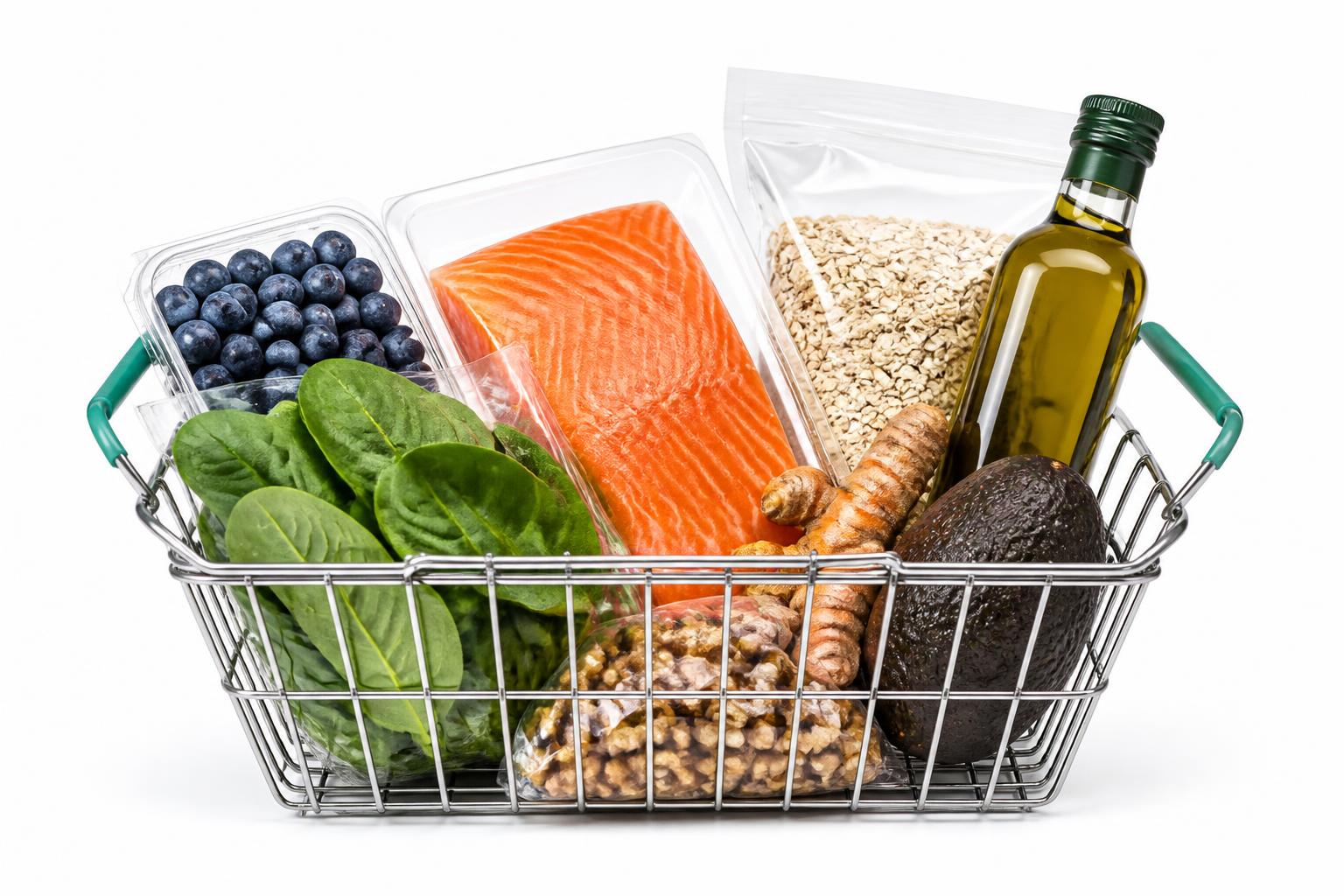
Produce: the foundation of your cart
Fill at least half your cart with fresh or frozen produce. Specific picks that appear repeatedly in nutrition research include:
- Leafy greens such as spinach, kale, and arugula. Bagged organic options at Trader Joe's and Costco work well for busy weeks.
- Cruciferous vegetables including broccoli, cauliflower, and Brussels sprouts. Frozen bags are just as nutritious and far cheaper.
- Berries such as blueberries, strawberries, and tart cherries. Fresh in season, frozen year-round. The USDA notes that dark-colored fruits tend to be rich in polyphenols.
- Citrus and bell peppers for vitamin C.
- Garlic and onions for quercetin and organosulfur compounds.
When buying frozen vegetables, check the ingredient list. The only ingredient should be the vegetable itself. Sauces, seasonings, and "natural flavors" added to frozen bags can introduce ingredients worth a second look.
Proteins: quality matters more than quantity
Fatty fish
Salmon, sardines, mackerel, and trout are among the best-studied sources of omega-3 fatty acids, which PubMed research links to reduced production of pro-inflammatory eicosanoids. Wild-caught canned salmon and sardines at Trader Joe's or Walmart are affordable everyday options.
When buying canned fish, look for labels that list only fish, water, and possibly salt. Skip cans with added soybean oil or "broth" with unspecified additives.
Poultry and eggs
Pasture-raised eggs and organic chicken are widely available at Whole Foods and Target. Eggs from pasture-raised hens tend to have a better omega-6 to omega-3 ratio according to research published in Nutrients.
Legumes
Black beans, lentils, and chickpeas provide fiber and plant protein. Canned versions are convenient. Check that the only ingredients are the legume, water, and possibly salt. Avoid cans with added sugars or "flavoring" you cannot identify.
Healthy fats: oils, nuts, and seeds
Extra-virgin olive oil (EVOO) is the most researched oil in the context of anti inflammatory eating patterns. Use it for low to medium-heat cooking and dressings. Look for a harvest date on the bottle, not just an expiration date, as freshness affects polyphenol content.
Avocados and avocado oil are good secondary choices. Walnuts, flaxseeds, and chia seeds round out plant-based omega-3 sources.
For packaged snacks and crackers, flip the bag and check the oil used. Many products at mainstream stores still use soybean, corn, or canola oil as primary fats. If you want to quickly identify which packaged foods contain these oils, a seed oil scanner app can read the barcode and flag them instantly.
Whole grains and pantry staples
Oats, quinoa, brown rice, farro, and 100% whole-grain bread are the grains most consistent with anti inflammatory eating patterns. When buying bread, the first ingredient should be a whole grain, not "enriched wheat flour." Aim for short ingredient lists with no high-fructose corn syrup, artificial dyes, or preservatives you cannot recognize.
Herbs and spices deserve a spot on every anti inflammatory foods to buy list. Turmeric, ginger, cinnamon, and black pepper are inexpensive and well-studied. Buy them in bulk at Costco or in the spice aisle at any major store.
Packaged foods: label checks that matter
Not everything on an anti inflammatory diet grocery list has to be unpackaged. Practical packaged picks include:
- Canned tomatoes with no added sugar or "natural flavors"
- Nut butters with only nuts and salt as ingredients
- Plain Greek yogurt without added sugars or artificial sweeteners
- Dark chocolate at 70% cacao or higher with a short ingredient list
- Unsweetened plant milks without carrageenan or excessive additives
The label check that matters most on packaged foods is the ingredient list, not just the nutrition panel. Ingredients are listed by weight, so the first three or four tell you the most about what you are actually eating. For a deeper breakdown of how to read that list, the food additives list guide explains common additives and what they mean in plain English.
What to limit or skip
This list is not about perfection, but a few categories consistently appear in research as patterns associated with higher inflammatory markers:
- Ultra-processed snacks with long ingredient lists, synthetic dyes, and multiple emulsifiers
- Refined sugars in excess, including items where sugar appears in the first three ingredients
- Trans fats, which the FDA has largely removed from the US food supply but can still appear as "partially hydrogenated oil" in older or imported products
- Highly refined grain products such as white bread and most commercial pastries
The WHO's guidance on diet and chronic disease consistently recommends limiting free sugars, saturated fats, and sodium, all of which tend to be high in ultra-processed foods.
A quick store-by-store note
- Whole Foods and Trader Joe's offer the widest selection of short-ingredient packaged foods and organic produce.
- Costco is excellent for bulk walnuts, wild-caught salmon, organic frozen vegetables, and EVOO.
- Target and Walmart have improved their store-brand options significantly. Good & Gather (Target) and Marketside (Walmart) lines often have cleaner labels than comparable national brands.
For a store-by-store version, see our healthy Walmart grocery picks.
Conclusion
Building an anti inflammatory grocery list does not require a nutrition degree or an hour of label reading in every aisle. Start with a cart that is mostly whole foods, choose packaged products with short recognizable ingredient lists, and pay attention to the oils and sweeteners that appear in the first few ingredients. Small, consistent changes across your weekly shop add up over time. If you want to make label reading faster and more reliable at the shelf, download Osana to scan barcodes and ingredient labels instantly.
Frequently asked questions
What are the most important foods to put on an anti inflammatory grocery list?
Leafy greens, berries, fatty fish, extra-virgin olive oil, legumes, and whole grains are the foods most consistently linked to lower inflammatory markers in nutrition research. These should form the base of your weekly shop.
Is an anti inflammatory diet the same as a clean eating diet?
They overlap but are not identical. Clean eating focuses broadly on minimally processed foods. An anti inflammatory approach is more specific, prioritizing foods and nutrients that research associates with reduced chronic inflammation, such as omega-3 rich fish, polyphenol-rich produce, and EVOO.
Can I follow an anti inflammatory diet on a budget?
Yes. Frozen vegetables, canned sardines, dried lentils, oats, and store-brand olive oil are all affordable options available at Walmart, Target, and Costco. Buying frozen produce is nutritionally comparable to fresh and significantly cheaper.
How do I check if a packaged food fits an anti inflammatory diet?
Flip the package and read the ingredient list. Look for short lists with recognizable ingredients. Avoid products where sugar, refined grains, or unfamiliar additives appear in the first three ingredients. A barcode scanner app can speed this up at the shelf.
Are seed oils a concern on an anti inflammatory grocery list?
Some nutrition researchers raise questions about high omega-6 intake from refined seed oils such as soybean and corn oil, though the evidence is still debated. Many people choosing an anti inflammatory eating pattern prefer to cook with EVOO or avocado oil instead and check packaged food labels for seed oil content.
Do I need to buy everything organic?
Not necessarily. The Environmental Working Group publishes an annual Dirty Dozen list highlighting produce with higher pesticide residues, which can help you prioritize where organic spending makes the most sense. For most packaged staples, ingredient quality matters more than the organic label.

Choose cleaner swaps before they land in your cart.
Use Osana at Whole Foods, Trader Joe's, Target, Costco, or Walmart to compare labels faster and shop with more confidence.