Gut healthy foods: a practical US grocery guide
 By Clement7 min read
What are gut healthy foods, really?
Gut healthy foods are whole and minimally processed foods that provide fiber, fermented cultures, and diverse plant compounds shown to support a balanced digestive environment. For women in their 40s and 50s, building a gut-supportive grocery list is less about trendy supplements and more about consistent, practical choices made at the store every week.
Research from the NIH Human Microbiome Project and a landmark 2021 Stanford study published in Cell both point to the same core finding: dietary variety, especially from plant foods and fermented products, is one of the most reliable ways to support microbiome diversity. That is a useful anchor when you are standing in the produce aisle trying to decide what to put in your cart.

Find the controversial ingredients already in your kitchen.
Scan packaged foods at home, understand ingredients, and find healthier alternatives in seconds.




 Scan with Osana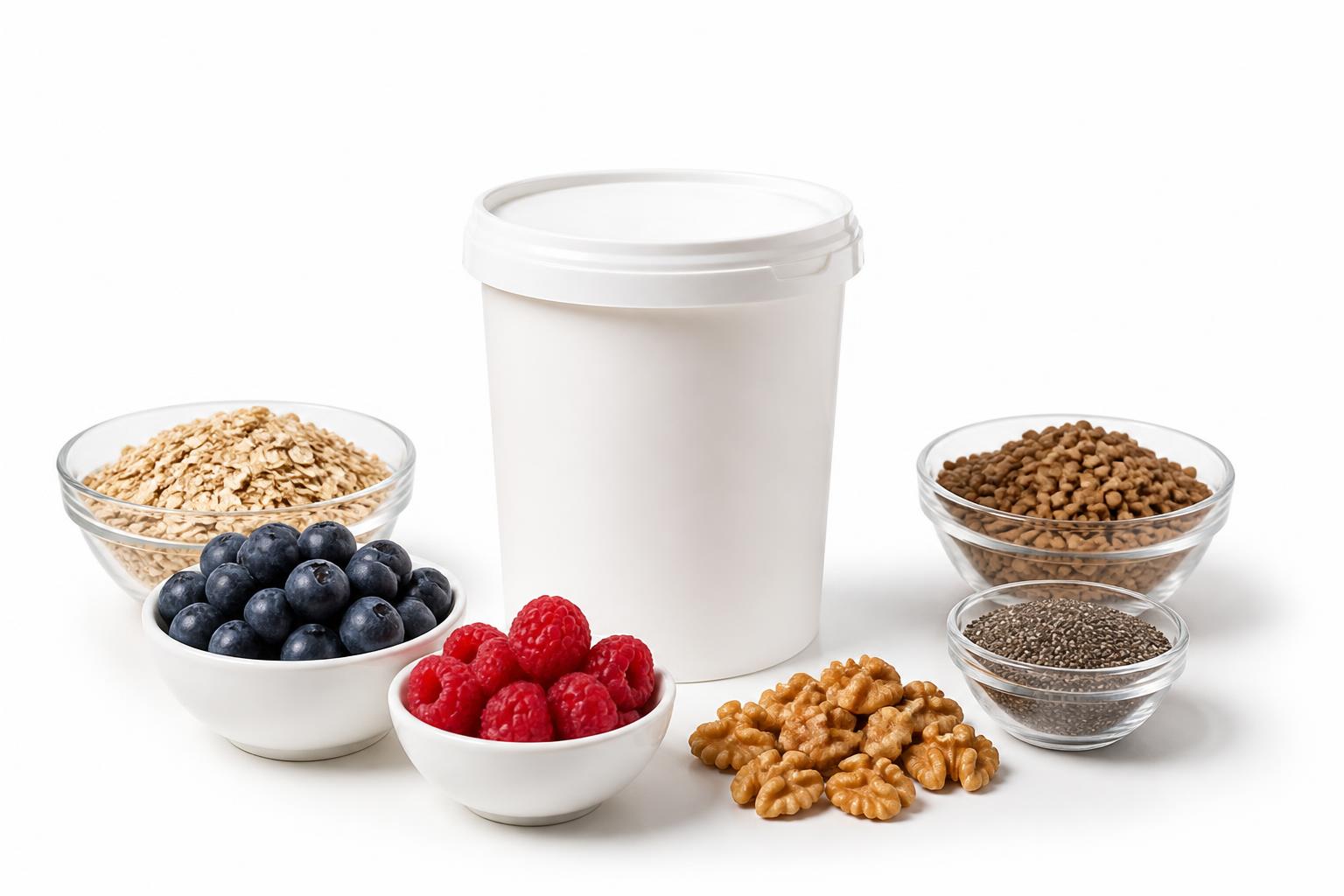
The gut healthy grocery list by category
Fermented foods
Fermented foods deliver live cultures that research links to microbiome support. The key is reading labels carefully, because many shelf-stable products are pasteurized after fermentation and no longer contain active cultures.
- Plain yogurt and kefir - Look for "live and active cultures" on the label. At Trader Joe's, their plain whole-milk kefir lists L. acidophilus and several Lactobacillus strains. At Costco, Stonyfield Organic plain yogurt carries the same seal.
- Sauerkraut and kimchi - Refrigerated versions (not shelf-stable canned) are most likely to retain live cultures. Wildbrine and Cleveland Kitchen are two brands widely available at Whole Foods and Target.
- Miso paste - A tablespoon stirred into warm (not boiling) broth keeps cultures intact. Look for short ingredient lists: soybeans, rice or barley, salt.
One label flag to watch: some flavored yogurts marketed as "probiotic" contain more added sugar than a candy bar. Check the Nutrition Facts panel and aim for under 8g of added sugar per serving.
High-fiber plant foods
Dietary fiber is the primary fuel source for beneficial gut bacteria, according to the Academy of Nutrition and Dietetics. Most US adults consume roughly half the recommended 25-38g per day, so this is often the highest-leverage change you can make.
Practical picks for your gut healthy grocery list:
- Legumes - Canned lentils, chickpeas, and black beans are fast, affordable, and available everywhere from Walmart to Whole Foods. Rinse them to reduce sodium.
- Oats - Rolled or steel-cut oats contain beta-glucan, a soluble fiber with strong research support. Plain oats have one ingredient. Flavored instant packets often add 12g or more of sugar.
- Berries - Blueberries, raspberries, and blackberries are among the highest-fiber fruits and are easy to buy frozen without additives.
- Leafy greens and cruciferous vegetables - Broccoli, Brussels sprouts, kale, and spinach contribute both fiber and polyphenols. Frozen versions are nutritionally comparable to fresh and often cheaper.
- Whole grains - Farro, barley, and brown rice add variety. When buying packaged grain products, check that a whole grain is listed as the first ingredient. Our high fiber foods list goes deeper on label reading for fiber claims.
Prebiotic-rich foods
Prebiotics are specific fibers that selectively feed beneficial bacteria. Garlic, onions, leeks, asparagus, bananas (especially slightly underripe ones), and Jerusalem artichokes are among the richest sources. These are inexpensive whole foods available at every major US grocery chain.
Polyphenol sources
Polyphenols are plant compounds that act as a food source for certain gut bacteria. A 2019 review in Nutrients found that polyphenol-rich diets were associated with greater microbiome diversity. Practical sources include:
- Extra virgin olive oil
- Dark chocolate (70% cacao or higher, short ingredient list)
- Green and black tea
- Walnuts and almonds
- Colorful vegetables and fruits across the spectrum
Packaged foods: what to look for and what to skip
Not every gut-supportive food needs to come from the produce section. The challenge with packaged foods is that marketing terms like "gut health," "digestive support," and "probiotic" are not tightly regulated by the FDA, so label reading matters.
Look for:
- Short, recognizable ingredient lists
- Whole food fiber sources listed early (oats, lentils, chia seeds)
- "Live and active cultures" seal from the National Yogurt Association on dairy products
- Minimal added sugar
Be cautious of:
- "Prebiotic fiber" from chicory root or inulin added to heavily processed products - these can cause bloating in sensitive individuals
- Products with a long list of emulsifiers and stabilizers such as carrageenan, polysorbate 80, or carboxymethylcellulose, which some early research suggests may affect gut lining integrity (though human evidence is still developing)
- Flavored kefir or kombucha with 20g or more of added sugar per serving
For a deeper look at how to spot ultra-processed formulations on the shelf, how to avoid ultra-processed foods at the grocery store walks through the NOVA classification in plain language.
A quick label-reading routine for gut health
When you pick up a packaged food marketed for digestive wellness, run through this fast check:
- Ingredients list first - Can you identify most items? Are whole foods near the top?
- Added sugar - Under 5-8g per serving for most products.
- Fiber content - At least 3g per serving is a reasonable benchmark for a product claiming fiber benefits.
- Additives - Scan for emulsifiers, artificial sweeteners (some research links high doses of certain sweeteners to microbiome changes), and preservatives you do not recognize.
This routine takes about 30 seconds once you practice it a few times.
Building your gut healthy grocery list by store
- Whole Foods / Trader Joe's - Best for refrigerated fermented foods, diverse whole grains, and short-ingredient packaged options.
- Costco - Strong for bulk legumes, frozen berries, plain yogurt, olive oil, and walnuts at lower cost per ounce.
- Target / Walmart - Carry mainstream brands; look for store-brand plain oats, canned legumes, and frozen vegetables where ingredient lists are often simpler than branded equivalents.
Conclusion
The best foods for gut health are not exotic or expensive. A consistent mix of fermented dairy, diverse plant fibers, legumes, colorful produce, and minimally processed whole grains covers the evidence-based bases. The real work is at the label level, separating genuine gut-supportive products from marketing noise. If you want a faster way to check what is actually in the packaged foods you are buying, Osana lets you scan any barcode or ingredient label and instantly flags additives, ultra-processed formulations, and cleaner alternatives.
Frequently asked questions
What are the best foods for gut health that I can find at a regular US grocery store?
Yogurt with live cultures, kefir, canned or dried legumes, oats, frozen berries, garlic, onions, and leafy greens are all widely available and well-supported by nutrition research. You do not need a specialty store.
How much fiber do I actually need for gut health?
The Dietary Guidelines for Americans recommend 25g per day for adult women. Most US adults fall well short. Increasing fiber gradually and drinking enough water helps avoid digestive discomfort as you add more.
Is kombucha actually good for gut health?
Kombucha does contain organic acids and some live cultures, but the research on specific health benefits is limited compared to yogurt or kefir. It can be part of a varied diet, but check the label for added sugar, which can be high in commercial versions.
Do I need to buy probiotic supplements if I eat fermented foods?
For most healthy adults, getting live cultures from food sources like plain yogurt, kefir, or refrigerated sauerkraut is a reasonable approach. Supplements may be appropriate in specific situations, but that is a conversation for your healthcare provider, not a general grocery recommendation.
What packaged food additives might negatively affect gut health?
Early research, mostly in animal models, has raised questions about certain emulsifiers such as carboxymethylcellulose and polysorbate 80, as well as high doses of some artificial sweeteners. Human evidence is still developing, so the practical takeaway is to favor shorter ingredient lists rather than to panic about any single additive.
How is a gut health grocery list different from a general clean-eating list?
A gut health focus specifically prioritizes fermented foods, prebiotic fibers, and microbiome-supportive polyphenols. A general clean-eating list is broader and centered on avoiding processed ingredients. There is overlap, but the gut health angle adds fermentation and fiber diversity as non-negotiable priorities.
Get the cleaner swaps list before your next grocery run.
One short email a week: new label checks and better-for-you products we actually tested.
No spam. Unsubscribe anytime.

Choose cleaner swaps before they land in your cart.
Use Osana at Whole Foods, Trader Joe's, Target, Costco, or Walmart to compare labels faster and shop with more confidence.