Daily Value on Nutrition Labels: How to Read %DV Fast
 By Clement8 min read
The short answer
The Percent Daily Value, printed as %DV, tells you how much one serving of a food contributes to a full day of eating. The fast rule is simple: 5% or less is low, 20% or more is high. High is good for fiber, calcium, iron, potassium and vitamin D. Low is what you want for saturated fat, sodium and added sugars.
One catch matters more than everything else on the panel: every percentage refers to one serving, not to the whole package.

Find the controversial ingredients already in your kitchen.
Scan packaged foods at home, understand ingredients, and find healthier alternatives in seconds.




 Scan with Osana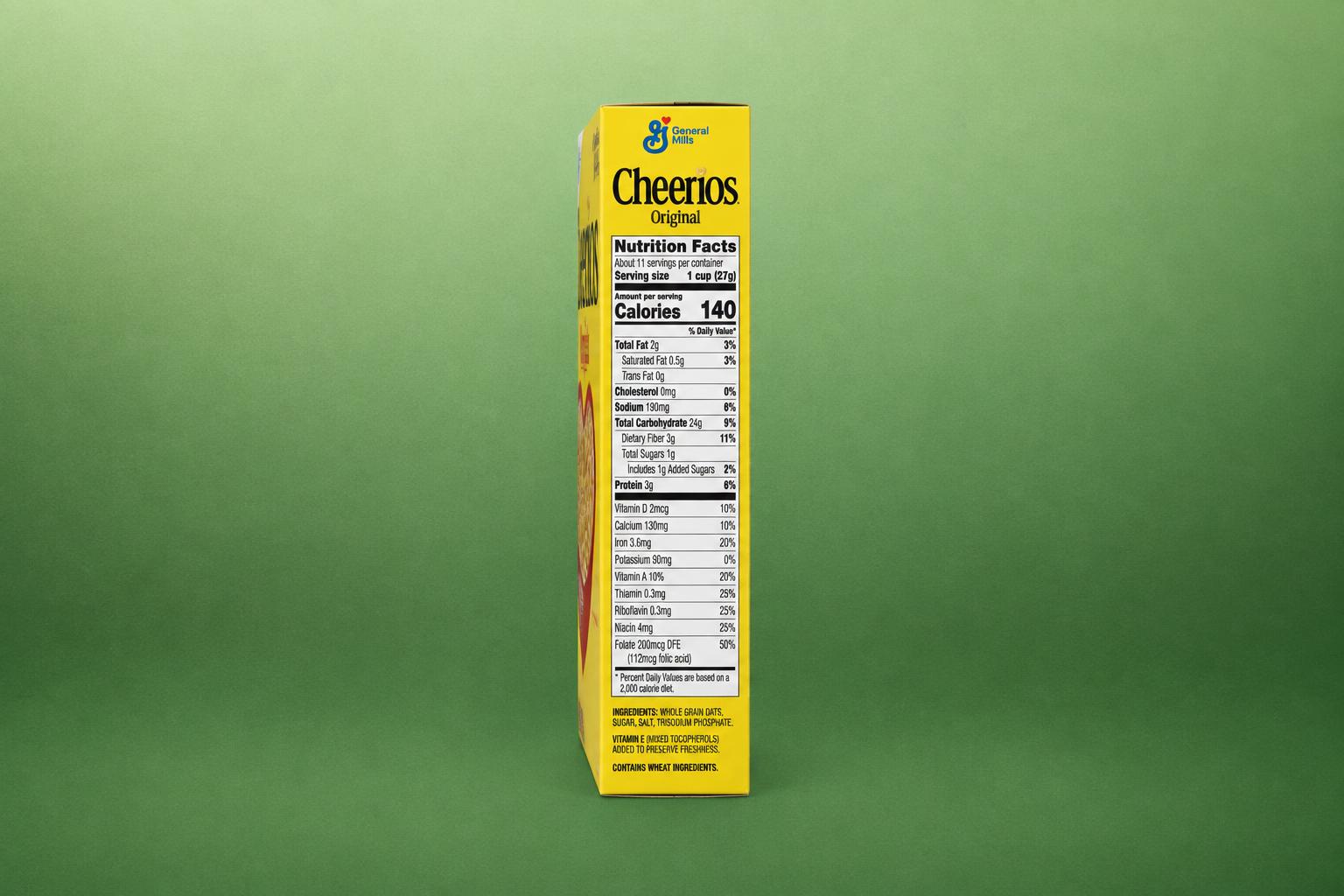
What the Daily Value and %DV actually mean
Two different things share similar names.
The Daily Value (DV) is the reference amount behind the scenes, expressed in milligrams or grams: 2,300 mg of sodium, 50 g of added sugars, 28 g of fiber. The %DV is that same reference turned into a percentage, so you can compare a soup and a granola bar without doing arithmetic. A soup at 35% DV sodium supplies roughly a third of the day's reference in one serving.
The FDA publishes the full list of reference amounts on its Daily Value on Nutrition and Supplement Facts labels page. A label showing 20% DV for fiber is telling you the serving contains about 5.6 g, since the fiber reference is 28 g.
The 5/20 rule, the fastest shortcut on the label
The 5/20 rule is the habit worth building first, and it comes straight from FDA guidance:
- 5% DV or less per serving is low for that nutrient.
- 20% DV or more per serving is high for that nutrient.
- Anything in between sits in the middle, which is where most everyday foods land.
Low and high are not good and bad on their own. It depends on what you are looking at.
For nutrients you want more of, such as fiber, calcium, iron, potassium and vitamin D, a high percentage is a win. A cereal at 24% DV fiber is doing real work in a bowl.
For nutrients most people are told to limit, such as saturated fat, sodium and added sugars, a low percentage is the win. A frozen entree at 45% DV sodium is high by the label's own standard. That does not make it forbidden, but it tells you what the rest of the day needs to look like.
The Daily Values worth knowing
You do not need to memorise the whole table. These are the reference amounts that come up most often on US labels:
| Nutrient | Daily Value | Aim for |
|---|---|---|
| Sodium | 2,300 mg | Low %DV |
| Added sugars | 50 g | Low %DV |
| Saturated fat | 20 g | Low %DV |
| Dietary fiber | 28 g | High %DV |
| Calcium | 1,300 mg | High %DV |
| Iron | 18 mg | High %DV |
| Potassium | 4,700 mg | High %DV |
| Vitamin D | 20 mcg | High %DV |
These figures are the general guide for adults and children age 4 and older, built around a 2,000-calorie diet.
Serving size is where most comparisons break
Every percentage on the panel describes one serving, not one package. That single detail causes most of the confusion in the aisle.
A bag of tortilla chips may define a serving as 12 chips with 10% DV sodium. If the bag holds five servings and you eat half of it, you have taken in roughly 25% DV sodium from chips alone. A pint of ice cream is often three servings. A bottled iced tea is often two. Nobody is hiding anything, but the number your eye lands on is per serving.
Before comparing two products, check that the serving sizes are comparable. Two granola brands at 8% DV added sugars are only equivalent if both measure the same amount. One might use a 40 g serving and the other 55 g. If they differ, scale the smaller one up in your head before you decide. For a closer look at that gap, see our guide to serving size versus portion size.
What has no %DV and why
Not every line on the panel gets a percentage, and that is normal.
Total sugars has no %DV, because there is no established reference amount for all sugars combined, including the ones naturally present in milk and fruit. Added sugars does have a Daily Value, currently 50 g, so it does carry a percentage. That is why a plain yogurt can show a high total sugars number with 0% DV added sugars.
Trans fat has no %DV either. Neither does protein on most conventional food labels, since protein intake is generally adequate in the US diet and the FDA only requires a percentage for protein in specific cases, such as foods for young children or when a protein claim is made.
A missing percentage is not a warning sign. It simply means you read the gram count directly.
Comparing two products in the aisle
Here is how this works with realistic grocery choices.
Bread. Two whole grain loaves, both one slice per serving. Loaf A: 6% DV sodium, 8% DV fiber, 4% DV added sugars. Loaf B: 9% DV sodium, 21% DV fiber, 2% DV added sugars. Loaf B is high in fiber by the 5/20 rule and lower in added sugars, at a modest sodium cost. That is a reasonable trade.
Pasta sauce. Two jars, both a half cup serving. Jar A: 16% DV sodium, 12% DV added sugars. Jar B: 20% DV sodium, 0% DV added sugars. Neither is wrong. If added sugars matter most to you, Jar B wins. If sodium is the priority, Jar A does. The panel lets you decide instead of guessing from the front of the package.
Cereal. A box advertising whole grain shows 4% DV fiber and 22% DV added sugars per serving. The front of the box says one thing and the panel says another. This is exactly the moment the label earns its keep.
Front-of-package claims and the ingredient list answer different questions than the percentages do. If you want to go further into what the ingredients themselves tell you, our guide on how to avoid ultra processed foods covers that side.
The limits worth knowing
The general label guide is built on a 2,000-calorie daily diet. Individual needs differ by age, sex, activity level, pregnancy and medical conditions. If you eat 1,500 or 2,800 calories a day, the percentages remain useful for comparing products, but they are not a personal target.
The percentages also say nothing about food quality, freshness, satiety or how a food fits your overall pattern. A product can be low in everything and still not be a meal. Use the panel as a comparison tool, not a verdict. The FDA's overview of how to understand and use the Nutrition Facts label walks through the full panel, and its explainer on what is on the Nutrition Facts label is a good refresher.
Anyone managing a condition such as hypertension or diabetes should set targets with a clinician rather than from a label alone.
A 20-second shopping routine
- Read the serving size and the servings per container first, then decide roughly how much you will actually eat.
- Scan the limit nutrients: saturated fat, sodium, added sugars. Look for 5% DV or less where you can get it.
- Scan the nutrients worth encouraging: fiber, calcium, iron, potassium, vitamin D. Look for 20% DV or more where it makes sense for that food.
- If you are comparing two products, confirm the serving sizes match before judging the numbers.
- Adjust for reality. If you know you will eat two servings, double the percentages in your head.
That is the whole method. It takes a few seconds per product once it becomes a habit, and it works in every aisle without memorising a single gram target.
Conclusion
The percentages turn abstract milligrams into a quick yes, no or maybe, and the 5/20 rule plus an honest look at serving size covers most of what you need in a store. Treat the panel as a comparison tool rather than a grade, and it will steer you well across bread, sauce, cereal and snacks alike. If you would rather see those numbers interpreted for you while you shop, scanning a barcode with Osana is one way to speed the process up.
Frequently asked questions
Is a high percentage always bad?
No. A high %DV is desirable for fiber, calcium, iron, potassium and vitamin D. It is worth limiting for saturated fat, sodium and added sugars.
Why does total sugars have no %DV but added sugars does?
There is no established daily reference amount for all sugars combined, including naturally occurring ones in fruit and dairy. Added sugars has a Daily Value of 50 g, so it gets a percentage.
Do the percentages apply to me if I do not eat 2,000 calories?
The general label guide uses a 2,000-calorie diet. If your needs differ, the percentages are still useful for comparing one product against another, but they are not personal targets.
What if I eat two servings?
Double everything. Both the gram amounts and the percentages scale directly with the number of servings you eat.
Should the %DV column or the ingredient list come first?
Use the percentages when comparing similar products on the nutrients you care about. Use the ingredient list when you want to know what the food is actually made of. They answer different questions.

Choose cleaner swaps before they land in your cart.
Use Osana at Whole Foods, Trader Joe's, Target, Costco, or Walmart to compare labels faster and shop with more confidence.