Healthy frozen foods at Costco: how to read the freezer aisle like a pro
 By Clement7 min read
Find the controversial ingredients already in your kitchen.
Scan packaged foods at home, understand ingredients, and find healthier alternatives in seconds.



 Scan with Osana
The healthiest frozen foods at Costco are almost always the ones with the shortest ingredient lists: single-ingredient frozen vegetables and fruit, plain wild-caught fish and shrimp, frozen chicken breast with no added solution, and a small number of frozen meals whose ingredient panel reads like a recipe rather than a chemistry set. Everything else in the aisle needs a 20-second label check, because Costco carries both very clean items and heavily formulated ones side by side. Costco's assortment also rotates by region and season, so verify the product, price, and pack size in your warehouse or on Costco.com before you plan a haul. Prices and availability referenced here were checked in June 2024 and change often.
This guide stays on one job: choosing well inside the frozen section. For a wider look at how frozen entrees score across brands, see our roundup of the lowest-scoring frozen meals on US shelves.
Why the Costco freezer aisle is different
Two structural things change how you shop it.
First, pack size raises the stakes. A 4-pound bag or a 12-count box means one bad ingredient decision follows your family for three weeks. A mediocre single-serve entree at Target is a $4 mistake; the Costco version is a $17 commitment and a full freezer shelf.
Second, Costco's private label sits next to national brands in the same bin. Kirkland Signature items are frequently reformulated versions of a name-brand product, sometimes with fewer additives, sometimes with different oils. You cannot assume the store brand is cleaner or dirtier. You have to check.
The categories that win on ingredients
Plain frozen vegetables and fruit
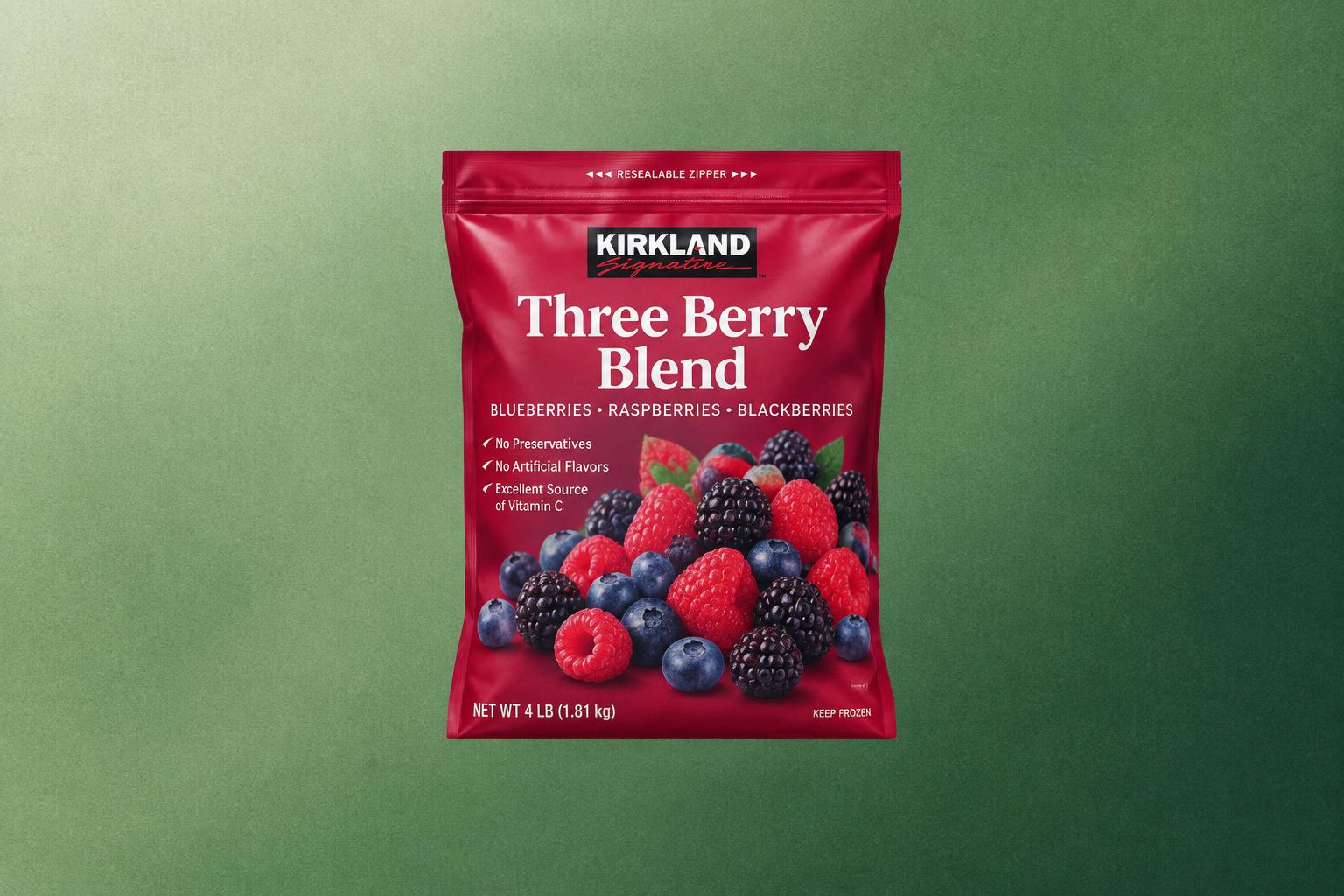
This is the strongest corner of the aisle. Costco's frozen organic broccoli florets, normandy vegetable blends, green beans, riced cauliflower, three-berry blend, and wild blueberries typically list one to five whole-food ingredients and nothing else. Freezing shortly after harvest preserves most nutrients well; a USDA-supported review of freezing and nutrient retention found frozen produce nutritionally comparable to fresh in many cases.
Label check: look for "broccoli" as the entire ingredient list. Seasoned or "steam in bag with sauce" versions usually add oils, maltodextrin, modified corn starch, and flavor blends.
Plain proteins
Frozen wild sockeye salmon fillets, raw shrimp, chicken breasts, and grass-fed patties are usually clean. Two things to scan for:
- Sodium tripolyphosphate or STPP on shrimp and scallops, a moisture-retention additive that also raises sodium.
- "Chicken breast with rib meat, water, salt, sodium phosphate" on value packs. That added solution means you paid for brine weight.
Frozen bases and staples
Frozen cauliflower pizza crusts, plain brown rice cups, frozen whole-grain waffles, and unsweetened acai packs can all be solid. Compare two brands in the bin and take the one with the shorter list and less added sugar.
What to check before you commit to a frozen meal
The best frozen meals at Costco, from a label standpoint, tend to be simple multi-serve items: a two-ingredient frozen fish fillet, frozen chicken skewers, a bag of dumplings with a recognizable filling, or a frozen vegetable and grain blend you finish yourself. The further a product moves toward "complete dinner in a tray," the longer the ingredient list usually gets.
Run these five checks in the aisle.
1. Sodium per serving, not per package. Many frozen entrees land at 700 to 1,100 mg of sodium per serving. The FDA's Daily Value for sodium is 2,300 mg, so one entree can eat half a day. Also read the serving count: a "family size" lasagna may be six servings, not two.
2. Which oils are used. Frozen breaded items, frozen pizzas, and sauced entrees often use soybean, canola, or sunflower oil. If you are actively limiting these, the ingredient panel is the only reliable place to confirm. Our complete list of seed oil label names covers the aliases that show up in frozen formulations.
3. The additive cluster. Watch for a run of three or more of these together: modified food starch, maltodextrin, disodium inosinate and guanylate, autolyzed yeast extract, carrageenan, sodium benzoate, artificial flavor, caramel color. One thickener in a sauce is normal. A cluster signals a heavily engineered product.
4. Added sugar in savory food. Frozen orange chicken, teriyaki bowls, and glazed meatballs can carry 12 to 20 g of added sugar per serving. Check the Added Sugars line, which the FDA now requires on the Nutrition Facts label.
5. Protein and fiber floor. For a meal to actually hold a family until bedtime, aim for roughly 20 g protein and 4 g fiber per serving. Below that, you are usually buying refined carbohydrate with flavoring.
A practical shopping pattern that works
Healthy Costco frozen meals rarely come fully assembled. The pattern that holds up across weeks looks like this:
- One clean protein pack: frozen salmon portions or plain chicken.
- Two vegetable bags: one for roasting, one for steam-in-bag nights.
- One frozen fruit bag for smoothies and oatmeal.
- One or two prepared items you have already vetted, for the nights that fall apart.
That mix gives you roughly ten quick dinners from four to six items, and only the last group needs careful label reading. It also avoids the common Costco trap of buying three prepared entrees, discovering the family likes one, and freezing out the rest.
Reading between organic, non-GMO, and "natural"
Costco carries a lot of USDA Organic frozen produce, which is genuinely meaningful for pesticide and synthetic additive rules. "Natural," by contrast, has no firm FDA definition for most foods, so it tells you little about processing. If you want the legal distinction between the seals you see on frozen bags, our guide to what organic and non-GMO actually mean on the package breaks it down.
It is also worth knowing that many US shoppers now cross-check additives against European rules after seeing social media comparisons, a trend amplified by recent MAHA-adjacent conversation. As consumer context, that interest is real, and the European Food Safety Authority publishes its food additive re-evaluations openly if you want to look up a specific ingredient yourself rather than trust a clip.
Quick label comparisons worth doing in the aisle
Since Costco bins are big and nearby, direct comparison is easy:
- Frozen breaded chicken versus frozen plain grilled chicken strips: compare sodium and the oil line.
- Kirkland Signature frozen berry blend versus a branded blend: check for added sugar or juice concentrate.
- Frozen cauliflower crust versus frozen thin crust: compare the first three ingredients, not the front-of-pack claim.
- Frozen shrimp, raw and plain, versus pre-cooked cocktail shrimp: check for phosphates.
Take a photo of the panel on your phone. Next trip, you will not have to re-read it.
The bottom line
Costco healthy frozen food exists in volume, but it clusters in the plain-ingredient corners of the aisle rather than in the prepared-entree bins. Buy your vegetables, fruit, fish, and poultry without added solutions, then vet prepared items on sodium, oils, added sugar, and additive clusters. Confirm current pricing and stock at your own warehouse, because Costco assortments shift regionally. If you would rather not squint at a panel in a cold aisle with a cart in the way, you can scan the barcode with Osana and see the additives, ultra-processed flags, and cleaner alternatives in a few seconds.
Frequently asked questions
Are Kirkland Signature frozen items healthier than name brands?
Sometimes, but not by rule. Kirkland formulations vary by product and supplier. Compare the two panels sitting next to each other rather than assuming the private label is cleaner.
Do frozen vegetables lose nutrients compared to fresh?
Generally very little, and blanched-then-frozen produce can retain more vitamin C than fresh produce that has traveled and sat for a week. Plain frozen vegetables remain one of the best value items in the store.
What is the most common ingredient red flag in frozen entrees?
A stack of flavor and texture additives together, such as modified food starch plus maltodextrin plus yeast extract plus artificial flavor. Individually they are permitted; collectively they usually indicate a highly formulated product.
Is high sodium in frozen meals avoidable at Costco?
Often yes, if you shift toward unseasoned proteins and vegetables and add your own salt. Prepared frozen entrees tend to rely on sodium for shelf stability and flavor after reheating.
How do I track prices and availability?
Check Costco.com for your region or call your warehouse. Frozen assortments rotate seasonally, and a product available in Texas may not be stocked in New York the same month.

Choose cleaner swaps before they land in your cart.
Use Osana at Whole Foods, Trader Joe's, Target, Costco, or Walmart to compare labels faster and shop with more confidence.