Allulose vs stevia: how the two sweeteners actually differ on US labels
 By Clement7 min read
Find the controversial ingredients already in your kitchen.
Scan packaged foods at home, understand ingredients, and find healthier alternatives in seconds.




 Scan with Osana
Allulose and stevia are both sugar alternatives, but they are not the same kind of ingredient. Allulose is a "rare sugar," a monosaccharide found naturally in tiny amounts in figs, raisins, and maple syrup, that tastes about 70 percent as sweet as table sugar and is used in gram-for-gram amounts. Stevia is a high-intensity sweetener made from steviol glycosides extracted from the leaves of Stevia rebaudiana, roughly 200 to 350 times sweeter than sugar, so it is used in milligram amounts. If you want the short answer: allulose behaves like sugar in texture and browning, stevia does not, and most products that use stevia need bulking agents to make up the difference.
That distinction explains almost everything you will see on a label, including why a "stevia-sweetened" ice cream often has a long ingredient list and an allulose-sweetened one can look surprisingly short.
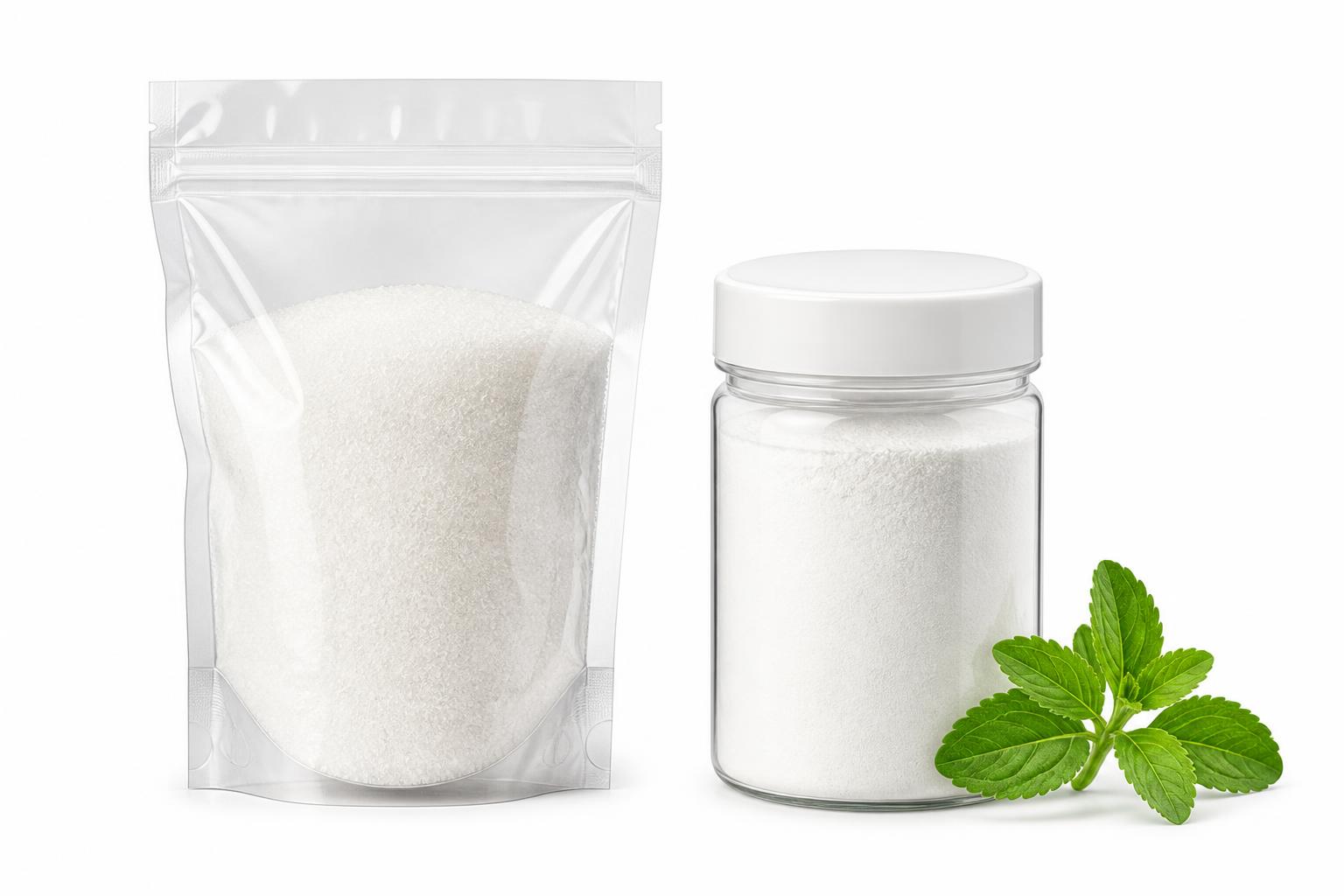
What allulose is and why manufacturers use it
Allulose (also written D-allulose or D-psicose) is produced commercially by converting fructose from corn using enzymes. Your body absorbs it but largely does not metabolize it for energy, and most of it is excreted in urine, which is why it contributes about 0.4 calories per gram instead of sugar's 4.
Manufacturers like it for reasons that have nothing to do with marketing:
- It dissolves, caramelizes, and browns like sugar, so cookies, ice cream, and syrups behave normally.
- It lowers freezing point, keeping low-sugar ice cream scoopable instead of icy and rock hard.
- It does not have the cooling mouthfeel of erythritol or the licorice-like aftertaste some people notice with stevia.
- In 2019 the FDA allowed allulose to be excluded from "Total Sugars" and "Added Sugars" on the Nutrition Facts panel, while still counting in total carbohydrates. That single rule change is why so many products now advertise "0g added sugar."
Where you will see it in US stores: keto and low-sugar ice cream (Rebel, Halo Top varieties), protein and snack bars, Quest and similar cookies, chocolate-style bars, pancake syrups, sugar-free candy, coffee syrups, and an increasing number of protein sodas and shakes at Target, Whole Foods, and Costco.
What stevia is and why manufacturers use it
Stevia on a label is shorthand for purified steviol glycosides, most often rebaudioside A (Reb A), or newer ones like Reb M and Reb D that taste cleaner and are increasingly made by fermentation rather than leaf extraction. You may see any of these names: stevia leaf extract, steviol glycosides, Reb A, Reb M, or brand names like Truvia, Pure Via, and SweetLeaf.
Reasons it dominates beverages:
- It is heat and pH stable, so it survives pasteurization and acidic sodas.
- It costs very little per unit of sweetness.
- It adds no calories and no carbohydrate weight, which matters in drinks where you cannot add bulk.
Where you will see it: zero-sugar sodas and flavored waters, Zevia, sparkling teas, Vitaminwater Zero, flavored yogurts, kombucha, electrolyte powders, and tabletop packets. In powdered blends, stevia is usually a small fraction of the packet, with erythritol or dextrose doing the bulking. If you are decoding those bulking ingredients, our sugar alcohols list and label guide walks through the names.
Allulose vs stevia: the practical comparison
| Allulose | Stevia | |
|---|---|---|
| Ingredient type | Rare sugar (carbohydrate) | Plant-derived high-intensity sweetener |
| Relative sweetness | ~70% of sugar | ~200-350x sugar |
| Calories | ~0.4 per gram | Effectively zero per serving |
| Counts as added sugar on US label | No (FDA, 2019) | No |
| Bakes and browns | Yes | No |
| Typical aftertaste | Minimal | Bitter or licorice note for some people |
| Needs bulking agents | Rarely | Usually |
| Common GI complaint | Gas, bloating at higher doses | Uncommon |
| US regulatory status | GRAS | Purified glycosides GRAS; whole leaf not approved |
What the current evidence says, and what is still uncertain
Both have a reasonable safety record at typical intakes, and both have real gaps in long-term human data.
For allulose, the FDA has accepted multiple GRAS notices and in 2019 issued guidance on excluding allulose from sugar declarations. Short-term trials suggest it does not meaningfully raise blood glucose or insulin, and some small studies show it may blunt the glucose rise from a co-eaten carbohydrate load. The main documented downside is digestive: tolerance studies generally point to gastrointestinal symptoms above roughly 0.4 g per kilogram of body weight in a single dose, which is easy to exceed if you eat a pint of allulose-sweetened ice cream in one sitting. Notably, the European Union has not authorized allulose as a novel food, so you will not find it in EU products. That is a regulatory timing and dossier difference, not a published finding of harm, and it is worth keeping those two things separate when you see it framed online as a "banned ingredient."
For stevia, the Joint FAO/WHO Expert Committee on Food Additives set an acceptable daily intake of 4 mg per kg body weight per day, expressed as steviol equivalents, and the European Food Safety Authority has reaffirmed that level. In the US, purified steviol glycosides are GRAS, but whole stevia leaf and crude extracts are not approved for use as sweeteners, a nuance many "all natural" claims blur.
The broader uncertainty applies to both. The WHO's 2023 guideline advising against using non-sugar sweeteners for weight control was based largely on observational data across many sweeteners and does not identify allulose or stevia as harmful; it reflects weak evidence of long-term benefit rather than proof of risk. Emerging research on sweeteners and the gut microbiome is early, inconsistent, and mostly not specific to these two ingredients. Anyone telling you the question is settled in either direction is overstating the science.
How to read the label in the store
- Check placement in the ingredient list. Allulose high on the list means it is doing bulk work. Stevia near the end means it is a trace-level sweetener and something else is providing body.
- Look at total carbohydrates, not just sugars. Allulose shows up in total carbs but not in Total or Added Sugars, so a bar can read "0g added sugar" and still list 20g carbs.
- Scan for co-sweeteners. Many products pair allulose with monk fruit or stevia, or stevia with erythritol, sucralose, or maltitol. The blend, not the headline ingredient, determines how it tastes and how your stomach reacts.
- Watch the serving size. GI tolerance is dose dependent, and one "serving" of low-sugar ice cream is usually two thirds of a cup, not the container. Our guide to serving size vs portion size covers that gap.
- Judge the whole product. A stevia-sweetened cookie is still a cookie. Sweetener choice tells you very little about refined flours, flavorings, or processing level.
So, allulose or stevia?
For an honest allulose sweetener comparison: choose allulose when texture matters, in home baking, ice cream, and syrups, and when you tolerate it comfortably. Choose stevia in drinks, coffee, and yogurt where you need sweetness without bulk and cost matters. In the stevia vs allulose debate there is no clear health winner at normal intakes, and many people end up using both for different jobs. Buy the smallest size first, notice how your digestion responds, and treat either one as a tool for reducing added sugar rather than a license to eat more dessert.
If you would rather not compare ingredient panels in the aisle, you can scan the barcode with Osana and see the sweeteners, additives, and processing flags for a product in a couple of seconds.
FAQ
Is allulose a sugar alcohol? No. Sugar alcohols like erythritol and maltitol end in "-ol" and are polyols. Allulose is a monosaccharide, a true sugar that your body mostly does not metabolize.
Why does allulose appear in total carbs but not in total sugars? FDA guidance lets manufacturers exclude allulose from Total and Added Sugars because it is metabolized differently, while still requiring it in total carbohydrate. That is a labeling rule, not a claim that it is carbohydrate free.
Does stevia count as ultra-processed? Purified steviol glycosides are a cosmetic or functional additive, and their presence is one of the markers used in processing classifications. See the NOVA food classification explained for how that works in practice.
Can I bake with stevia like I do with sugar? Not directly. You lose the bulk, moisture, and browning that sugar provides, so recipes usually need a bulking ingredient such as allulose, erythritol, or extra fruit puree.
Are either of these safe during pregnancy? Purified steviol glycosides are considered acceptable within the established daily intake, and allulose is GRAS, but pregnancy-specific data are limited for both. Ask your OB or a registered dietitian about your own situation.
Choose cleaner swaps before they land in your cart.
Use Osana at Whole Foods, Trader Joe's, Target, Costco, or Walmart to compare labels faster and shop with more confidence.