MSG in food: what monosodium glutamate really is and how to spot it on labels
 By Clement8 min read
Find the controversial ingredients already in your kitchen.
Scan packaged foods at home, understand ingredients, and find healthier alternatives in seconds.




 Scan with Osana
MSG in food is monosodium glutamate, the sodium salt of glutamic acid, an amino acid that occurs naturally in tomatoes, parmesan, mushrooms, soy sauce and breast milk. Manufacturers add it because it delivers savory "umami" flavor cheaply, which lets them cut salt and meat while keeping food tasty. The US Food and Drug Administration classifies it as generally recognized as safe, and large reviews have not confirmed the dramatic reactions described in decades of headlines, though a minority of people report short-lived symptoms after large doses.
That is the short answer. The longer answer matters if you are standing in a Target aisle with a toddler in the cart, trying to decide whether a seasoning packet is a dealbreaker.
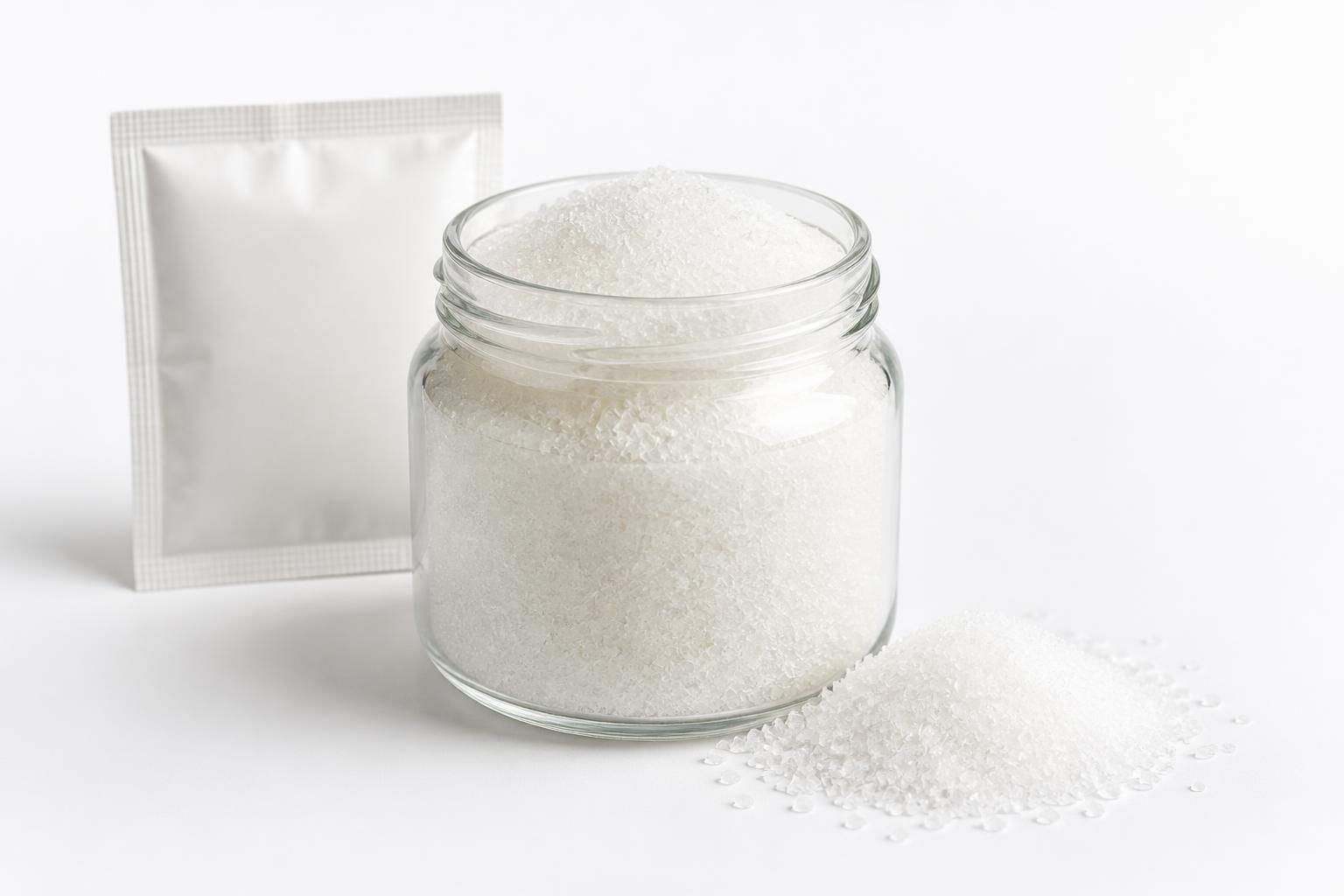
What monosodium glutamate in food actually is
Glutamate is one of the most common amino acids in the human diet. Your body cannot tell the difference between the glutamate in a ripe tomato and the glutamate from added MSG once it is digested. The distinction is the delivery: MSG is purified, crystalline and concentrated, produced commercially by bacterial fermentation of starch or molasses, similar to how vinegar or yogurt cultures are made.
A typical American eats roughly half a gram of added MSG per day, while pulling in several grams of naturally bound glutamate from ordinary foods like cheese, cured meats and tomato products. That ratio is worth remembering when a video implies MSG is a uniquely industrial intrusion into an otherwise clean plate.
One practical note: MSG contains sodium, but only about one third as much as table salt by weight. Food scientists often use it to reduce total sodium in a recipe while keeping the savory punch, which is why it sometimes shows up in products marketed as lower sodium. If sodium is your main concern, the Nutrition Facts sodium line tells you more than the ingredient list does.
Why manufacturers use it
Three reasons drive almost every use of MSG in packaged food:
- Flavor rescue. Removing fat, salt or real meat strips flavor. MSG puts back the savory depth at a fraction of the cost of broth, aged cheese or slow-roasted bones.
- Consistency. Tomatoes and mushrooms vary by harvest. Purified glutamate does not, so a brand's ranch dressing tastes identical in Sacramento and Tampa.
- Cost. It is one of the cheapest flavor tools available, which is why it clusters in value brands, shelf-stable meals and restaurant-style products.
That third point is the most useful signal for shoppers. MSG itself is not the problem so much as what its presence often implies: a formula engineered for palatability and shelf life rather than built from whole ingredients.
Foods with MSG in US grocery stores
You will find added glutamates most often in these categories:
- Seasoning blends and bouillon. Cubes, powdered broth bases, taco and chili seasoning packets, "everything" savory sprinkles.
- Chips and salty snacks. Flavored tortilla chips, ranch and barbecue coatings, nacho cheese powders, some puffed snacks.
- Instant noodles and soup. Ramen flavor sachets, canned condensed soups, dry soup mixes.
- Frozen and refrigerated meals. Skillet kits, frozen fried rice, breaded chicken products, some frozen pizzas.
- Dips, dressings and sauces. Ranch, French onion dip mixes, gravy packets, stir-fry and teriyaki sauces, some barbecue sauces.
- Deli and processed meats. Certain lunch meats, sausages, jerky and marinated chicken.
Whole Foods and Trader Joe's both keep added MSG rare in their private labels, though Trader Joe's does use yeast extract and other glutamate-rich flavorings in some items. At Walmart, Costco and Target, the value-brand seasoning and snack aisles are where you will see it most.
MSG on ingredient labels: the names to know
US labeling rules require that added monosodium glutamate be declared as "monosodium glutamate," and it cannot be hidden inside the word "spices" or "natural flavors." The FDA is explicit on this point in its MSG questions and answers.
What the rules do not require is a "contains MSG" flag on ingredients that naturally deliver free glutamate. These are legitimate ingredients used for flavor, not loopholes, but they behave similarly on your tongue:
- Yeast extract and autolyzed yeast
- Hydrolyzed soy, wheat or pea protein
- Soy protein isolate and concentrate
- Disodium inosinate and disodium guanylate, flavor boosters almost always paired with glutamate
- Natural flavor blends built on tomato, mushroom or seaweed extract
Two other additive names in the same family are monopotassium glutamate and calcium diglutamate. If a label says "No MSG added" but lists yeast extract plus disodium inosinate, the product is still engineered for umami. That is not deception, but it is useful to recognize.
What the current evidence says, and what it does not
The "Chinese restaurant syndrome" story began with a single 1968 letter to a medical journal and snowballed for decades. Since then, controlled studies have repeatedly failed to reproduce consistent symptoms when MSG is given in food rather than in a glass of water at unrealistic doses. A systematic review in the Journal of Headache and Pain found little support for the claim that dietary MSG triggers headaches, while noting that study quality was mixed.
Regulators have landed in similar territory. The FDA maintains its GRAS status, and the European Food Safety Authority re-evaluated glutamates in 2017 and set a group acceptable daily intake of 30 mg per kg of body weight, noting that some high consumers in Europe may exceed it. That is a nuanced conclusion, not a clean bill of health and not an alarm. For a 150-pound adult, that ADI works out to roughly 2 grams per day of total added glutamates.
The honest uncertainties:
- A small subset of people report transient effects such as flushing, headache or tingling after large doses on an empty stomach. Self-reported sensitivity is more common than it shows up in blinded testing, but that does not make individual experience irrelevant.
- Most long-term research links MSG intake to outcomes only indirectly, because the foods containing it tend to be ultra-processed and high in sodium. Untangling the additive from the food matrix is genuinely difficult.
- Animal studies using injected doses far beyond any dietary exposure are frequently cited online and are not a fair basis for grocery decisions.
If you want the regulatory background on why "generally recognized as safe" is a weaker guarantee than it sounds, that is worth understanding separately: see our explainer on what GRAS status really tells you.
How to read labels without overthinking it
Renewed consumer interest in additives, including attention driven by MAHA-adjacent food commentary, has put MSG back on the list of ingredients people search before buying. A neutral approach works better than a blanket ban:
- Read position, not just presence. MSG near the end of a long ingredient list is a flavor tweak. A list where the first five entries are refined starch, oil, sugar and flavorings tells you more about the product than the MSG does.
- Check sodium alongside it. Savory packaged foods with MSG are often high in total sodium anyway. The %DV per serving is the number that matters for your family's daily total.
- Count the flavor stack. Yeast extract plus disodium inosinate plus hydrolyzed protein plus natural flavors is a sign of heavy reformulation, not a single tweak.
- Test your own tolerance honestly. If you consistently feel off after a specific product, skip that product. One bad experience does not need scientific validation to change your grocery list.
- Trade up where it is easy. Swapping a bouillon cube for low-sodium broth, or a seasoning packet for cumin, garlic powder and smoked paprika, costs little and removes the question entirely.
The bottom line
MSG is one of the better-studied additives in the food supply, and the weight of current evidence does not support treating it as a toxin. It is, however, a reliable marker of food designed in a lab rather than a kitchen, which is a fair reason to notice it. If you would rather not squint at fine print in the seasoning aisle, you can scan a barcode with Osana and see the additives, ultra-processed signals and cleaner alternatives in a few seconds.
FAQ
Is MSG worse than table salt?
They are different things. MSG carries about a third of the sodium of table salt by weight and is used for savory flavor rather than saltiness. In some reformulations it actually lowers a product's total sodium.
Does "No MSG" on the package mean no glutamate?
Not necessarily. The claim refers to added monosodium glutamate. Products can still contain yeast extract, hydrolyzed protein or soy protein isolate, which supply free glutamate naturally.
Is MSG banned in Europe?
No. It is approved in the EU as additive E621 and carries a group acceptable daily intake set by EFSA in 2017, which is stricter guidance than the US applies but not a ban.
Should I avoid MSG if I get migraines?
Evidence for a dietary MSG trigger is weak, but triggers are individual. If you notice a pattern with specific foods, tracking and avoiding them is reasonable, and a clinician can help rule out other causes.
Is MSG safe for kids?
Regulators have not identified a specific concern for children at normal dietary levels. The more useful question is usually how ultra-processed the overall product is, not the MSG alone.
Choose cleaner swaps before they land in your cart.
Use Osana at Whole Foods, Trader Joe's, Target, Costco, or Walmart to compare labels faster and shop with more confidence.