Are protein bars ultra processed? What NOVA says about the bars in your cart
 By Clement7 min read
Find the controversial ingredients already in your kitchen.
Scan packaged foods at home, understand ingredients, and find healthier alternatives in seconds.




 Scan with Osana
Yes, most protein bars sold in US grocery stores are ultra processed under the NOVA classification, because they rely on isolated proteins, sugar alcohols, syrups, emulsifiers, and flavorings that you would never find in a home kitchen. A minority of bars, usually the short-ingredient date-and-nut kind, are only minimally or moderately processed. The label tells you which one you are holding, and the check takes about ten seconds.
That distinction matters more than the word "ultra processed" itself. A bar can be group 4 and still be a reasonable choice at 3 p.m. in a car pool line. The goal here is accuracy, not alarm.
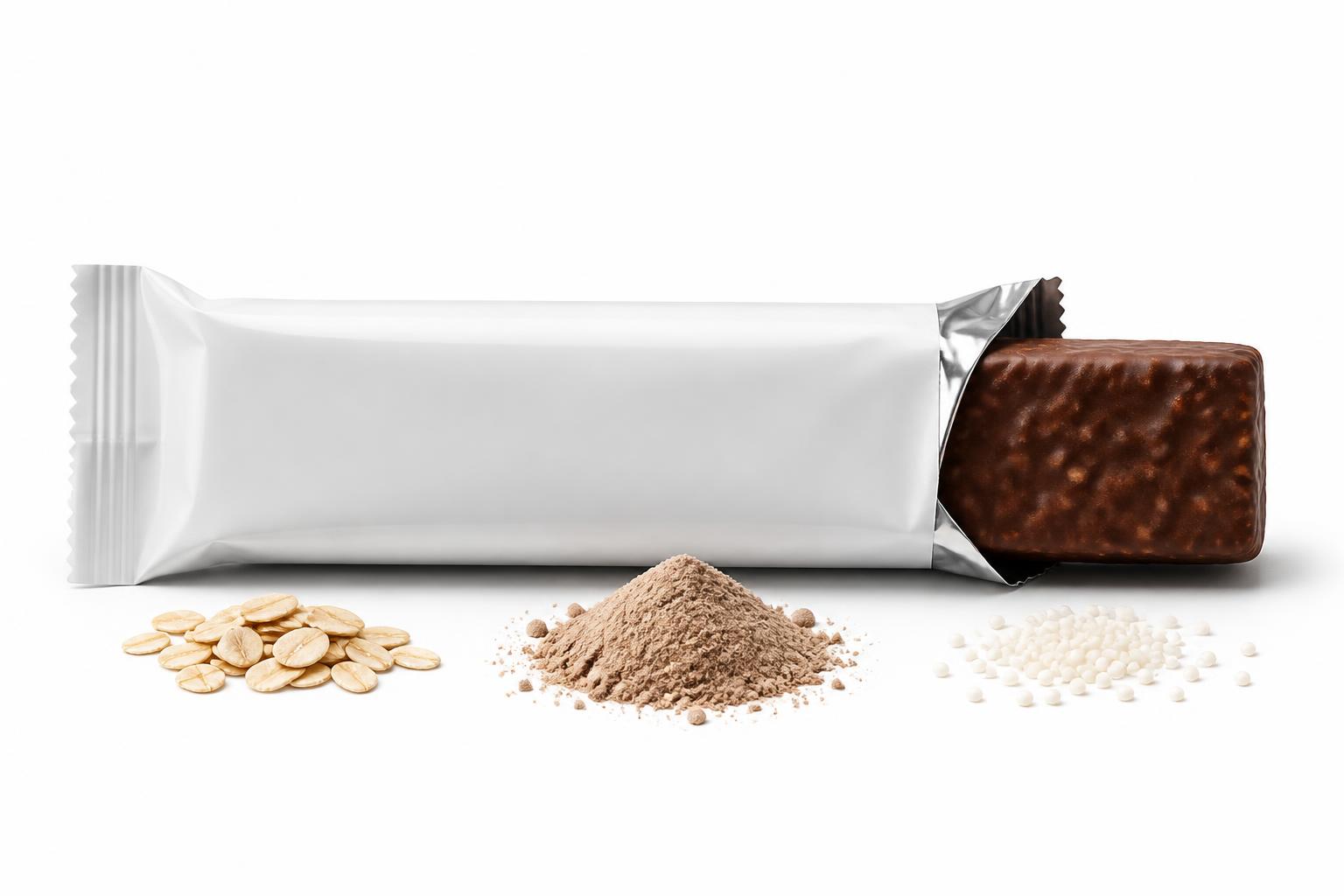
How NOVA actually classifies protein bars
NOVA sorts foods by the degree and purpose of industrial processing rather than by nutrients. Group 1 is unprocessed or minimally processed food such as almonds or plain oats. Group 2 is culinary ingredients such as oil, honey, and salt. Group 3 is processed food, meaning group 1 food plus a group 2 ingredient, like salted nuts. Group 4 is ultra processed: industrial formulations built mostly from substances extracted from foods, plus cosmetic additives. If you want the full framework with grocery examples, the NOVA food classification guide walks through all four groups.
Protein bars NOVA classification usually comes down to two questions:
- Is the protein an isolate or concentrate, such as whey protein isolate, soy protein isolate, or milk protein concentrate? Those are extracted fractions, not whole foods.
- Does the bar contain additives whose job is texture, shelf life, color, or taste rather than nutrition? Think soy lecithin, gum arabic, carrageenan, sucralose, natural flavors, tocopherols added as preservatives.
One yes on the second question is usually enough to put a bar in group 4. Two yeses make it clear-cut.
Where common US bars tend to land
These are category patterns, not product verdicts, and formulas change often.
- Date-and-nut bars with a list like "dates, almonds, cashews, sea salt" are group 1 or 3. Larabar-style bars and some Made Good or That's It products fit here. The protein is modest, usually 3 to 6 grams.
- Whole-food-leaning bars with added protein, such as RXBAR with egg whites and dates, sit in a gray zone. Egg white powder is an isolated ingredient, and most NOVA researchers would call these ultra processed, though they are far simpler than the average bar.
- Meal-replacement and high-protein bars from Quest, Pure Protein, Clif Builders, Barebells, and most Costco multipacks are firmly group 4. You will see isolates, soluble corn fiber, glycerin, palm kernel oil, sucralose or stevia, and emulsifiers.
- Candy-adjacent bars with chocolate coatings, caramel layers, and 15 or more ingredients are group 4 with the least ambiguity.
So the honest answer to "are protein bars processed" is that all of them are, since a bar is by definition a manufactured item. The useful question is how far along the spectrum yours sits.
Reading the wrapper in ten seconds
Flip the bar over and run this sequence in the aisle.
Count the ingredients. Under six is a strong signal of minimal processing. Over fifteen almost always means group 4.
Find the first three. They carry the most weight. Dates, nuts, or oats first is a different product than corn syrup, protein isolate, and palm oil first.
Scan for cosmetic additives. Emulsifiers like soy lecithin and mono- and diglycerides, gums such as xanthan and gum arabic, plus "natural flavors" are the classic NOVA markers. None of these are inherently dangerous, and FDA reviews them under its food additive and GRAS framework, which is worth understanding before you panic at a long word.
Look at the sweetener stack. Many ultra processed protein bars combine two or three sweeteners: allulose, erythritol, stevia, sucralose, plus a syrup. Sugar alcohols above roughly 10 grams per bar are a common cause of bloating and loose stools for some people, which is a tolerance issue rather than a safety one.
Check protein against calories. A bar with 20 grams of protein and 190 calories is doing real work. A bar with 9 grams of protein and 250 calories is mostly a candy bar with a marketing angle. The %DV shortcuts on the Nutrition Facts panel help you compare fiber, saturated fat, and sodium across brands fast.
What the science does and does not say
Observational research consistently links higher ultra processed food intake with higher risk of obesity, cardiovascular disease, and type 2 diabetes. A large umbrella review in The BMJ mapped these associations across dozens of outcomes, and a controlled NIH feeding study by Hall and colleagues found people ate about 500 more calories per day on an ultra processed diet compared with a minimally processed one matched for nutrients.
Three caveats matter for bars specifically.
Most of that evidence comes from diets dominated by soda, packaged baked goods, processed meat, and salty snacks. A fortified protein bar is not nutritionally equivalent to a soft drink, even if both are group 4. Researchers including those behind the NOVA framework itself acknowledge the category is broad.
The Hall study also points to mechanism: energy density, softness, and speed of eating drove overconsumption. A dense bar eaten as a planned snack behaves differently from chips eaten from an open bag.
And observational data cannot prove causation. People who eat many ultra processed foods differ in income, cooking time, sleep, and activity. The Dietary Guidelines for Americans still frame advice around overall dietary patterns rather than processing labels.
A practical way to shop the bar aisle
Decide what the bar is for. Post-workout recovery justifies a higher-protein group 4 bar. A snack for a seven-year-old's lunchbox probably does not.
Set a personal floor instead of a ban. A workable rule for most shoppers: at least 8 grams of protein, at least 3 grams of fiber, no more than 8 grams of added sugar, and fewer than 12 ingredients. That filter alone eliminates a large share of the Target and Walmart shelf.
Rotate in real food. Greek yogurt with berries, a hard-boiled egg with fruit, cottage cheese, or a handful of almonds with cheese all deliver comparable protein without the formulation. Bars are a convenience tool, best used a few times a week rather than as three daily meals.
Watch for reformulations. Brands change sweeteners and oils frequently, so the bar you vetted last spring may have a different ingredient list now.
The bottom line
Are protein bars ultra processed? Most of them, yes, and the NOVA group 4 label is a fair description of how they are built. But processing level is one input among several, alongside protein quality, added sugar, fiber, and how the bar actually fits your week. A simple, higher-protein bar eaten twice a week is not the thing standing between you and a better diet. If you want to see exactly where a bar lands before it goes in your cart, scanning its barcode with Osana surfaces the additives, sweeteners, and processing flags in a couple of seconds.
FAQ
Is RXBAR ultra processed?
By strict NOVA criteria, most researchers would say yes, because egg white powder is an isolated protein and some flavors include added natural flavoring. It is still among the simplest formulations on US shelves, typically six to nine recognizable ingredients.
Are homemade protein bars better?
Usually, in processing terms. If you blend dates, oats, nut butter, and a scoop of protein powder, everything except the powder is group 1 or 2. The powder keeps it from being fully minimally processed, but the additive load drops sharply.
Do sugar alcohols in protein bars matter?
They matter mainly for digestive comfort. Erythritol, maltitol, and sorbitol are poorly absorbed, and larger amounts can cause gas or laxative effects in sensitive people. Check the sugar alcohol line under Total Carbohydrate.
Which protein bars are the least processed at Trader Joe's or Whole Foods?
Look in the date-and-nut section rather than the sports nutrition shelf. Bars listing dates, nuts, cocoa, and salt with no isolates or emulsifiers are the shortest lists you will find, though they deliver less protein per bar.
Choose cleaner swaps before they land in your cart.
Use Osana at Whole Foods, Trader Joe's, Target, Costco, or Walmart to compare labels faster and shop with more confidence.