High Fiber Snacks: A Label-Smart US Grocery Guide
 By Clement7 min read
Find the controversial ingredients already in your kitchen.
Scan packaged foods at home, understand ingredients, and find healthier alternatives in seconds.




 Scan with Osana
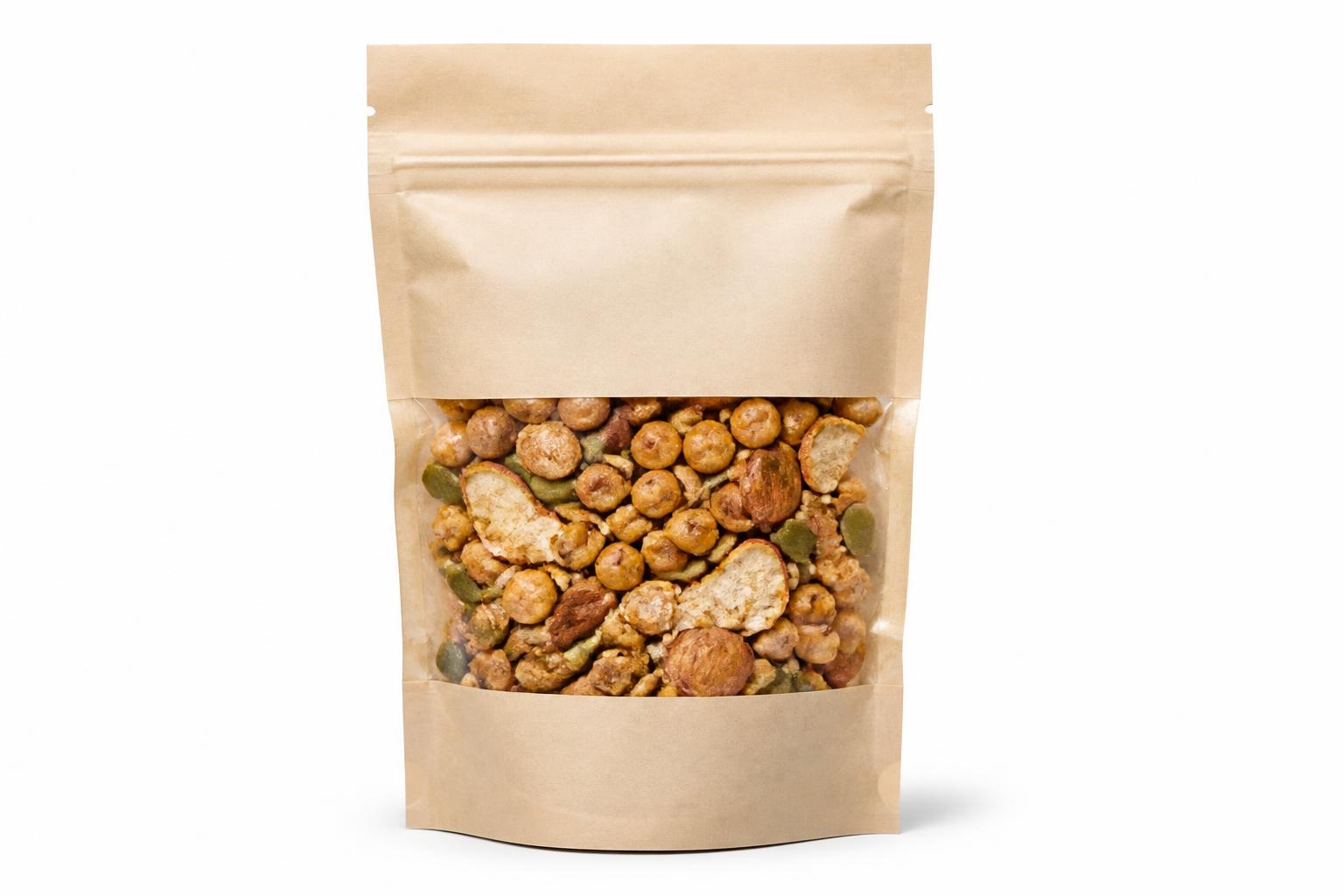
The best high fiber snacks are the ones that deliver at least 3 grams of fiber per serving from recognizable whole foods, not from a long list of isolated fiber additives. In practice that means roasted chickpeas, raw almonds and pistachios, popcorn, chia pudding, whole-fruit-and-nut bars, edamame, pear or raspberries with nut butter, and bean-based dips with seeded crackers. Below is how to compare the widely available options at Costco, Target, Trader Joe's, Walmart and Whole Foods using five numbers on the label: fiber, added sugar, sodium, protein and the ingredient list itself.
How much fiber a snack should actually have
The Daily Value for fiber is 28 grams a day, and the FDA counts a food as a "good source" at 10 percent DV (about 2.8 grams) and an "excellent source" at 20 percent DV (about 5.6 grams). Most Americans land far below the target: federal dietary guidance lists fiber as a nutrient of public health concern, and NIH's fiber overview reflects the same gap.
A useful shopping rule: 3 grams of fiber minimum per snack serving, ideally 5 or more, with added sugar under 6 grams and sodium under 200 milligrams. If you want a refresher on reading those percentages quickly, the %DV shortcut guide covers it in two minutes.
Best high fiber snacks by category
Nuts and seeds
Almonds are the quiet winner: a 1 ounce serving (about 23 almonds) gives roughly 3.5 grams of fiber and 6 grams of protein with one ingredient. Pistachios land near 3 grams of fiber plus 6 grams of protein. Chia seeds are the density champion at roughly 10 grams of fiber per ounce, which is why 2 tablespoons stirred into yogurt turns a low-fiber snack into a solid one.
What to check on the bag: roasted nuts are often cooked in sunflower, safflower or peanut oil and salted to 150 to 250 milligrams per ounce. Dry roasted and unsalted versions (Kirkland, Trader Joe's, Wonderful) skip both. Skip anything labeled "honey roasted" or "praline," which adds 5 to 8 grams of sugar per ounce.
Legume snacks
Roasted chickpeas such as Biena or Saffron Road deliver about 5 to 6 grams of fiber and 6 grams of protein per ounce, with chickpeas, oil and seasoning as the entire ingredient list. Dry roasted edamame runs even higher on protein, often 13 to 14 grams per quarter cup with 8 grams of fiber. Trader Joe's and Target both stock versions under $4.
Watch sodium here. Barbecue and ranch flavors can hit 300 milligrams per serving, and the seasoning blends are where maltodextrin, natural flavors and yeast extract appear.
Popcorn
Air-popped or oil-popped popcorn is whole grain by definition and gives about 3.5 grams of fiber per 3 cup serving for 90 to 150 calories. Bagged brands like Skinny Pop, Lesser Evil and Boom Chicka Pop keep ingredient lists to three or four items. Microwave bags and heavily coated "kettle" or "cheddar" styles are a different product: more sodium, more oil, and often added colors or flavors.
Fruit that earns its place
Raspberries are unusually high fiber for fruit at roughly 8 grams per cup. One medium pear with skin gives about 5.5 grams, an avocado half about 5 grams, and a cup of blackberries close to 7.5 grams. Pair any of them with a tablespoon of almond butter and you have a genuinely healthy fiber snack with no label to decode at all.
Dried fruit counts too, but concentrate: prunes offer about 6 grams of fiber per half cup. Check that the only ingredients are the fruit, since many dried mango, cranberry and pineapple products add sugar and sulfites.
Bars and packaged snacks
This is where fiber claims get slippery. A whole-food bar such as a Larabar lists dates, nuts and fruit and provides 3 to 5 grams of fiber from the food itself. Many low-sugar bars instead use chicory root fiber, inulin, soluble corn fiber or polydextrose to reach a big fiber number, which some people find causes gas and bloating. Neither approach is unsafe; they simply are not interchangeable, and the label tells you which one you bought.
Also scan for the sweetener system. Sugar alcohols such as erythritol and maltitol show up on the same bars, and how those names appear on labels is worth knowing before you buy a whole box at Costco.
Crackers and dips
Seeded and whole grain crackers (Mary's Gone Crackers, Wasa, Triscuit Original) run 3 to 6 grams of fiber per serving with short ingredient lists; Triscuit is famously whole wheat, oil and salt. Pair them with hummus (about 3 grams of fiber per 4 tablespoons) or a black bean dip and you have close to 8 grams in one plate.
High fiber snack ideas you can assemble in five minutes
- Greek yogurt with 2 tablespoons chia and a half cup raspberries: about 12 grams fiber, 18 grams protein
- Apple slices with 1 tablespoon peanut butter: about 5.5 grams fiber
- Half cup dry roasted edamame with clementines: about 11 grams fiber
- Three cups popcorn tossed with nutritional yeast: about 4 grams fiber
- Whole grain toast with mashed avocado and hemp seeds: about 9 grams fiber
- Overnight oats with ground flaxseed and blueberries: about 10 grams fiber
Four of the six need no barcode at all, which is the fastest way to raise fiber without evaluating a new product every week.
Reading the ingredient list, not just the claim
Front-of-pack fiber messaging is marketing; the back is the data. Three habits help:
- Compare per serving, then check serving size. A cracker box may list 30 grams as a serving while the bag holds four.
- Locate the fiber source. If "whole grain oats," "chickpeas" or "almonds" sits in the first three ingredients, the fiber is likely intrinsic. If the only fiber words are chicory root or soluble corn fiber, it was added.
- Count the additive tail. Emulsifiers, colors and flavor blends at the end of the list are markers of heavy processing, the pattern described in the NOVA classification system. The WHO guidance on diet favors whole plant foods, and FDA's dietary fiber definition page explains which added fibers can legally be declared.
Interest in additives and in what is restricted in Europe versus the United States has pushed a lot of shoppers to read labels more closely, and fiber snacks are one aisle where that habit pays off quickly because the differences between two similar-looking bags are large.
A quick shortlist worth keeping
If you want a default cart: unsalted almonds, dry roasted edamame, plain roasted chickpeas, a simple popcorn, raspberries or pears, hummus, seeded crackers, and a date-and-nut bar. That set covers crunchy, sweet, savory and portable, keeps added sugar low, and lands most snacks in the 3 to 8 gram fiber range without relying on isolated fiber additives.
When a new product does tempt you, checking the ingredient list and processing level in the Osana app takes a few seconds and tells you whether the fiber on the front of the box came from real food.
FAQ
Is added fiber like chicory root as good as fiber from whole foods? It counts toward the number on the label and is permitted by the FDA, but the research base is narrower than for intrinsic fiber, and larger doses cause digestive discomfort for some people. Treat whole-food fiber as the base and added fiber as a bonus.
What is a high fiber snack with protein too? Dry roasted edamame, roasted chickpeas, Greek yogurt with chia, and almonds with an apple all pair 3 or more grams of fiber with meaningful protein.
How fast should I increase fiber? Gradually, over a couple of weeks, with more water. Jumping from 12 to 30 grams overnight is the usual cause of bloating.
Are fiber gummies a reasonable substitute? They provide isolated fiber without the vitamins, minerals and satiety of whole foods, so they are a supplement rather than a snack. Food first is the simpler choice.
Choose cleaner swaps before they land in your cart.
Use Osana at Whole Foods, Trader Joe's, Target, Costco, or Walmart to compare labels faster and shop with more confidence.