Sodium Benzoate in Food: Uses, Safety and Labels
 By Clement7 min read
Quick answer: sodium benzoate is a preservative used to stop mold, yeast, and some bacteria in acidic foods and drinks such as sodas, salad dressings, and pickles. It is approved by the FDA (GRAS, up to 0.1%) and in the EU as E211. The real questions are how much you consume in total and what it is paired with on the label.

Find the controversial ingredients already in your kitchen.
Scan packaged foods at home, understand ingredients, and find healthier alternatives in seconds.



 Scan with Osana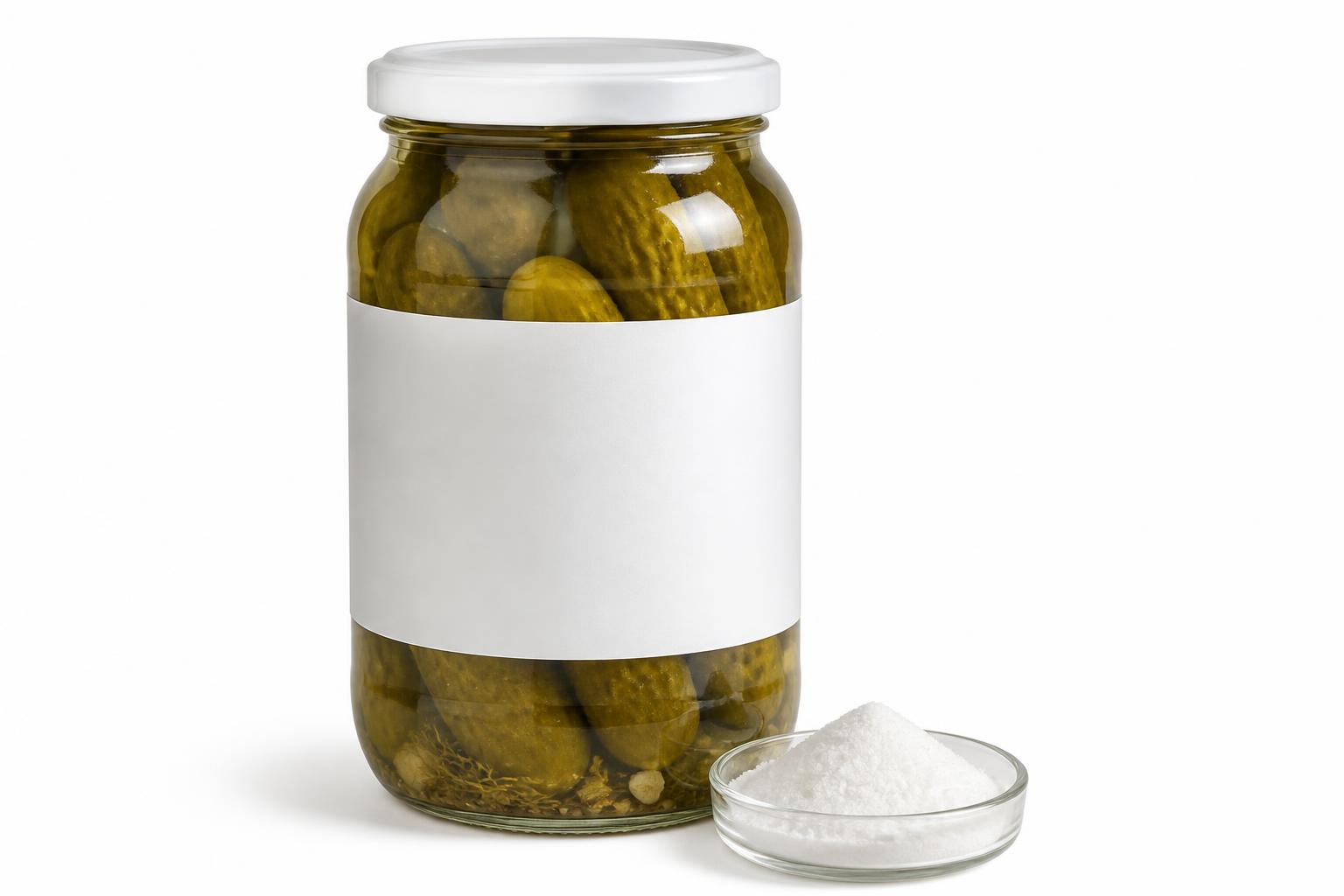
What sodium benzoate is, in plain English
Sodium benzoate is a salt of benzoic acid used as a preservative that stops mold, yeast, and some bacteria from growing in acidic foods and drinks. It is approved in the United States as Generally Recognized As Safe (GRAS) at up to 0.1 percent by weight, and it is also approved in the European Union as E211, so it is not a "banned in Europe" ingredient. The open questions are less about whether it is allowed and more about total daily intake, its behavior alongside ascorbic acid, and what its presence usually signals about how processed a product is.
If you have been scrolling clean-eating or additive content lately, you have probably seen sodium benzoate named in a list of ingredients to avoid. This guide gives you the boring, useful version: what it does, where it shows up in a US grocery cart, what the evidence supports, what it does not, and how to read a label without standing in the aisle for ten minutes.
Why manufacturers use the sodium benzoate preservative
Sodium benzoate only works well in acidic conditions, roughly pH 4.5 and below. In that environment it converts to benzoic acid, which interferes with microbial energy metabolism. That chemistry explains the pattern you see on shelves: it appears in sodas, salad dressings, pickles, and fruit-based products, and almost never in milk, bread, or fresh meat.
Three practical reasons it stays popular:
- Cost. It is inexpensive compared with many alternatives, and effective at low concentrations.
- Shelf stability without refrigeration. A shelf-stable dressing or a room-temperature juice needs mold protection during months of distribution.
- Neutral flavor at low doses. At typical use levels most people cannot taste it, though some detect a slight bitterness in low-sugar drinks.
Common alternatives include potassium sorbate, sorbic acid, cultured dextrose, vinegar, and simply refrigerating the product. None of these are automatically "cleaner" in a nutritional sense, but you will notice that many premium brands use them for positioning reasons.
Foods with sodium benzoate: where it shows up in US stores
You will find foods with sodium benzoate concentrated in a handful of aisles. Formulations change constantly, so treat these as categories to check rather than a blacklist of products.
Drinks
Diet and regular sodas, especially fruit-flavored ones, plus shelf-stable lemonades, iced teas, fruit punch drinks, and some flavored waters. Cola drinks often use phosphoric acid and less frequently need benzoate; citrus and berry flavors are more likely candidates.
Condiments and dressings
Shelf-stable salad dressings, mayonnaise-style spreads, barbecue sauces, hot sauces, relishes, and some ketchups. Refrigerated dressings from the produce section are more likely to rely on cultured ingredients or vinegar instead.
Pickled and jarred items
Pickles, olives, pickled peppers, maraschino cherries, and some jarred sauerkraut. Many traditional fermented versions in the refrigerated case skip it entirely.
Fruit-based and sweet items
Jams, jellies, fruit fillings, syrups, fruit cups in juice, and some frostings.
Non-food products in your house
Toothpaste, mouthwash, cough syrups, and many cosmetics also use it, which matters if you are trying to estimate total exposure rather than food alone.
A quick Target run illustrates the pattern. Store-brand shelf-stable ranch dressing frequently lists it; a refrigerated organic ranch usually does not. A fruit punch juice drink often lists it; 100 percent juice in a chilled carton usually does not. That difference is a useful shortcut across most categories.
What the evidence actually says
Here is where honesty matters more than a verdict.
Regulatory position. The US FDA lists sodium benzoate as GRAS under specified conditions of use. The European Food Safety Authority re-evaluated benzoic acid and benzoates in 2016 and kept an acceptable daily intake of 5 mg per kg of body weight per day, while noting that exposure in some high-consuming children could approach or exceed that level. You can read the EFSA re-evaluation of benzoates directly.
The benzene question. This is the most substantive concern. When sodium benzoate and ascorbic acid (vitamin C) are both present in a beverage, benzene can form under certain conditions, especially with heat and light exposure. Benzene is a recognized human carcinogen. The FDA investigated this in the mid-2000s, and the industry reformulated most affected products; FDA testing data on benzene in beverages found levels in the vast majority of tested drinks below the 5 parts per billion drinking water standard. The risk is real chemistry but was largely addressed through reformulation, not eliminated as a theoretical possibility.
Behavior in children. The often-cited 2007 Southampton study published in The Lancet tested mixtures of artificial colors plus sodium benzoate and found small increases in hyperactive behavior in some children. Because the mixture was tested as a whole, the study cannot isolate sodium benzoate as the cause. The EU responded by requiring warning labels on the specific colors involved, not on benzoate.
Cell and animal studies. Laboratory work has examined oxidative stress and mitochondrial effects at concentrations well above realistic dietary exposure. These findings are worth tracking but do not translate directly into human dietary risk. Human evidence at normal intake levels remains limited, which is a genuine uncertainty rather than a hidden danger.
The reasonable summary: for most people eating a varied diet, sodium benzoate at approved levels is not the ingredient most likely to affect health. If your family drinks several fruit-flavored sodas a day, total intake is a fair thing to reduce, and you are probably reducing added sugar at the same time.
Reading sodium benzoate on labels
Sodium benzoate on labels is straightforward once you know where to look. Scan the ingredient list, not the front of the pack.
- Look for sodium benzoate, benzoic acid, potassium benzoate, or E211 on imported products.
- Check for the phrase "to preserve freshness" or "as a preservative" in parentheses right after it.
- Note whether ascorbic acid or citric acid plus vitamin C appears in the same beverage. That combination is the one worth swapping if you buy it weekly.
- Compare shelf-stable versus refrigerated versions of the same product. Refrigeration often replaces the need for preservatives.
- Remember that ingredients are listed by weight, so a preservative near the very end of a long list is present in tiny amounts. Percent Daily Value figures do not cover additives at all, which is why understanding what %DV does and does not tell you helps you avoid over-reading a panel.
A practical family rule: rather than banning one additive, look at how many products in your cart are heavily formulated overall. Preservative lists tend to travel with refined starches, added sugars, and flavor systems, so the broader strategy in avoiding ultra-processed foods at the grocery store usually reduces benzoate exposure automatically.
Conclusion
Sodium benzoate is a well-studied, widely approved preservative that is legal on both sides of the Atlantic, with one legitimate technical concern (benzene formation alongside vitamin C in drinks) that has largely been managed through reformulation. It is a reasonable thing to notice, not a reason to panic, and the categories where it appears most are the ones already worth buying less of. If you want to see which additives are actually in your pantry without decoding every label yourself, you can scan your groceries with Osana and get a clear read in a few seconds.
Frequently asked questions
Is sodium benzoate banned in Europe?
No. It is approved in the EU as E211 with defined maximum levels by food category, and EFSA maintains an acceptable daily intake of 5 mg per kg of body weight per day.
Should I worry about benzene in soda?
For occasional consumption, the measured levels in reformulated products are very low. If you buy fruit-flavored sodas regularly, check whether the label lists both a benzoate and ascorbic acid, and store drinks cool and out of sunlight.
Is potassium sorbate a better alternative?
It is a different preservative with a similar safety profile and a broader pH range. Swapping one for the other is not a meaningful health upgrade on its own.
Can sodium benzoate cause allergic reactions?
Sensitivity reactions such as hives are reported but uncommon. People with aspirin sensitivity or chronic urticaria sometimes react to benzoates and should discuss it with a clinician.
Does organic certification exclude sodium benzoate?
Yes. Synthetic sodium benzoate is not permitted in products labeled USDA Organic, which is one reason organic shelf-stable items rely on vinegar, cultured dextrose, or refrigeration.

Choose cleaner swaps before they land in your cart.
Use Osana at Whole Foods, Trader Joe's, Target, Costco, or Walmart to compare labels faster and shop with more confidence.