Erythritol vs stevia: what the labels, the FDA, and the research actually say
 By Clement7 min read
Find the controversial ingredients already in your kitchen.
Scan packaged foods at home, understand ingredients, and find healthier alternatives in seconds.




 Scan with Osana
Erythritol and stevia are not the same kind of sweetener, and the difference matters more than most packages suggest. Erythritol is a sugar alcohol (polyol) that adds bulk, crunch, and a cooling taste, while stevia is a plant-derived high-intensity sweetener used in tiny amounts because it is hundreds of times sweeter than sugar. In US grocery products they are usually found together, because stevia alone tastes bitter or licorice-like and cannot replace the physical volume of sugar. If you are choosing erythritol or stevia, you are usually really choosing between a bulking agent and a flavor tool, not between two interchangeable options.
What each ingredient actually is
Erythritol occurs naturally in small amounts in pears, grapes, and fermented foods, but the erythritol in your protein cookie is produced industrially by fermenting glucose (typically from corn) with yeast. It delivers roughly 60 to 80 percent of the sweetness of sugar with close to zero calories, and most of it is absorbed in the small intestine and excreted unchanged in urine. That last detail is why erythritol is usually gentler on digestion than sorbitol, maltitol, or xylitol, which ferment in the colon.
Stevia comes from the leaves of Stevia rebaudiana. What gets used in food is not the leaf but purified steviol glycosides, most commonly Reb A, Reb M, or Reb D. The FDA has issued no-objection letters for high-purity steviol glycosides but has not approved whole stevia leaf or crude extracts for use as sweeteners in food. This is one of the quiet gaps between the marketing image ("just a leaf") and the manufacturing reality.
Why manufacturers use them together
Sugar does structural work. It browns, it bulks, it keeps cookies soft and ice cream scoopable. Remove it and you leave a hole in the recipe that stevia, used at fractions of a gram, cannot fill.
That is why an erythritol sweetener comparison almost always ends in the same place: erythritol is the volume, stevia is the sweetness intensity, and the two together approximate a sugar-like profile at a fraction of the calories. Blending also lets brands use less of each, which limits erythritol's cooling mouthfeel and stevia's bitter aftertaste.
You will also see monk fruit extract, allulose, soluble corn fiber, or chicory root inulin in the same blends. If you want a deeper look at how one of those pairings works on shelf, see our breakdown of allulose vs stevia.
Where you will find them in a US grocery run
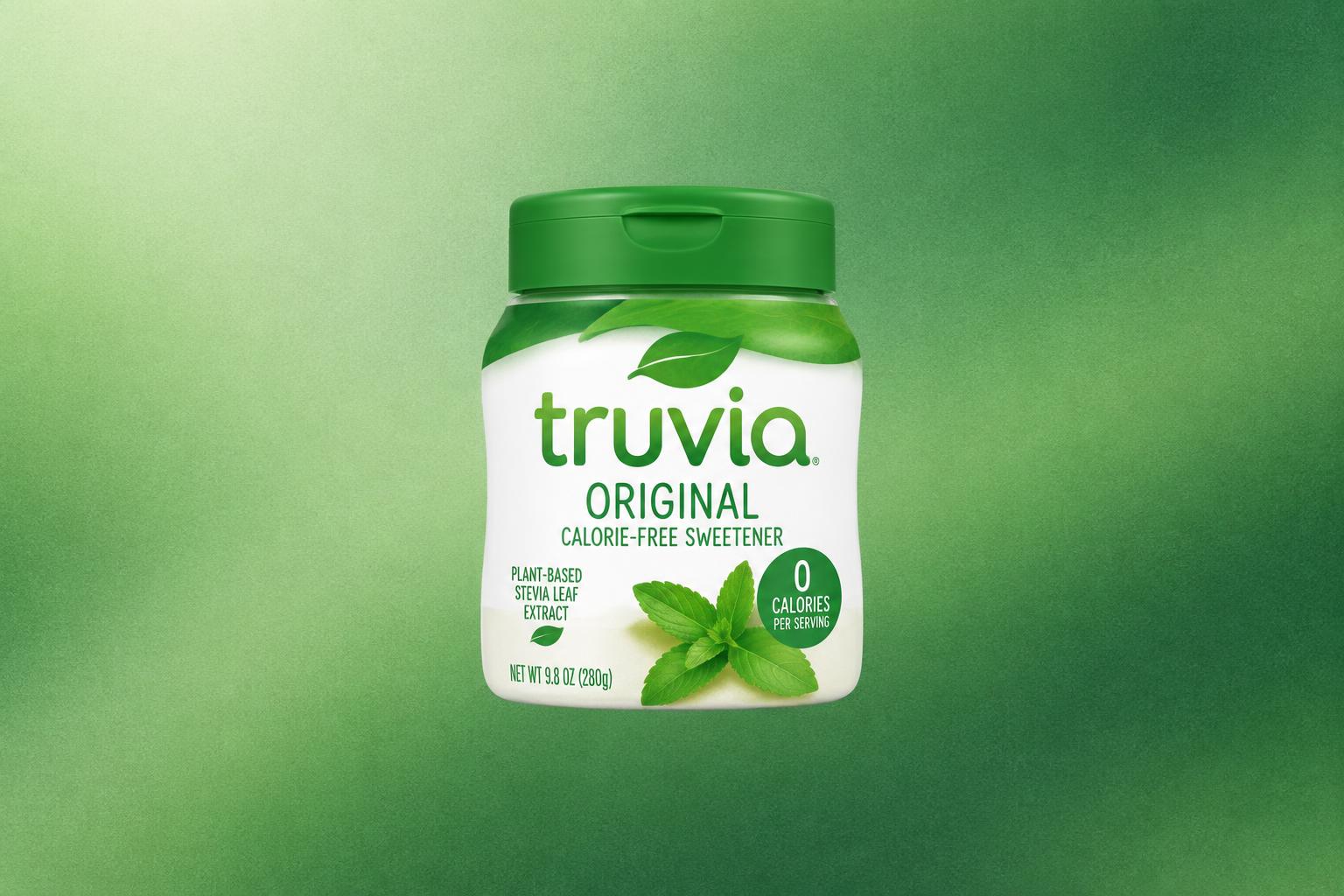
- Tabletop sweeteners: Truvia and many store-brand stevia packets are mostly erythritol with a small amount of Reb A. The first ingredient on a "stevia" packet is frequently erythritol or dextrose.
- Keto and low-sugar baking: Swerve, Lakanto, and Whole Foods 365 baking blends at Target, Walmart, and Sprouts.
- Protein bars and cookies: Quest, Atkins, and many Costco-sized multipacks list erythritol high in the ingredient list.
- Ice cream and frozen desserts: Halo Top, Rebel, and Enlightened use erythritol partly for texture and freezing point.
- Beverages: Zevia, Bai, and stevia-sweetened flavored waters typically use steviol glycosides alone, with no erythritol, because liquids do not need bulk.
- Yogurt and chocolate: Lily's chocolate and several Trader Joe's no-sugar-added items rely on erythritol plus stevia.
What the current evidence says, including the uncertainty
Erythritol has been used as a food ingredient since the 1990s and is treated as generally recognized as safe in the US. The European Food Safety Authority re-evaluated erythritol (E 968) in 2023 and did not set a numerical acceptable daily intake, concluding it is not a safety concern at reported use levels, while noting laxative effects at higher single doses, particularly from beverages. The practical takeaway: gas, bloating, or loose stools are the realistic risk for most people, and they are dose dependent.
The bigger question came from a 2023 study in Nature Medicine that linked higher circulating erythritol levels with cardiovascular events and showed increased platelet reactivity after a large erythritol drink. This generated significant coverage and fueled the online additive conversation that many shoppers now follow, including MAHA-adjacent content. Important caveats: the observational portion measured blood erythritol, which the body also produces internally from glucose metabolism, so elevated levels may reflect underlying metabolic dysfunction rather than diet. The intervention arm was small and used a single large dose. Researchers, including the study authors, have called for more work. This is an open question, not a settled verdict.
Steviol glycosides have a longer regulatory track record. JECFA and EFSA set an acceptable daily intake of 4 mg per kg of body weight per day expressed as steviol equivalents, and typical consumption stays well below it. The World Health Organization's 2023 guideline on non-sugar sweeteners advised against using any non-sugar sweetener, including stevia, for long-term weight control, based on low-certainty evidence. That guidance is about the category, not a safety warning about a specific ingredient, and it was widely misreported.
So: neither ingredient has been shown to be harmful at normal intake, and neither has strong evidence of long-term benefit beyond reducing sugar and calories.
How to read the label without overthinking it
Check the ingredient order, not the front of the pack. A product branded "sweetened with stevia" can list erythritol first, meaning it is the dominant ingredient by weight.
Look at the Nutrition Facts panel. Erythritol appears under total carbohydrate, often broken out as "Sugar Alcohol" or listed by name. Stevia contributes essentially nothing and will not appear there.
Scan for other names. Steviol glycosides, Reb A, rebaudioside A or M, stevia leaf extract, and Stevia rebaunaldiana extract are all stevia. Erythritol is sometimes labeled as E 968 on imported products.
Watch the dose if you are sensitive. Sugar alcohols in a full serving of ice cream plus a protein bar plus a sweetened yogurt add up quickly.
Remember what these ingredients do not tell you. A bar sweetened with stevia and erythritol can still be heavily processed with emulsifiers, isolates, and flavorings. If that matters to you, the NOVA food classification framework is a more useful lens than the sweetener alone.
A practical way to choose
If your priority is minimizing added sugar in coffee or tea, plain steviol glycoside drops involve the fewest ingredients. If you are baking and need volume, an erythritol-based blend is the realistic option. If you have IBS or notice digestive symptoms, reduce erythritol quantity before worrying about anything else. And if the cardiovascular research makes you uneasy, using erythritol occasionally rather than in multiple products daily is a reasonable, low-cost response while the science develops.
Neither choice needs to be permanent. Stevia vs erythritol is a small decision inside a much larger one, which is how much of your cart is built from ultra-processed formulations in the first place.
Conclusion
Erythritol vs stevia is less a rivalry than a partnership: erythritol provides the bulk and texture, stevia provides the sweetness, and most products use both. Current regulatory reviews support their use at typical intakes, with genuine open questions around erythritol and cardiovascular markers, and clear evidence only that large doses can upset digestion. Reading ingredient order and the sugar alcohol line on the panel tells you more than any front-of-pack claim. If you want to see what is really in the sweetened products in your cart, scanning them with Osana takes a few seconds per barcode.
FAQ
Is erythritol or stevia better for blood sugar? Both have negligible effects on blood glucose and insulin in most studies. Neither is inherently superior on that measure, though a finished product's other ingredients, like starches and flours, may raise blood sugar regardless.
Why does erythritol taste cold in my mouth? Erythritol has a negative heat of solution, meaning it absorbs heat as it dissolves. That produces the cooling sensation, which is most noticeable in chocolate, frostings, and mints.
Can kids have products with erythritol and stevia? Both are permitted in foods consumed by children in the US and EU. Because children are smaller, the laxative threshold for erythritol is reached at lower amounts, so portion size matters more than with adults.
Is stevia safe during pregnancy? High-purity steviol glycosides are approved for general use and considered acceptable within the established daily intake. Whole stevia leaf and crude extracts are not FDA-approved sweeteners. Ask your OB-GYN about your specific situation.
Does erythritol count toward net carbs? Many brands subtract it, and the FDA does allow sugar alcohols to be listed separately, but net carb math is a marketing convention rather than a regulated term. Check the total carbohydrate line if you track closely.

Choose cleaner swaps before they land in your cart.
Use Osana at Whole Foods, Trader Joe's, Target, Costco, or Walmart to compare labels faster and shop with more confidence.