Canola oil vs olive oil: what the label and the research say
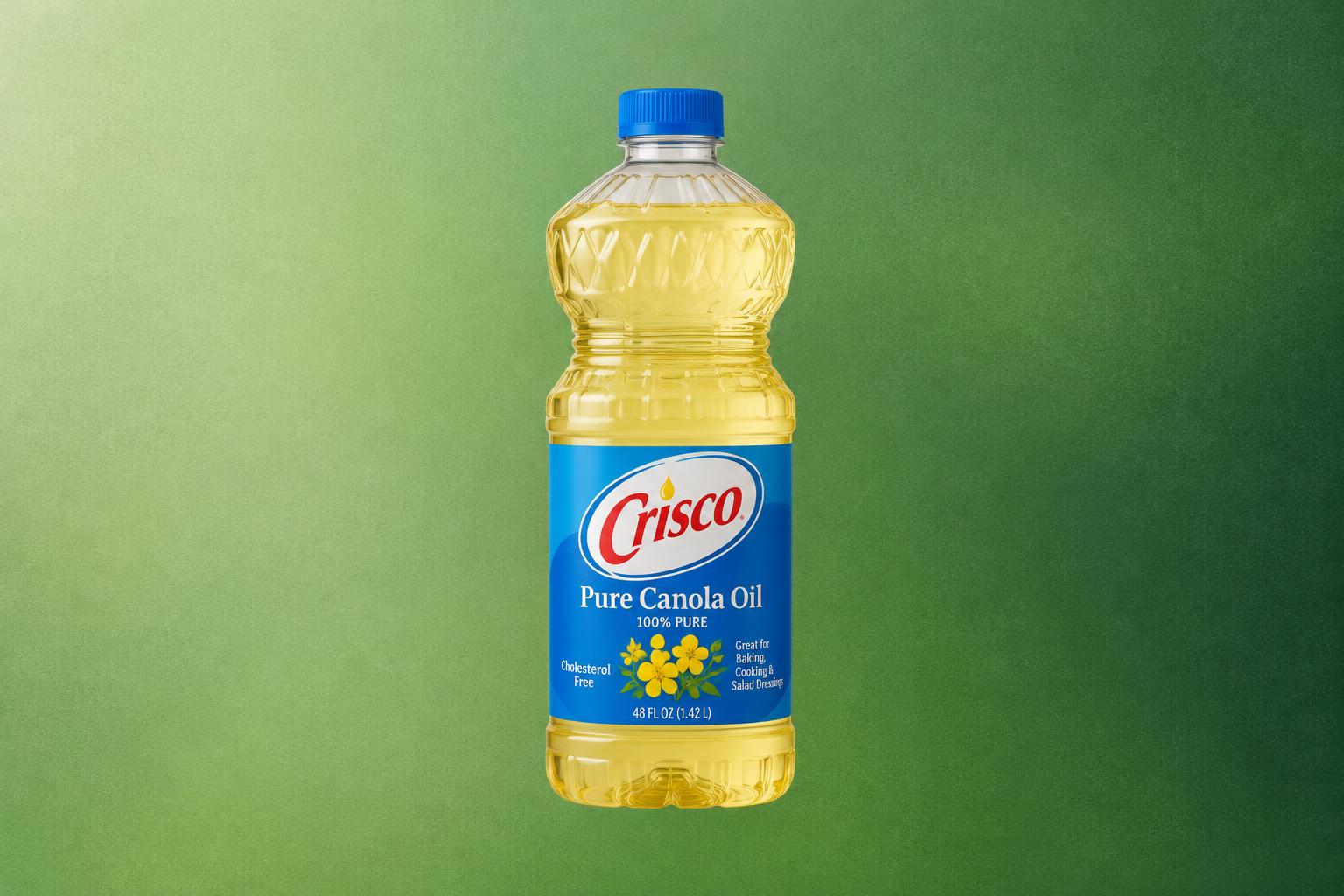
In the canola oil vs olive oil question, calories are a tie: both carry 884 calories per 100 grams in USDA FoodData Central. The real difference is the type of fat inside. In USDA data, canola has about half the saturated fat of olive oil and more polyunsaturated fat, while olive oil has more monounsaturated fat. Canola is also a seed oil and is usually refined, which puts it at the center of the seed-oil debate. Extra virgin olive oil is pressed from olives and unrefined. Neither one wins on every point. The better pick depends on how you cook, what you want to limit, and what the ingredient list actually says.

Find the controversial ingredients already in your kitchen.
Scan packaged foods at home, understand ingredients, and find healthier alternatives in seconds.




 Scan with Osana
Canola oil vs olive oil: the fat profiles side by side
Both oils are pure fat, so the comparison comes down to which fats they contain. USDA lists 100 g of fat in every 100 g of canola oil and of olive oil. That fat splits into saturated, monounsaturated and polyunsaturated types, and the split is where these two oils part ways.
Canola leans polyunsaturated. Per 100 grams, USDA lists 28.1 g of polyunsaturated fat. That includes 18.6 g of omega-6 linoleic acid and 9.1 g of ALA, the plant form of omega-3 (USDA).
Olive oil leans monounsaturated, with 73.0 g per 100 grams, and it has 13.8 g of saturated fat compared with 7.4 g in canola (USDA). Its polyunsaturated fat is much lower, at 10.5 g (USDA).
One detail matters here: the USDA olive oil numbers come from its general "salad or cooking" entry, not a separate extra virgin listing. Individual products can differ, so treat these as typical values. If you want to see how fats appear on a package, our guide to the nutrition facts label walks through each line.
Is canola oil a seed oil?
Yes, canola oil is a seed oil. It comes from the seeds of rapeseed varieties bred to be low in erucic acid. Most canola oil on store shelves is refined. Olive oil is pressed from the fruit of the olive tree, so it isn't counted as a seed oil.
Canola usually appears on lists of seed oils next to soybean, sunflower, corn and cottonseed oil. Our list of seed oils covers the full group and the names you'll see on labels.
Why people debate seed oils
The seed-oil debate centers on two things: omega-6 content and refining. Critics point to the omega-6 fats in seed oils and to the industrial processing used to refine them. Other experts see seed oils as a reasonable part of a varied diet, and the two sides still disagree.
Canola sits in an unusual spot in that argument. Its 18.6 g of omega-6 linoleic acid per 100 g is roughly double the 9.8 g in olive oil (USDA canola, USDA olive). Canola also carries 9.1 g of ALA omega-3 (USDA). That mix is why canola gets defended by some and criticized by others.
If you're curious where seed oils show up beyond the bottle, our guide to foods with seed oils covers the common grocery categories.
Olive oil vs canola oil for cooking
For everyday cooking, choose by flavor and use more than by headlines. Refined canola has a mild, neutral taste, which is why it's common in baking, frying and packaged foods. Extra virgin olive oil has a fruity, sometimes peppery flavor that many cooks prefer for dressings, drizzling and sautéing.
Canola oil
- Seed oil from low erucic acid rapeseed, usually refined
- Lower in saturated fat, higher in polyunsaturated fat, with plant omega-3
- Neutral taste for baking, frying and roasting
- Shows up as "canola oil" or inside "vegetable oil" on snacks, dressings and baked goods
Olive oil
- Fruit oil pressed from olives; extra virgin is unrefined
- Higher in monounsaturated fat than canola, but also higher in saturated fat
- Distinct flavor for dressings, drizzling and sautéing
- Shows up as "olive oil", "extra virgin olive oil" or "olive oil blend"
Because both oils have the same calories, swapping one for the other doesn't change the energy in a recipe. What changes is the fat mix and the taste. Keeping both works well: a neutral oil for baking and a good olive oil for finishing.
How to read oil names on packaged foods
The ingredient list tells you which oil is actually inside, so read past the front of the pack. When a US label says "vegetable oil", it names the oils in parentheses, often with "and/or". That wording means the product may contain one of the listed oils, several, or all of them.
The same habit works for olive oil claims. Here is how to decode three lines you'll often see on chips, crackers, dressings and frozen meals.
A front label that says "made with olive oil" can still list a seed oil in the ingredients. Ingredients are listed by weight, so the first oil named is usually the main one. Our guide on how to read food ingredient labels explains the order rule, and seed oils in packaged foods shows where they hide.
What the FDA has allowed on oil labels
The FDA has allowed qualified health claims for both olive oil and canola oil, but a qualified claim signals limited evidence, not proof. These claims appear through letters of enforcement discretion, which let a brand use specific wording while the science stays unsettled.
The olive oil letter is dated November 1, 2004, and covers monounsaturated fat from olive oil and coronary heart disease. The canola letter followed on October 6, 2006, for unsaturated fats from canola oil (FDA).
On November 19, 2018, the FDA added a claim for oils with at least 70% oleic acid, including high oleic canola oil and olive oil (FDA statement). Its label language refers to about 1.5 tablespoons (20 grams) a day, used to replace saturated fat without raising total calories.
Keep in mind that high oleic canola is a different product from regular canola, so check the bottle. A claim on the label doesn't make an oil a health food. If you're managing heart health, ask your doctor or a registered dietitian which fats fit your plan.
Is canola oil better than olive oil?
Neither oil is better across the board; each one comes with tradeoffs. Canola offers less saturated fat, more ALA omega-3 and a neutral taste, but it's a seed oil and usually refined. Extra virgin olive oil is unrefined and higher in monounsaturated fat, but it has more saturated fat than canola.
If you'd like to cut back on seed oils, olive oil is the simplest swap at home, and it fits alongside other minimally processed foods. If seed oils don't worry you, canola is a practical everyday oil. Either way, check the packaged foods in your cart too, because the oil choice there is made for you.
Look for
- "Extra virgin" on olive oil if you want an unrefined oil
- The oils named in parentheses after "vegetable oil"
- Which oil comes first in an "olive oil blend"
- "High oleic" on canola, which is a different oil from regular canola
- A neutral oil for baking and a flavorful one for dressings
Skip
- Assuming "made with olive oil" means olive oil is the only oil
- Reading a qualified health claim as proof
- Pouring more because an oil sounds healthy: both have the same calories
- Clearing out your whole pantry over one headline
For a weekly list built around whole foods and simple fats, our anti-inflammatory grocery list is a calm place to start.
Frequently asked questions
Does canola oil have less saturated fat than olive oil?
Yes. USDA lists 7.4 g of saturated fat per 100 g of canola oil, compared with 13.8 g in olive oil (USDA canola, USDA olive). Olive oil is higher in monounsaturated fat, at 73.0 g versus 63.3 g per 100 g (USDA olive, USDA canola).
Does canola oil have omega-3?
Yes. USDA lists 9.1 g of ALA, the plant form of omega-3, per 100 g of canola oil, alongside 18.6 g of omega-6 linoleic acid (USDA FoodData Central).
What does "canola and/or sunflower oil" mean on a label?
It means the product may contain canola oil, sunflower oil or both. US labels name the oils in parentheses, often with "and/or", so the maker can switch between them. Both are seed oils.
Conclusion
Canola oil vs olive oil isn't a contest with one clear winner. Both have the same calories, but canola is lower in saturated fat and higher in polyunsaturated fat, while olive oil is richer in monounsaturated fat. Canola is a refined seed oil, and extra virgin olive oil is pressed and unrefined.
The FDA allows qualified claims for both, which signal limited evidence. The most useful habit is simple: read the oil names in the ingredient list, not the front of the pack.
If you'd like to spot seed oils and oil blends in a product before it goes in your cart, Osana can scan the label for you on your next grocery run.
Sources
- USDA FoodData Central, canola oil (SR Legacy), accessed October 2026.
- USDA FoodData Central, olive oil, salad or cooking (SR Legacy), accessed October 2026.
- FDA, "Qualified Health Claims: Letters of Enforcement Discretion", accessed October 2026.
- FDA, statement on the qualified health claim for oleic acid and coronary heart disease, November 19, 2018.