Is oat milk ultra-processed? Simple vs barista oat milk on the label
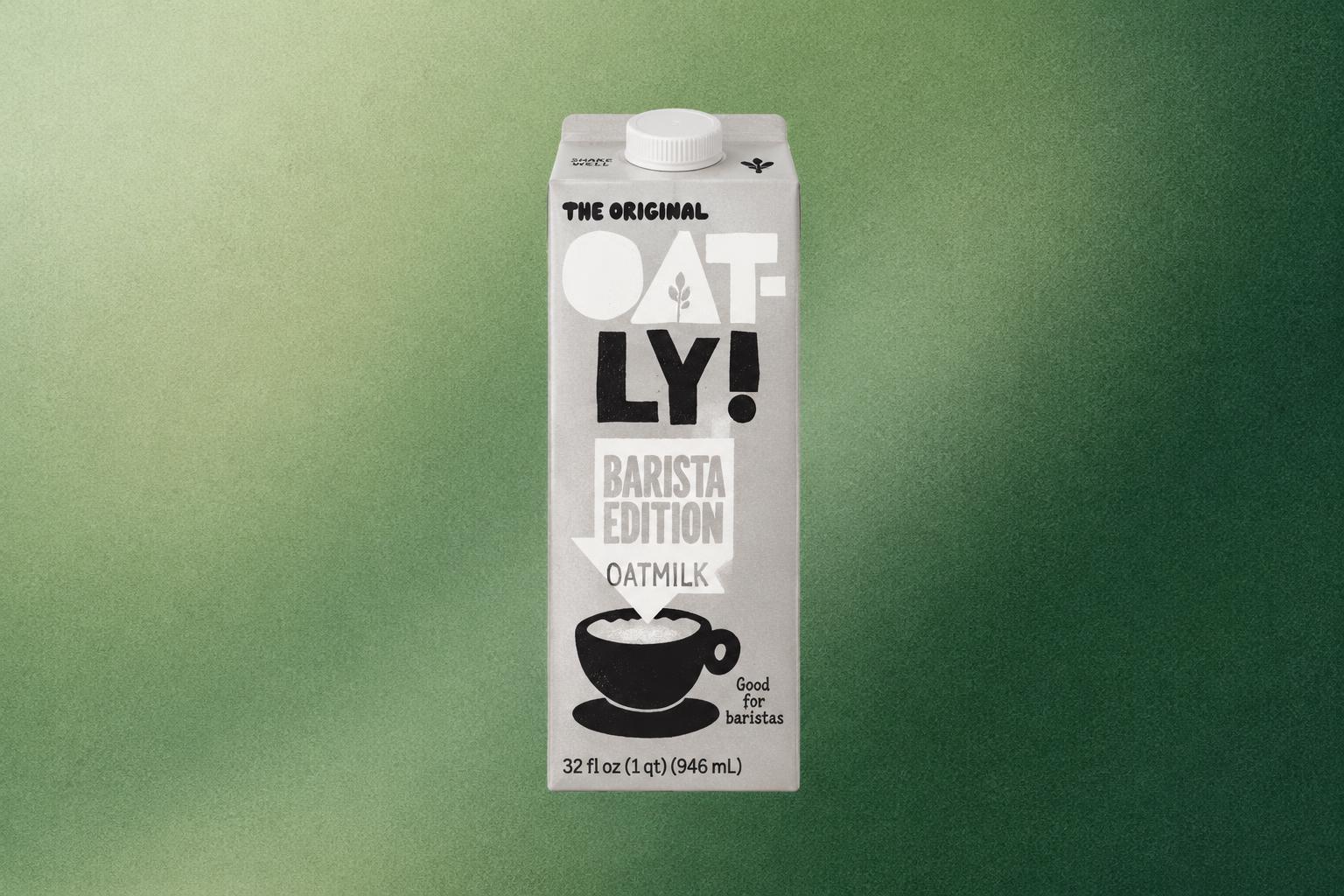
Is oat milk ultra-processed? It depends on the carton. A simple oat milk made from oats, water and a pinch of salt is processed at most by NOVA's logic, the same level as plain bread or cheese. Many barista blends and flavored cartons go further. They add oil plus gums, phosphate salts or flavors, and those last three are the kinds of additives NOVA ties to ultra-processed foods. Oat milk also goes through an enzyme step that turns some of the oat starch into sugar, which is a fair point of debate. The front of the carton rarely tells you which kind you're holding. The ingredient list does, and it's usually short enough to read in the aisle.

Find the controversial ingredients already in your kitchen.
Scan packaged foods at home, understand ingredients, and find healthier alternatives in seconds.




 Scan with Osana
Is oat milk ultra-processed? The short answer
Some oat milks are and some aren't, and the list tells you which. NOVA sorts foods into four groups by how they are made and what goes into them. Ultra-processed foods in group 4 are "formulations of ingredients, mostly of exclusive industrial use," often carrying flavors, emulsifiers, emulsifying salts, sweeteners or thickeners (Monteiro et al., Public Health Nutrition 2019).
NOVA's authors don't name oat drinks in that paper, so every placement below applies their group definitions to typical cartons. Our guide to the NOVA food classification covers all four groups, and the spectrum shows where common oat milks land.
How oat milk is made, step by step
Oat milk is oats broken down in water, then smoothed into a drink. A 2023 review in Food Chemistry: X describes the process as soaking, grinding, hydrolysis, separation, filtering, heat treatment and homogenization (Yu et al., 2023).
- Soak and grind
The oats are milled and mixed with water to pull out their starch, fiber and protein.
- Add enzymes
Enzymes such as alpha-amylase break down the oat starch. According to the review, this produces more glucose and maltose, keeps the drink from turning thick and gluey, and makes it taste sweeter (Yu et al., 2023).
- Separate and filter
Insoluble fiber and bran particles are removed, leaving a smooth liquid.
- Heat and homogenize
The drink is heat treated for shelf life, and homogenizing spreads any added oil into tiny droplets so it doesn't separate.
Does the enzyme step make oat milk ultra-processed?
It's a gray area, and NOVA doesn't settle it directly. The enzymes don't add sugar from outside. They split starch that was already in the oats into smaller sugars such as glucose and maltose (Yu et al., 2023). That's why an unsweetened oat milk can still taste lightly sweet and show some sugar on the label.
NOVA's group 1 allows processes such as crushing, grinding and non-alcoholic fermentation (Monteiro et al., 2019). Breaking down starch that's already in the oats is closer to those steps than adding dextrose or maltodextrin. The same paper lists those two as group 4 substances.
Some people still count enzyme-treated oat drinks as more processed than whole oats, and that's a reasonable view. For everyday shopping, the additives on the list are a clearer signal than the enzyme step.
Processed is not the same as ultra-processed: oats, water, oil and salt make a processed food by NOVA's logic, like bread made from flour, water, yeast and salt. Our guides to processed vs ultra-processed foods and whether bread is ultra-processed show the same line with other foods.
Barista blends: where ultra-processed starts
By NOVA's logic, a carton crosses into ultra-processed territory when its list includes cosmetic additives. NOVA's authors suggest checking whether a list holds at least one ingredient characteristic of group 4 (Monteiro et al., 2019). Barista blends are built to foam and to stay smooth in hot coffee, so they tend to carry more of these than a basic carton.
| On the list | Why it's there | NOVA-style read |
|---|---|---|
| Oats, water | The drink itself | Base food |
| Salt, sugar | Taste | Kitchen ingredient (group 2) |
| Canola, rapeseed or sunflower oil | Creaminess and body | Kitchen ingredient (group 2) |
| Soy lecithin, monoglycerides | Keep oil and water mixed | Emulsifier (group 4 marker) |
| Calcium carbonate, tricalcium phosphate, vitamins | Fortification | Not on NOVA's cosmetic list (calcium phosphates here add calcium) |
| Dipotassium phosphate and other phosphate salts | Stability and texture | Works like an emulsifying salt (group 4 marker) |
| Gellan gum, guar gum, other gums | Thicker, smoother texture | Thickener (group 4 marker) |
| Natural flavor | Vanilla or "creamy" taste | Flavor (group 4 marker) |
Oils in oat milk
Oil is what makes many oat milks creamy. One recipe cited in the 2023 review uses 0.20 kg of oats and 0.035 kg of rapeseed oil per kilogram of oat drink (Yu et al., 2023). In NOVA's terms, oil on its own is a culinary ingredient, not a group 4 marker. If you prefer to limit canola or sunflower oil, our seed oils list shows every name they go by on US labels.
Gums, phosphates and flavors
These are the entries that tip a carton toward group 4 by NOVA's logic. Gums thicken, phosphate salts help keep the drink stable, and natural flavor adds a rounder taste. Natural flavor is still a flavor in NOVA's terms, as our explainer on natural flavors in food covers.
Oat milk vs cow's milk on the label
Oat milk is a different food from dairy milk, not a copy of it. In a comparison table from the 2023 review, a 240 ml (about 1 cup) serving of cow's milk had about three times the protein of an oat milk, while the oat milk had more carbohydrate (Yu et al., 2023).
Processing level and nutrition are separate questions. A simple oat milk can be low on the processing scale and still low in protein. If you're choosing a milk for the whole family, our ranking of the healthiest milk brands compares labels side by side.
How to read an oat milk carton in 30 seconds
Start with the ingredient list, then check the Nutrition Facts panel. Names like "original," "extra creamy" or "barista" can mean different recipes from brand to brand, so the list is the reliable part.
Look for
- A short list: oats, water, salt
- Oil only if you want a creamier drink
- Calcium and vitamins if the carton replaces dairy milk
- Protein per serving, especially for kids
Watch for
- Gums such as gellan or guar gum
- Emulsifiers such as soy lecithin or monoglycerides
- Added phosphate salts such as dipotassium phosphate (calcium phosphates for fortification are a different case)
- Natural or artificial flavor
- Cane sugar or a syrup on the ingredient list
On an unsweetened oat milk, the sugars on the label come from the oat starch. To spot sugar that was added, check the ingredient list for cane sugar or syrups, not just the sugar lines. Our guide to added sugar vs total sugar explains how the two lines differ. For more foods that follow this same logic, see our guide to whether cheese is ultra-processed.
Frequently asked questions
Is barista oat milk ultra-processed?
Often, yes, by NOVA's logic. Many barista blends combine oil with phosphate salts, gums or flavors to foam and stay smooth in coffee. Gums, flavors and phosphate salts acting like emulsifying salts are group 4 markers. A barista carton with only oats, water, oil and salt would read as processed instead.
Why does unsweetened oat milk contain sugar?
During production, enzymes break some of the oat starch into glucose and maltose, which adds sweetness (Yu et al., 2023). That sugar comes from the oats, not from added cane sugar.
What is the least processed oat milk?
Look for a carton with oats, water and salt only, or make it at home by blending oats with water and straining. Store-bought versions with that short list read as processed at most by NOVA's logic, not ultra-processed.
The bottom line on oat milk and processing
Oat milk is not ultra-processed by default. A carton of oats, water and salt is processed at most by NOVA's logic. Adding oil keeps it there, because oil is a kitchen ingredient. The enzyme step that turns starch into sugars is a gray area, but it adds no sugar from outside the oats.
Many barista and flavored blends cross into ultra-processed, because gums, phosphate salts and flavors read as NOVA group 4 markers. Read the list first, then protein and sugars.
To see an oat milk's processing level and additives before it goes in your cart, try scanning it with Osana on your next grocery run.
Sources
- Monteiro C.A. et al., "Ultra-processed foods: what they are and how to identify them," Public Health Nutrition 22(5):936-941, 2019.
- Yu Y. et al., "Oat milk analogue versus traditional milk: Comprehensive evaluation of scientific evidence for processing techniques and health effects," Food Chemistry: X 19:100859, 2023.