Monk fruit vs erythritol: why many monk fruit sweeteners contain both
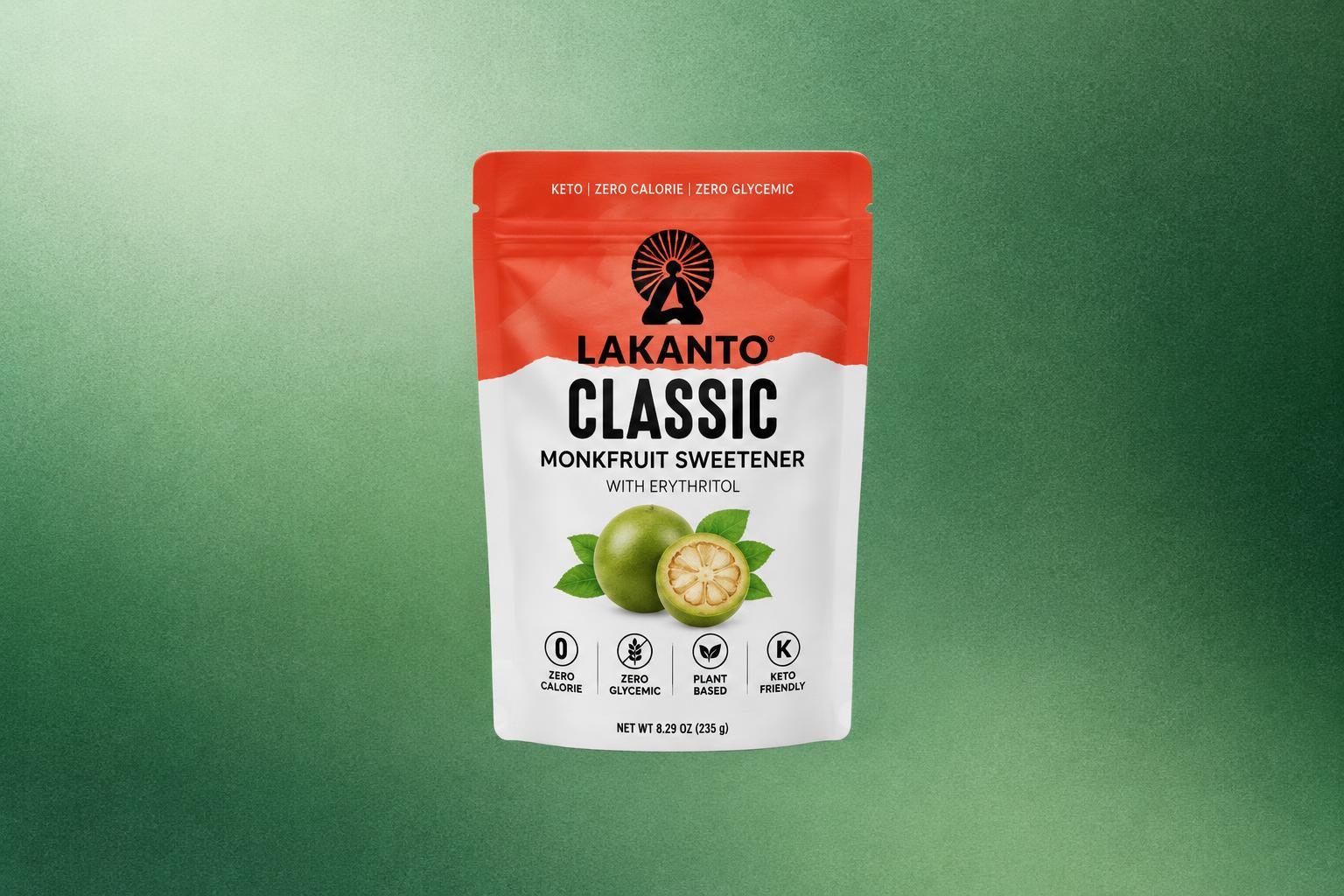
Monk fruit vs erythritol isn't a choice between two names for one thing: they are two different ingredients. Monk fruit extract comes from a small fruit and is so concentrated that only a tiny amount is needed. Erythritol is a sugar alcohol that supplies the bulk you actually scoop. That's why many bags sold as "monk fruit sweetener" list erythritol first: most of what you're buying is erythritol, with monk fruit added for sweetness. Neither one wins in every kitchen. What matters is knowing which one you're getting, how it measures in your recipes, and what the research on erythritol does and doesn't show. The ingredient list on the back of the bag answers the first question in a few seconds.

Find the controversial ingredients already in your kitchen.
Scan packaged foods at home, understand ingredients, and find healthier alternatives in seconds.




 Scan with Osana
Is monk fruit the same as erythritol?
No: monk fruit is a fruit extract, and erythritol is a sugar alcohol. Monk fruit extracts come from the fruit of Siraitia grosvenorii, also called luo han guo. The FDA has received GRAS ("generally recognized as safe") notices for these extracts. For certain ones, it has not questioned the companies' conclusions for their intended uses (FDA).
Erythritol belongs to a different family. The FDA groups it with other sugar alcohols such as sorbitol, xylitol, lactitol, mannitol and maltitol (FDA). So the two show up side by side on many labels, but they are not interchangeable names for the same thing.
Why the two end up in the same bag
High-intensity sweeteners are many times sweeter than table sugar (FDA). A spoonful of pure monk fruit extract would be far too sweet to swap for sugar in a cake. To make a product that measures like sugar, brands usually blend a small amount of extract with a bulking ingredient, and erythritol is a common choice.
Because ingredients are listed in order by weight, the first word on the list is what most of the bag is. If erythritol comes first, you're mainly buying erythritol, even when the front says monk fruit in large letters.
Monk fruit extract vs erythritol side by side
Think of monk fruit extract as the sweetness and erythritol as the body. They do different jobs in a blend, which is why they're so often sold together.
Monk fruit extract
Monk fruit extract is a concentrated sweetener made from a fruit. You'll find it as a pure powder or liquid drops, and inside blends. On its own it's used in very small amounts, so it doesn't measure cup for cup like sugar. To see how it stacks up against another plant extract, read our comparison of stevia vs monk fruit.
Erythritol
Erythritol is a sugar alcohol, in the same family as xylitol and sorbitol. In a blend, it provides the volume you measure with your spoon or cup. Our list of sugar alcohols explains the others you'll spot on labels.
If you're choosing between erythritol and stevia blends instead, see erythritol vs stevia.
Monk fruit extract
- What it is: an extract of monk fruit, also called luo han guo
- How it's used: in tiny amounts, for sweetness
- On labels: usually "monk fruit extract", often listed after a bulking ingredient
- What to know: baking bags usually blend it with something else, so check what that is
Erythritol
- What it is: a sugar alcohol
- How it's used: as bulk, so a blend measures like sugar
- On labels: "erythritol" in the ingredients, and sometimes a "sugar alcohol" line on the Nutrition Facts panel
- What to know: large amounts can cause digestive discomfort in some people
How to read a monk fruit sweetener label
Read the ingredient list first and the front of the bag second. The order of the ingredients, and the word that sits next to "monk fruit", tell you what you're really buying. Here are the lines you're most likely to see in the baking aisle at Walmart, Target or Costco.
| What the label says | What it means |
|---|---|
| "Monk fruit extract" | Pure extract with no bulking ingredient. Very concentrated, so follow the package for amounts; it won't swap cup for cup with sugar. |
| "Erythritol, monk fruit extract" | Mostly erythritol, a sugar alcohol, with monk fruit for sweetness. This is the classic "monk fruit sweetener" bag. |
| "Allulose, monk fruit extract" | Mostly allulose, with monk fruit for sweetness. One way to buy a measurable monk fruit blend without erythritol. |
| "Dextrose, monk fruit extract" | Mostly dextrose, which is a sugar, with monk fruit for sweetness. Check the sugar lines on the Nutrition Facts panel too. |
| "Sugar alcohol" line on the Nutrition Facts panel | The product contains sugar alcohols such as erythritol, shown in grams per serving. |
Dextrose deserves a second look because it's a sugar, as our guide to dextrose vs sugar explains. Sugar also hides under several other names, and this list of hidden names for sugar helps you spot them fast. If an allulose blend catches your eye, allulose vs stevia covers what allulose is.
What the 2023 erythritol study found
A 2023 study linked higher blood erythritol with a higher risk of major heart events, but it did not prove erythritol causes them. It's worth knowing about, especially since many monk fruit blends are mostly erythritol.
The study in brief: In an observational study published in Nature Medicine, people with higher blood erythritol levels had a higher risk of major cardiovascular events, such as heart attack and stroke. Lab tests in the same paper suggested erythritol enhanced platelet clotting activity (Witkowski et al., Nature Medicine, 2023). An observational study shows an association, not cause and effect.
So what does that mean for your pantry? It's a reason to pay attention to how much erythritol you use, not a reason to panic. Reading the ingredient list tells you whether the study is even relevant to the bag in your cart.
If you have heart disease, a clotting disorder, diabetes or another health condition, ask your doctor or a registered dietitian which sweetener fits you best.
Erythritol side effects to keep in mind
Beyond that study, the side effect to know about is digestive. Sugar alcohols in large amounts can cause digestive discomfort in some people. Several treats baked with an erythritol blend add up faster than a spoonful in your coffee.
The bigger picture on sweeteners
The World Health Organization's 2023 guideline advises not to use non-sugar sweeteners for weight control, and it describes that recommendation as conditional (WHO, May 2023). For a wider look at sweeteners across the store, see our guide to artificial sweeteners in food.
How to choose a sweetener in the baking aisle
Start with your recipe, then let the ingredient list decide. A bag that measures like sugar is handy for baking, but you should know what makes up all that bulk.
- Flip the bag
Read the ingredient list before the front claims. The first ingredient is what most of the bag is.
- Name the bulking ingredient
Is it erythritol, allulose or dextrose? Each is a different ingredient, and dextrose is a sugar.
- Decide if you want erythritol
If you'd rather skip it, look for pure monk fruit extract or a blend built on another bulking ingredient, such as allulose.
- Check how it measures
Blends are often designed to replace sugar easily, while pure extract is used in tiny amounts. Follow the package directions for conversions.
- Glance at the Nutrition Facts panel
A "sugar alcohol" line confirms that sugar alcohols are part of the mix.
- Start with a small batch
If your family is new to a sweetener, try it in one recipe first to see how everyone likes the taste.
Pure extract can be trickier in baking because it adds sweetness without the volume sugar brings. That trade-off is the main reason blends exist, so neither choice is wrong as long as you know what's inside.
Frequently asked questions
Is monk fruit sweetener just erythritol?
Not exactly, but many are mostly erythritol. When the ingredient list reads "erythritol, monk fruit extract", erythritol makes up most of the weight and monk fruit adds the sweetness. Pure monk fruit extract contains no erythritol.
Can you buy monk fruit without erythritol?
Yes. Look for an ingredient list that says only "monk fruit extract", or a blend that pairs monk fruit with another bulking ingredient, such as allulose. Check for dextrose too, since it's a sugar.
Is monk fruit healthier than erythritol?
There's no simple ranking, because they do different jobs. Erythritol is the subject of the 2023 association study and, like other sugar alcohols, can cause digestive discomfort in large amounts. If you have a health condition, ask your doctor or a registered dietitian.
Conclusion
Monk fruit vs erythritol isn't really a contest between two equals. Monk fruit extract is a concentrated fruit sweetener used in tiny amounts, while erythritol is a sugar alcohol that gives many "monk fruit" bags their bulk. The ingredient order tells you which one you're mostly buying. If you'd rather avoid erythritol, look for pure extract or an allulose blend, and watch for dextrose. The 2023 study is a reason for moderation and attention, not alarm.
If you'd like a quick way to see which sweeteners and bulking ingredients are in a product before you buy it, you can try Osana on your next grocery run.