8 min read
TBHQ in food: what US shoppers need to know
TBHQ (E319) is a preservative legal in the US and EU. See its daily intake limit, which foods use it, and how to spot it on labels.
Practical, research-aware guides to reading food labels, understanding ingredients and additives, comparing food scanner apps, and choosing healthier grocery products.
TBHQ (E319) is a preservative legal in the US and EU. See its daily intake limit, which foods use it, and how to spot it on labels.
BHA and BHT are synthetic antioxidant preservatives found in cereals, snacks, and oils. Here is what the research says and how to spot them on labels.
BVO was in US sodas for decades before the FDA banned it in 2024. Here is why it was removed, what the science showed, and how to check your drinks.
From fruit snacks to cheese crackers, artificial food dyes are everywhere in kids snacks. Here is what the research says and how to spot them on labels.
Blue 1 (Blue #1, E133) colors candy, cereal and drinks. Learn where it hides in green and purple foods, what the evidence says, and the FDA's end-of-2027 target.
Yellow 6 is one of the most common artificial colors in US snacks and drinks. Here is what the research says and how to spot it on labels.
Yellow 5, or tartrazine, colors many US snacks and drinks. Learn where it comes from, what research says, which foods contain it, and how to spot it on labels.
The FDA officially revoked authorization for red dye 3 in January 2025. Here is what that means for your grocery cart, which foods still contain it, and how to spot it on a label.
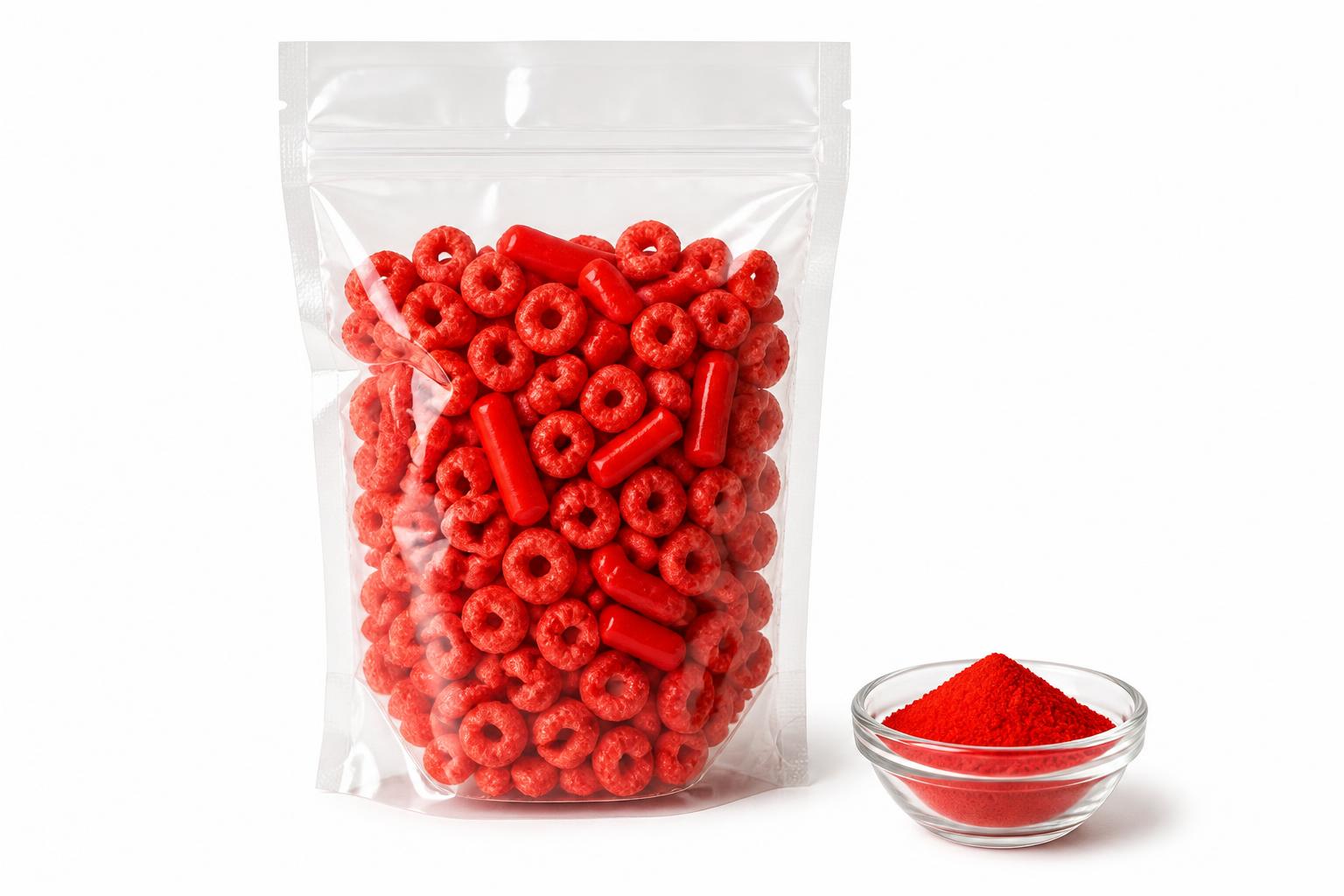
Red 40 hides under several names, including Allura Red AC, E129 and Red 40 Lake. Learn how to spot it on labels, what the research says, and where US and EU rules stand.